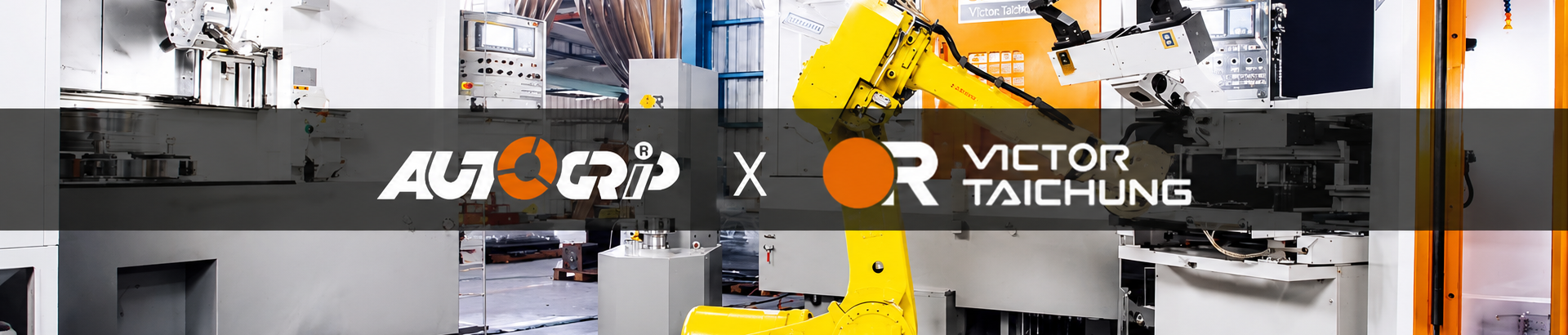
Jointly developed for aluminum wheel machining, the solution integrates dedicated power chuck technology with machine tool automation to improve clamping stability, process consistency, and production efficiency.
As aluminum wheel manufacturing moves toward higher precision, stronger process consistency, and greater automation, the role of workholding has become increasingly important. In wheel machining, clamping stability is no longer just a component-level issue. It directly affects machining accuracy, measurement reliability, maintenance needs, and the overall performance of an automated production line.
To meet these growing demands, AUTOGRIP MACHINERY CO., LTD. has partnered with Victor Taichung to develop a dedicated workholding solution for aluminum wheel machining. Successfully implemented in an automated production line, this collaboration highlights how machine tool builders and workholding specialists can work together to improve both manufacturing flexibility and production efficiency.
Responding to the Needs of Modern Aluminum Wheel Manufacturing
Aluminum wheel machining typically involves multiple stages, including turning, drilling, center-hole machining, measurement, and finishing. In this kind of process, the performance of the workholding system can have a direct impact on accuracy, repeatability, and changeover efficiency.
As manufacturers pursue more automated and integrated production environments, general-purpose clamping solutions may no longer be enough. What many operations now require are application-specific power chuck systems and customized workholding solutions that are designed to match machine configuration, process flow, and long-run production requirements.
This is the context behind the cooperation between AUTOGRIP and Victor Taichung.
A Dedicated Solution Built for Process Integration
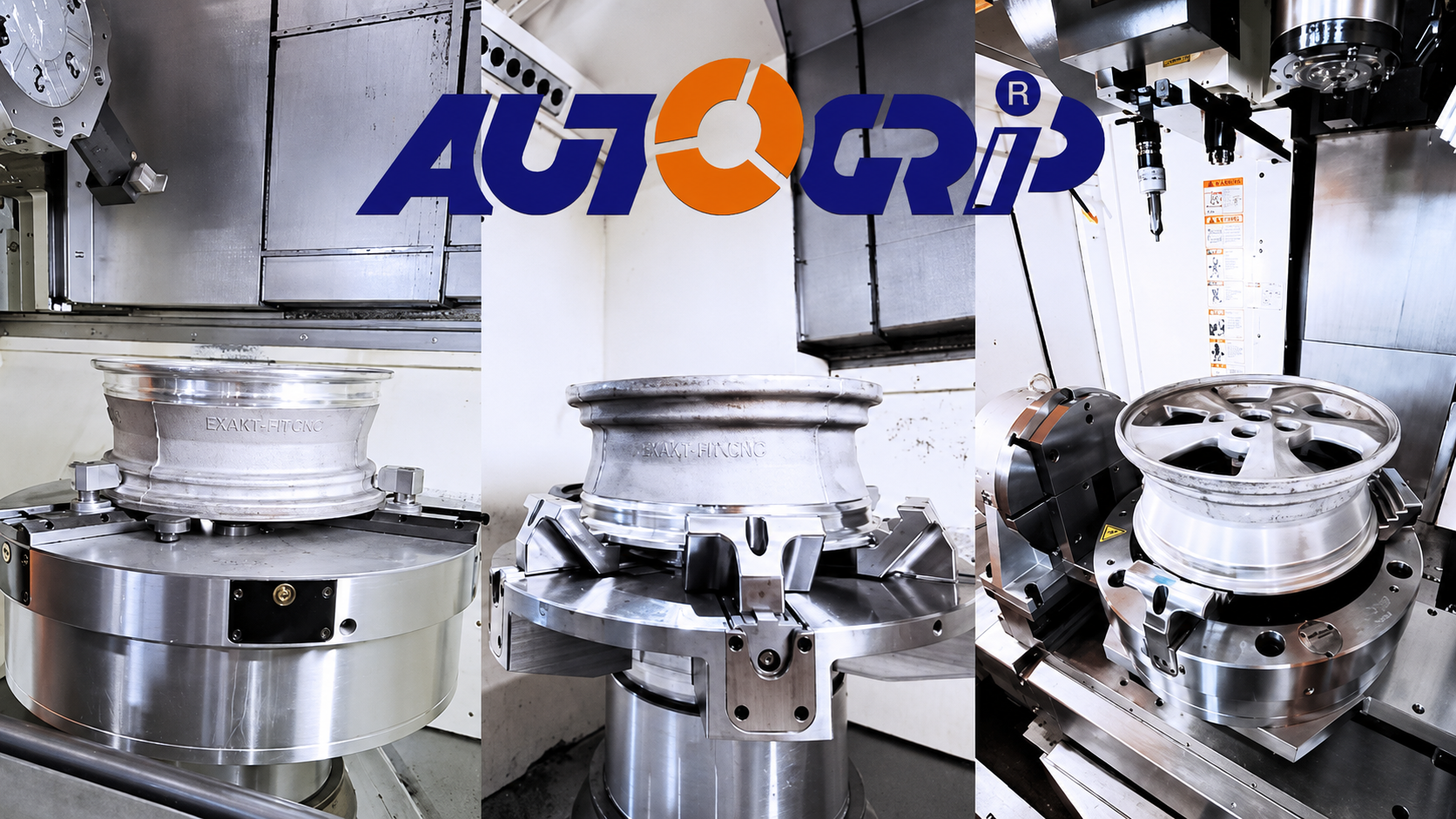
According to AUTOGRIP, the aluminum wheel chuck series in this project was jointly developed based on Victor Taichung’s machine specifications and actual production requirements. The solution was designed for Victor Taichung vertical turning centers and vertical machining centers, supporting OP1 to OP3 processes for 16-inch, 17-inch, and 18-inch aluminum wheels.
By integrating turning, drilling, and measurement into one production line, the solution helps improve line flexibility and overall operating efficiency. More importantly, it shows how workholding can be planned not as a standalone product, but as an integrated part of automated manufacturing.
Stable Clamping from OP1 to OP3
In OP1, AUTOGRIP applies its 3JW-28 aluminum wheel power chuck to provide automatic self-centering for 16-inch, 17-inch, and 18-inch wheels. Equipped with high-strength carbide gripping jaws for face clamping, the chuck helps ensure precise positioning during center-hole and outer-profile machining. The integrated airtight pressure detection function also continuously monitors clamping status, helping improve automation reliability and operational safety.
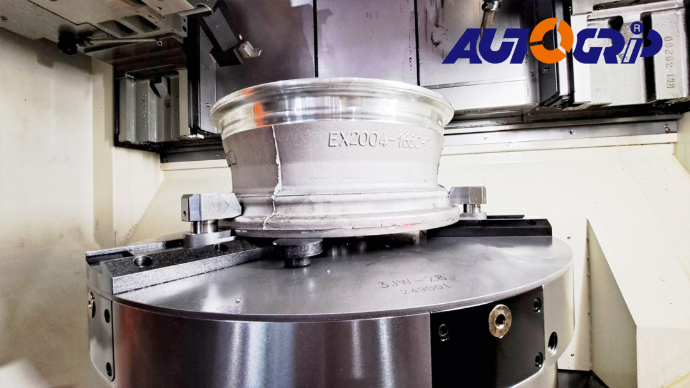
For center-hole measurement, the system uses the MW-811 wheel measurement chuck, which features an 8-jaw concentric internal support design and a chip-blowing dust protection mechanism. This configuration helps reduce chip interference and supports stable, high-accuracy measurement for hub diameters ranging from Φ50 to 150 mm.
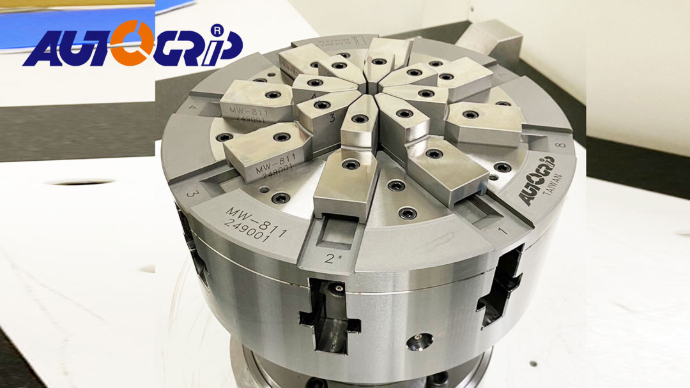
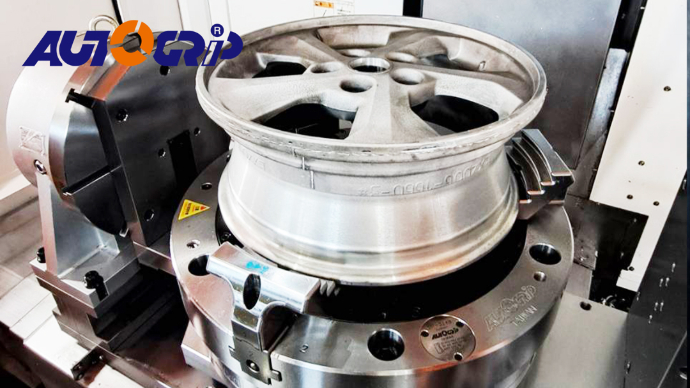
In OP2 and OP3 finishing stations, AUTOGRIP introduces the 6PW-25A11 and SHW-324B aluminum wheel chucks. Their fully sealed construction helps prevent coolant ingress, reduce maintenance requirements, and extend service life. The system also allows different wheel sizes to be machined without changing jaws, helping improve changeover
efficiency in production.
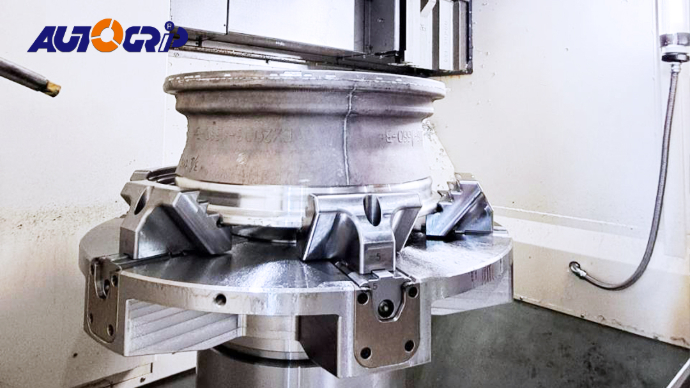
The SHW-324B further incorporates a vacuum dust-proof design to prevent chips from entering the chuck during PCD and air valve hole machining, helping maintain stable operation over long production runs.
More Than a Product Match-Up: A Collaborative Manufacturing Solution
One of the key points of this project is that it is not simply a case of combining a machine and a chuck. Instead, it reflects a deeper level of cooperation between machine tool design and workholding engineering.
For manufacturers, this kind of collaboration matters because aluminum wheel production places high demands on precision, cycle stability, and long-term reliability. A dedicated solution that is jointly developed around actual process conditions can offer stronger support for automation than a standard off-the-shelf setup.
This case also reflects a broader industry trend: manufacturers are increasingly looking for customized workholding solutions that help solve real process problems, rather than only comparing standard product specifications.
Key Value of the AUTOGRIP × Victor Taichung Collaboration
To better understand the practical value of this solution, the following table summarizes the major application needs and corresponding design features in the project.
| Application need |
Solution provided |
Operational value |
| Machining multiple wheel sizes |
Self-centering design and no jaw change for different sizes |
Improves production flexibility and changeover efficiency |
| Stable positioning in OP1 |
3JW-28 power chuck |
Supports accurate center-hole and outer-profile machining |
| High-accuracy center-hole measurement |
MW-811 with 8-jaw concentric support and chip-blowing protection |
Helps reduce chip interference and improve measurement stability |
| Long-term performance in finishing operations |
6PW-25A11 and SHW-324B with fully sealed construction |
Reduces maintenance needs and extends service life |
| Chip protection during PCD and valve hole machining |
SHW-324B with vacuum dust-proof design |
Supports stable long-run operation |
FAQ
1.Why is a dedicated power chuck important in aluminum wheel machining?
Because aluminum wheel production often involves multiple sizes, multiple operations, and automated process flow. A dedicated power chuck can provide better positioning stability, repeatability, and production efficiency than a general-purpose solution.
2.What makes this AUTOGRIP and Victor Taichung collaboration significant?
The significance lies in the joint development approach. Rather than simply combining existing products, AUTOGRIP and Victor Taichung developed a solution based on actual machine specifications and production requirements, making the workholding system a true part of the manufacturing process.
3.Why are customized workholding solutions becoming more important?
As manufacturing becomes more automated, stable clamping, lower maintenance, and faster changeovers become more critical. Customized workholding solutions help manufacturers align equipment performance with real production needs.
Expanding the Possibilities of Aluminum Wheel Automation
Through this collaboration with Victor Taichung, AUTOGRIP demonstrates how dedicated workholding design can support the next stage of aluminum wheel automation. By combining power chuck expertise with process-oriented engineering, the company continues to strengthen its role in high-precision workholding and customized applications.
For readers interested in exploring AUTOGRIP’s broader power chuck product range.
For aluminum wheel machining projects, automation integration, or customized workholding inquiries, contact AUTOGRIP MACHINERY directly.