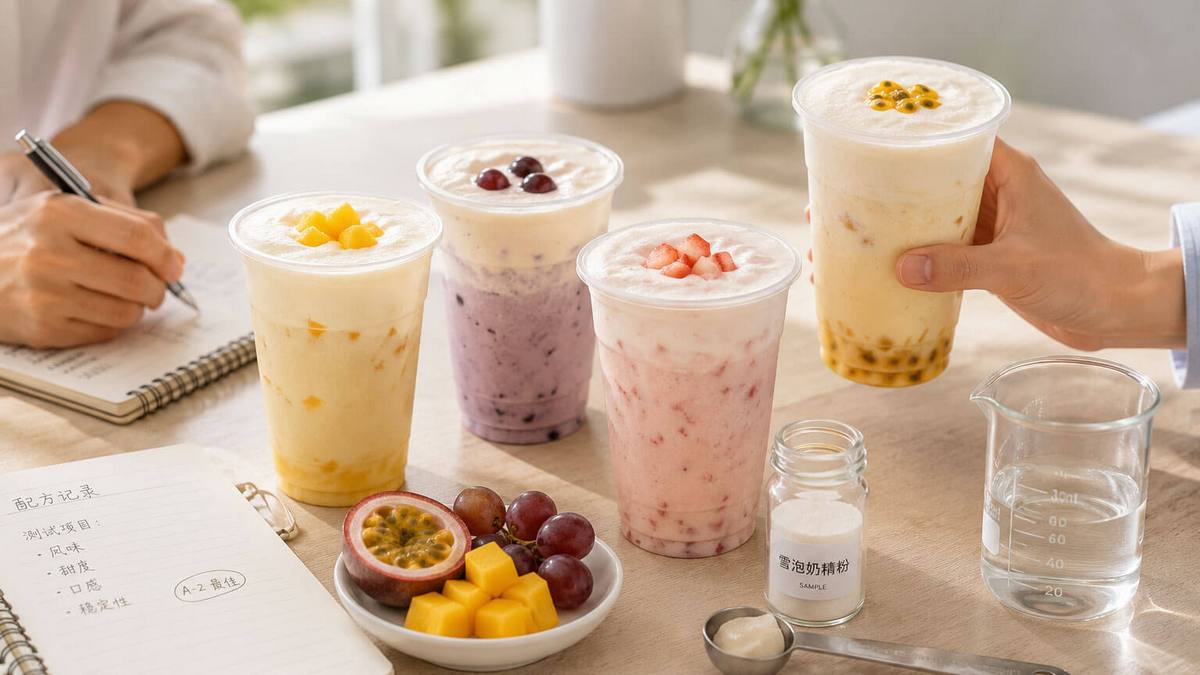
Over the past decade, bubble tea—once a niche Taiwanese beverage—has become a global sensation. What was once considered a novelty is now a mainstream beverage option in cafés, restaurants, and even hotels across the United States and Europe. The question many in the foodservice industry are asking is: Why are Western businesses adding bubble tea to their menus?
This article explores the economic, cultural, and operational factors driving this adoption, supported by real-world case studies and lessons for food entrepreneurs.
Global Market Expansion & Consumer Demand
According to Grand View Research (2024), the global bubble tea market is projected to exceed USD 5.6 billion by 2030, growing at a CAGR of 8.5%. Much of this growth comes from North America and Europe, where younger consumers—particularly Gen Z—are seeking beverages that combine flavor customization, visual appeal, and cultural novelty.
| Region |
CAGR (2024–2030) |
Key Growth Driver |
| North America |
9.2% |
Instagram-driven beverage trends |
| Europe |
8.8% |
Demand for premium and unique beverages |
| Asia-Pacific |
7.4% |
Market maturity and saturation |
Such trends make bubble tea a low-risk, high-return addition for cafés and restaurants looking to refresh their beverage offerings.
The Strategic Appeal for Western Cafés
Adding bubble tea provides several business advantages:
- Diversified revenue streams: Seasonal bubble tea flavors can balance slower coffee sales.
- Customization culture: Aligns with the “build-your-own” beverage trend seen in smoothies and specialty coffees.
- High profit margins: Raw materials such as tapioca pearls and tea bases have lower costs relative to selling price.
Supply Chain & Ingredient Innovation
Sourcing quality ingredients is key to consistency. Several global suppliers have emerged to support this trend:
| Company |
Headquarters |
Specialty |
| Empire Eagle Food Co., Ltd. |
Taiwan |
Premium tapioca pearls and syrup solutions for cafés |
| Chatime Group |
Taiwan |
Ready-to-serve bubble tea systems for franchises |
| Bubbleology |
UK |
R&D in fruit-based bubble tea concepts |
| Boba Guys |
USA |
High-end sustainable ingredients |
| TP TEA |
Taiwan |
Large-scale franchise and ingredient supply |
These brands serve as partners rather than competitors for Western food operators, often providing private-label products or training services.
Lessons for Business Operators
Here are three strategic lessons learned from early adopters:
- Start with seasonal menus — test bubble tea in summer to gauge market response.
- Train staff effectively — beverage consistency impacts repeat purchases.
- Source sustainable ingredients — eco-conscious consumers care about tapioca farming and packaging waste.
Conclusion
Bubble tea’s rise in Western cafés isn’t just a trend—it’s a strategic evolution in the beverage industry. By combining cultural authenticity, operational adaptability, and social media appeal, bubble tea represents both a growth opportunity and a branding asset for restaurants and cafés in the U.S. and Europe.



(3796)(20260924)(原).jpg)
(4005)(20260924)(原).jpg)