What Are the Types and Uses of Common Bearings? (To be continued...)
Knowledge

What Are the Types and Uses of Common Bearings? (To be continued...)

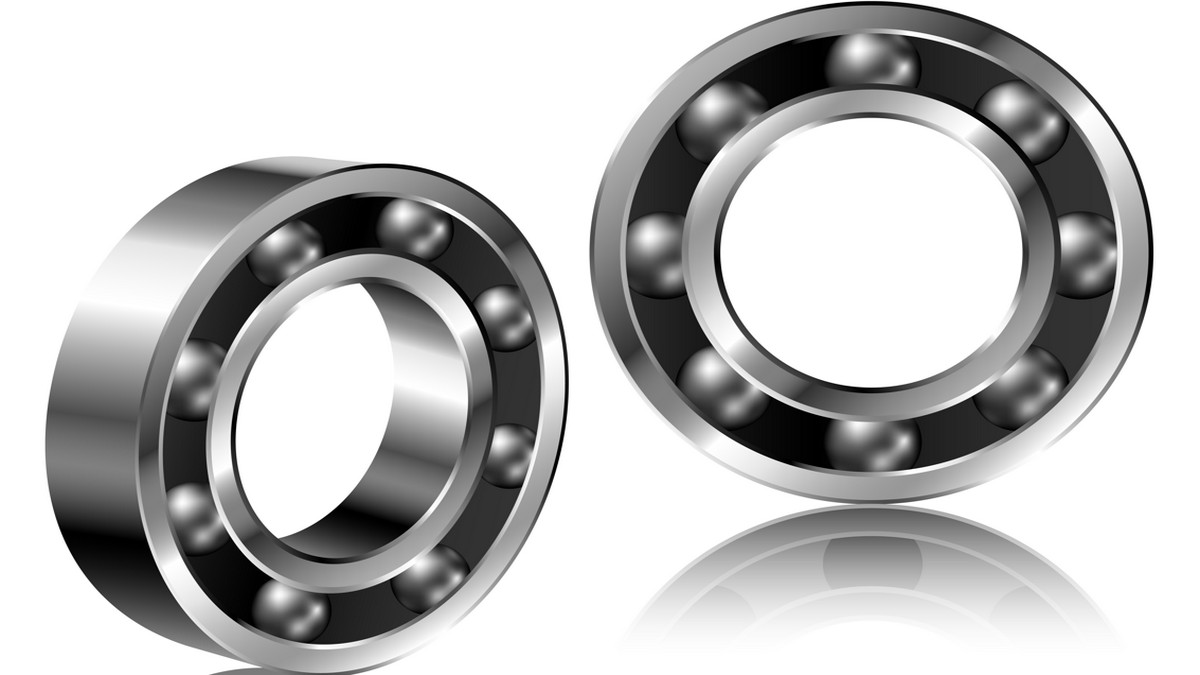
Bearings are crucial parts in mechanical equipment. Its main function is to support the mechanical rotating body to reduce the friction coefficient of the mechanical load during the transmission process of the equipment. This article will share the characteristics, differences and corresponding uses of several common bearings.
Published: Mar 28, 2023
What Are the Types and Uses of Common Bearings? (To be continued...)

Bearings are an important part of a protective mechanical facility that is very common in our daily production and life. Its main function is to support the mechanical rotating body, reduce the friction coefficient during its movement, and ensure its rotation accuracy. How many types of common bearings are there? What are the uses of bearings?

  1. Angular Contact Ball Bearings

  2. There is a contact angle between the ferrule and the ball. The standard contact angle is 15°, 30° and 40°. The larger the contact angle is, the greater the axial load capacity is. The smaller the contact angle is, the more favorable it is for high-speed rotation. Single row bearings can bear radial load and one-way axial load. Structurally, two single row angular contact ball bearings combined on the back share the inner ring and outer ring, which can bear radial load and bidirectional axial load.

    Main application: single row: machine tool spindle, high frequency motor, gas turbine, centrifugal separator, small car front wheel, differential pinion shaft. Double column: oil pump, roots blower, air compressor, various transmissions, fuel injection pump, printing machinery.

  3. Self-aligning Ball Bearings

  4. Double rows of steel balls, the raceway of the outer ring is an inner spherical type, so it can automatically adjust the misalignment of the shaft caused by the deflection or non-concentricity of the shaft or shell, and the bearing with a tapered hole can be easily installed on the shaft by using fasteners.

    Main application: woodworking machinery, textile machinery transmission shaft, vertical self-aligning bearing with seat.

  5. Spherical Roller Bearings

  6. This type of bearing is equipped with spherical rollers between the outer ring of the spherical raceway and the inner ring of the double raceway. According to the different internal structures, it is divided into four types: R, RH, RHA and SR. Due to the arc center of the outer ring raceway consistent with the center of the bearing, it has self-aligning performance, so it can automatically adjust the shaft center misalignment caused by the deflection or misalignment of the shaft or shell, and can bear radial load and bidirectional axial load.

    Main applications: papermaking machinery, deceleration devices, railway vehicle axles, rolling mill gearbox seats, rolling mill roller tables, crushers, vibrating screens, printing machinery, woodworking machinery, various industrial reducers, vertical self-aligning bearings with seats.

  7. Thrust Self-Aligning Roller Bearing

  8. The spherical rollers in this type of bearing are arranged obliquely. Because the raceway surface of the seat ring is spherical and has self-aligning performance, it can allow the shaft to have a certain inclination, and the axial load capacity is very large. Radial loads are generally lubricated with oil.

    Main applications: hydraulic generators, vertical motors, propeller shafts for ships, reducers for rolling screws in rolling mills, tower cranes, coal mills, extrusion machines, and forming machines.

  9. Tapered Roller Bearings

  10. This type of bearing is equipped with truncated cylindrical rollers, and the rollers are guided by the large rib of the inner ring. The design makes the vertices of the inner ring raceway surface, the outer ring raceway surface and the roller rolling surfaces of the conical surfaces intersect on the center line of the bearing. Single-row bearings can bear radial loads and one-way axial loads, double-row bearings can bear radial loads and two-way axial loads, and are suitable for heavy loads and impact loads.

    Main application: Automobile: front wheel, rear wheel, transmission, differential pinion shaft. Machine tool spindles, construction machinery, large agricultural machinery, gear reduction devices for railway vehicles, roll necks and reduction devices for rolling mills.

  11. Deep Groove Ball Bearings

  12. Structurally, each ring of the deep groove ball bearing has a continuous groove type raceway with a cross section of about one-third of the equatorial circumference of the ball. Deep groove ball bearings are mainly used to bear radial loads, and can also bear certain axial loads.

    When the radial clearance of the bearing increases, it has the properties of an angular contact ball bearing and can bear alternating axial loads in two directions. Compared with other types of bearings with the same size, this type of bearing has a small friction coefficient, high limit speed, and high precision. It is the preferred bearing type for users when selecting models.

    Main applications: automobiles, tractors, machine tools, motors, water pumps, agricultural machinery, textile machinery, etc.

  13. Thrust Ball Bearings

  14. It consists of a washer-shaped raceway ring with a raceway, a ball and a cage assembly. The raceway ring that matches the shaft is called the shaft ring, and the raceway ring that matches the housing is called the seat ring. Two-way bearings match the secret shaft of the middle ring, one-way bearings can bear one-way axial loads, and two-way bearings can bear two-way axial loads (neither of them can bear radial loads).

    Main application: Automobile steering pin, machine tool spindle.

Published by Mar 28, 2023 Source :kknews

Further reading

You might also be interested in ...

Headline
Knowledge
Biodegradable Straw Making Machines: Key Technologies Driving Sustainable Packaging Production
This article examines how biodegradable straw making machines are supporting the shift toward sustainable packaging production. It covers PLA and paper straw manufacturing technologies, automation trends, production challenges, and key factors manufacturers should consider when selecting biodegradable straw production equipment.
Headline
Knowledge
Choosing Between C-Frame and H-Frame Hydraulic Presses for Metal Stamping
This article provides a comprehensive guide for manufacturers on choosing between C-frame and H-frame hydraulic presses for metal stamping operations. It begins by analyzing the structural differences: C-frame presses are highlighted for their three-sided accessibility and space-saving design, making them ideal for light to medium-duty tasks. In contrast, H-frame presses are recognized for their superior stability and rigidity, making them the preferred choice for high-tonnage, high-precision, and heavy-duty applications. The article features a detailed comparative table evaluating both types based on tonnage capacity, footprint, and cost. It also outlines critical selection factors such as precision requirements and budget constraints. Finally, the guide naturally introduces leading global manufacturers, including Yeh Chiun, Schuler, AIDA, Komatsu, and Beckwood, helping readers make informed investment decisions tailored to their specific production needs.
Headline
Knowledge
What Do Fruit Juice Suppliers Provide? A Practical Guide for Beverage and Food Brands
A practical overview of ingredient formats, supplier services, and sourcing considerations for beverage and food product development.
Headline
Knowledge
Why Skin and Immune Formulation Matters More Than Coat Appearance in Companion Animal Health
Skin and coat concerns in companion animals often signal a broader formulation challenge rather than a surface-level issue alone. Recurrent dryness, itching, dull coat condition, and visible sensitivity are frequently linked to barrier weakness, immune imbalance, nutrient utilization, and digestive stability. Products positioned only around coat shine or a single trending ingredient may therefore fall short in daily use. More effective formulation usually begins with a broader biological view: skin health is closely shaped by the interaction between barrier function, immune response, microbiota balance, and life-stage needs.
Headline
Knowledge
Why Food Safety Certifications Matter More Than Ever in Bubble Tea Supply Chains
Bubble tea supply chains are under greater scrutiny than before. Flavor innovation still drives demand, but in cross-border trade, growth increasingly depends on whether ingredients can move through approval processes smoothly, meet market-specific expectations, and remain consistent across repeated shipments. Certifications such as ISO 22000, HACCP, FSSC 22000, HALAL, and KOSHER are no longer just supporting documents. They now influence market access, supplier credibility, risk control, and the ability to maintain stable commercial relationships over time.
Headline
Knowledge
How to Choose a Health Supplement Manufacturer: A B2B Buyer’s Guide to MOQ, Sampling, and Hidden Costs
Choosing a health supplement manufacturer is not just a purchasing decision. For B2B buyers, it is a commercial, technical, and operational decision that directly affects product quality, launch timing, working capital, and long-term supply stability. A manufacturer that looks competitive on paper may still create problems later if its MOQ structure is inflexible, its samples do not reflect production reality, or its quotation leaves out key cost items. That is why buyers evaluating contract manufacturing health supplements partners should look beyond unit price. The better question is not simply “Who can make this product?” but “Which manufacturer can support this project with the right balance of cost transparency, technical fit, and execution reliability?” This guide breaks that decision into five practical steps, with special attention to MOQ, sampling, and hidden costs, three of the most common sources of confusion in supplement sourcing.
Headline
Knowledge
Automatic Loading and Unloading CNC Cylindrical Grinding Machines: How Automation Improves Precision, Throughput, and Process Stability
A neutral overview of how automated work handling is changing cylindrical grinding, from part consistency and labor efficiency to safety and smart manufacturing integration.
Headline
Knowledge
Oil Seal Cross Reference: How to Match Part Numbers, Dimensions, and Seal Types Correctly
A practical guide to using oil seal interchange tables correctly and understanding what still needs to be verified
Headline
Knowledge
Tire Curing Press Machine: How It Shapes Tire Quality, Efficiency, and Modern Production
A practical look at how tire curing press machines work, why they matter in tire manufacturing, and what manufacturers now expect from modern curing systems
Headline
Knowledge
How Fresh Tea Bag Suppliers Maintain Quality from Tea Sourcing to Final Packaging
A closer look at sourcing discipline, production controls, and packaging strategies behind reliable fresh tea bag quality.
Headline
Knowledge
SoM vs CoM vs SBC: How to Choose the Right Embedded Architecture for Industrial IoT Projects
How SoM, CoM, and SBC choices affect integration flexibility, deployment scale, and long term industrial IoT planning
Headline
Knowledge
How to Prevent UPS Overload and Improve Electrical Safety in Critical Power Systems
Understanding overload causes, sizing mistakes, and protection planning in UPS backed environments.
Agree