A bearing is an important part of contemporary mechanical equipment. Its main function is to support the mechanical rotating body, reduce the friction coefficient during its movement, and ensure its rotation accuracy. Therefore, its application range is very wide and the market demand is strong. The Asian region represented by China and Japan has accounted for more than half of the global bearing consumption and has become the world's largest bearing consumer market, followed closely by Europe and North America, with 25% and 20% respectively.
What Is A Bearing?
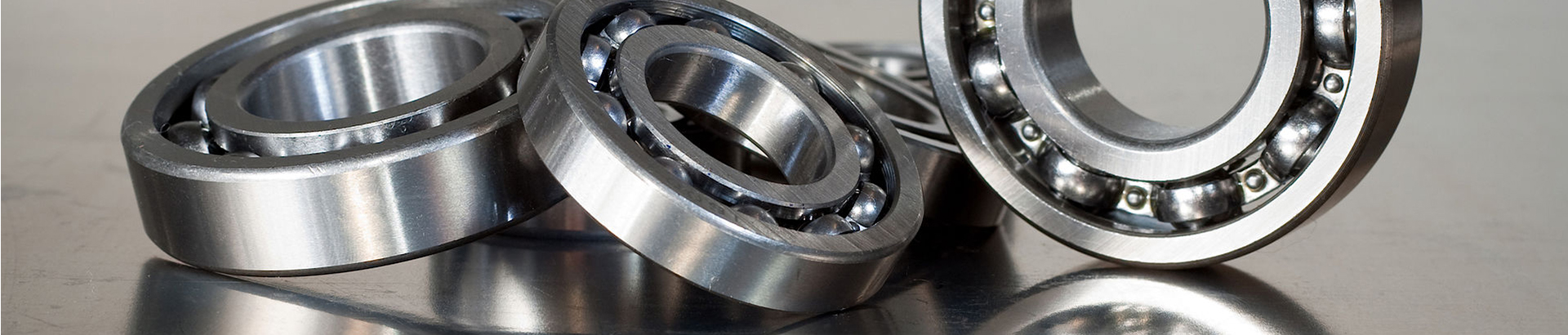
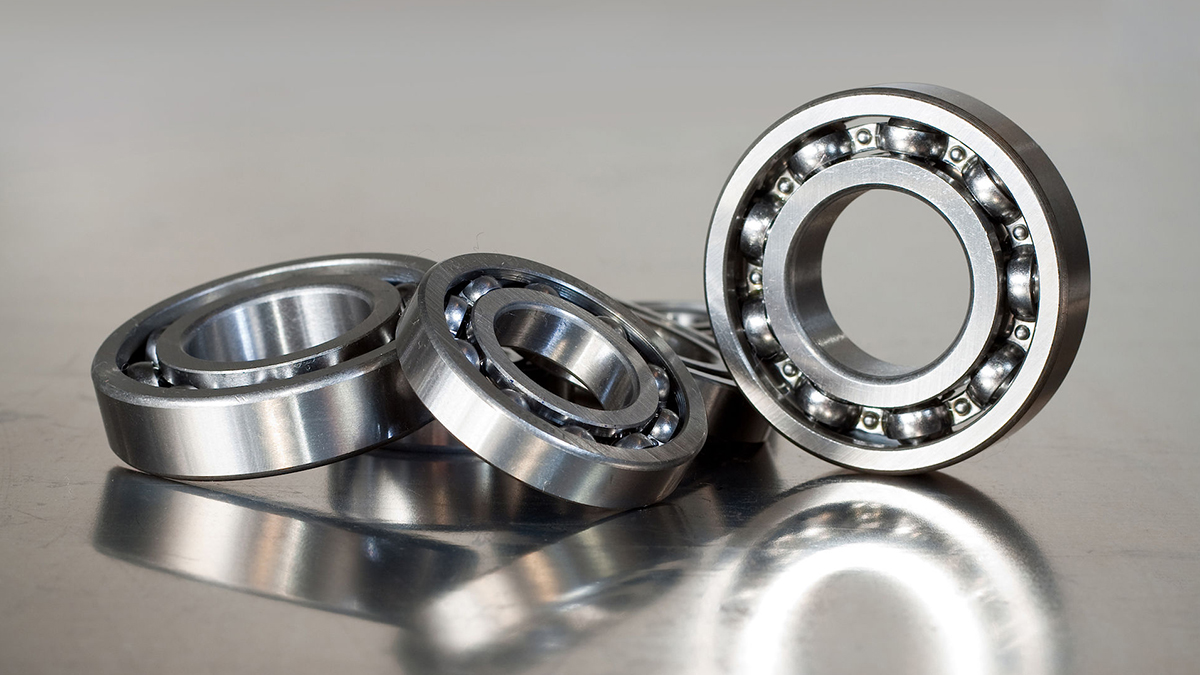
Bearings are mechanical assemblies that consist of rolling elements and usually inner and outer races which are used for rotating or linear shaft applications, and there are several different types of bearings, including ball and roller bearings, linear bearings, as well as mounted versions that may use either rolling element bearings or plain bearings
Development Status of Global Bearing Industry
From a global perspective, after years of industrial competition in the bearing industry, the high-end market is monopolized by eight multinational bearing companies, namely SKF (Sweden), Schaeffler (Germany), NSK (Japan), JTEKT (Japan), NTN (Japan), NMB (Japan), NACHI (Japan), and TIMKEN (United States). With first-class scientific and technological talents, processing equipment, and manufacturing technology, it leads the development direction of the world's bearings. The global bearing industry has formed a situation where international competition is domestic and domestic competition is international. Statistics show that more than 70% of the global bearing market is shared by the eight major multinational bearing group companies. Chinese bearing manufacturers have 20% of the global market share, 80% of which are sold to Asia, 10% are sold to Europe, and less than 7% of bearings are sold to the American market.
Development Status of China's Bearing Industry
China's bearing industry was founded in 1938. Since the reform and opening-up, China's economy has maintained a sustained and rapid development trend. The bearing industry has formed a complete set of independent and complete industrial systems. Whether in terms of bearing output or bearing sales, China has already moved forward into the ranks of major bearing industry countries, ranking third in the world. In 2018, the main business income of enterprises above designated size in China's bearing industry was 184.8 billion yuan, an increase of 3.36% over 2017. The completed bearing output was 21.5 billion sets, an increase of 2.38% over 2017. In 2019, due to the slowdown in the development of China's domestic mainframe industry represented by automobiles and machine tools, the demand for bearings has also shown a slowdown trend. In 2019, the main business income of China's bearing manufacturing industry declined to 177 billion yuan, down 4.22% year-on-year. Although China is already a big bearing producer in the world, it is not yet a strong bearing producer in the world. The industrial structure, R&D capabilities, technical level, product quality, efficiency, and effectiveness of China's bearing industry are far from the international advanced level.
Industry Competition Pattern and Degree of Marketization
-
Competition in the bearing industry
According to the statistics of the China Bearing Industry Association, as of the end of 2018, the scale income of China's bearing industry reached 184.8 billion yuan. The competition pattern among enterprises in the bearing industry is an all-around competition, mainly including quality, cost, innovation, and management competition.
On the one hand, although there are many bearing companies in China, due to the limitations of capital, technology, human resources, and R&D capabilities, the scale of these companies is generally relatively small, and market competition is mainly reflected in the low-end product market. As multinational bearing companies set up factories in China and accelerate their localization, market competition in China's bearing industry is bound to intensify. On the other hand, there is a huge demand for high-end bearing products in China, and it is currently mainly dependent on imports. The entire industry will accelerate the pace of technological upgrading and industrial integration. Powerful bearing manufacturers continue to increase investment in various aspects, and comprehensively enhance corporate innovation in terms of a quality brand, integration of industrialization, transformation of business formats, standard system, personnel training and ability, and strive to make China's bearing products close to or reach the international level in quality, and rank among the ranks of high-end bearing manufacturers.
-
The competition of large and heavy-duty bearings
China's economy continues to develop rapidly. Car bearings, high-speed or quasi-high-speed railway train bearings, various major equipment supporting bearings, high-precision bearings, engineering machinery bearings, etc. have become the main products for multinational companies to enter the China bearing industry. At the same time, the production level of China's high-end bearings still lags far behind the international advanced level, and the complete autonomy of high-end equipment and supporting bearings for major equipment has not yet been achieved. Therefore, China's main competitor is still the global leading international bearing supplier.
-
Major companies in the industry and their market shares
China's bearing industry is mainly concentrated in private and foreign-funded enterprises represented by East China, as well as state-owned traditional heavy industrial bases represented by Northeast and Luoyang. With the continuous improvement of China's marketization, private bearing companies continue to enter the bearing manufacturing industry and have become the main development of China's bearing industry. Foreign-owned brand-bearing companies also occupy an important part of China's domestic bearing market. The world’s eighth largest multinational bearing companies have established companies in China, and continue to increase investment and construction of factories, and even further set up regional headquarters and engineering technology centers in China.
Product Competition
- Divided by structure and movement mode: mainly rolling bearing demand
From the perspective of product competition, bearing products can be divided into rolling bearings and sliding bearings if they are divided according to the structure and movement of bearing products. Rolling bearings have the advantages of high transmission efficiency and good mechanical properties and are currently the dominant type in the bearing industry.
- Divided by size: mainly produces micro and small bearings, and the output of medium and large bearings has increased
In terms of size classification, with the continuous development and improvement of China's bearing technology, China bearing companies have begun to compete with foreign markets in the field of micro and small bearings, and the production volume is relatively large. However, the output of medium and large bearing products is still relatively small. However, with the development of China’s major equipment manufacturing industries such as aerospace and military industry, machine tools, wind power, etc., the demand for medium and large-sized and above-bearing products has gradually increased. Enterprises are also continuously introducing, developing, and producing such bearing products, and the output has increased in recent years.
- Divided by downstream application products: automotive bearings have the largest demand
The downstream applications of bearings are very extensive. At present, bearings are mainly used in the automotive industry, accounting for about 37%. Followed by bearings for household appliances, motor bearings, and textile machinery bearings, accounting for 12%, 11%, and 5% respectively.
Industrial Development
The inner and outer rings and rolling elements of the bearing are mainly made of bearing steel, including metal materials such as high-carbon chromium steel, carburized steel, stainless steel, heat-resistant steel, tool steel, and non-metallic materials such as ceramics, plastics, graphite, and carbon fiber. Bearing material products; cage materials include steel, ductile iron, bronze, brass, light alloy, phenolic laminated cloth tube, glass fiber reinforced phenolic resin, etc.
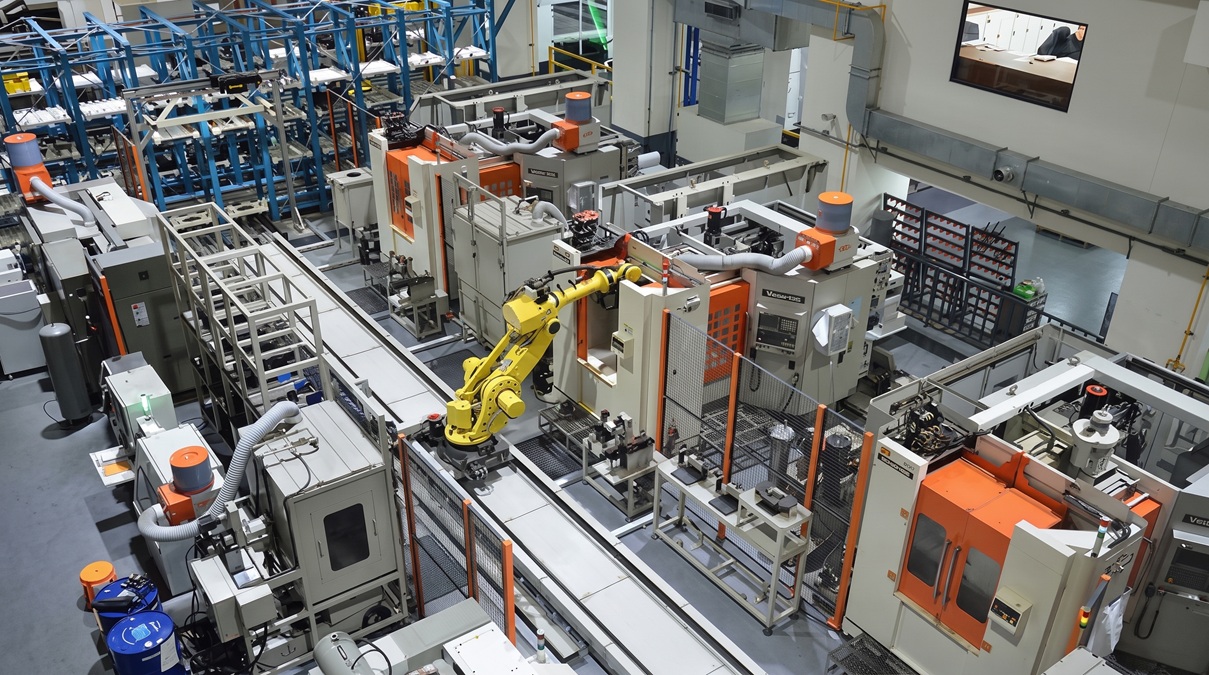
Bearings continue to develop with the progress of modern industrial mechanization and automation. Machines continue to replace human labor, and bearings are everywhere in people's work and life. Now there are more than 100,000 types of bearings. Bearing materials range from carbon steel to chromium steel and other alloy steels. The processing has changed from manual to automated. The life of the product has been greatly improved, and the accuracy has reached the micron level.
In modern industry, bearings are widely used in many fields such as transportation machinery, construction machinery, precision machine tools, instruments, and meters, and play an important role in the development of the world's machinery industry and other industries. The design and manufacture of bearings involve multidisciplinary theories. In bearing design, it is necessary to solve the problems of elastic contact inside the bearing, internal clearance, and original contact angle, contact angle change caused by load, load distribution inside the bearing, and relative displacement of the inner and outer rings caused by the load. In addition to applying mathematics and for the physical method, a series of theoretical researches such as Hertz contact theory, dynamic analysis model of rolling bearing, and theory of rolling bearing must be applied. In terms of manufacturing, bearings are relatively high-precision products and require complicated technological processes. In short, process-bearing products with precision, performance, life, and reliability with high efficiency and low cost requires the support of multidisciplinary theories and technologies such as material science, heat treatment technology, precision machining technology, and numerical control technology.