From Counter-UAS and airspace awareness to Taiwan-based drone OEM assembly, XPONENTIAL Europe 2027 highlights the integrated technology and manufacturing ecosystem shaping the future of airport security.
From Counter-UAS and airspace awareness to Taiwan-based drone OEM assembly, the event highlights why airport security increasingly depends on an integrated ecosystem rather than a single system.
When Airport Perimeter Security Becomes Three-Dimensional
Airport security has traditionally focused on the ground: fences, cameras, access controls, patrols, and vehicle monitoring. The growth of drone activity around airports is adding a new dimension. Security teams must now detect and identify unauthorized aircraft in the low-altitude airspace above and around the perimeter, assess whether an aircraft presents a credible threat, and share actionable information with the authorities responsible for any lawful response.
Recent drone disruptions at European airports have made this challenge visible to the public. The operational issue is not limited to the physical presence of a drone. Airports must also distinguish authorized flights from unknown aircraft, maintain situational awareness in a complex environment, and coordinate security, aviation, and emergency-response functions without disrupting legitimate operations.
This is why counter-uncrewed-aircraft systems, airspace management, sensor fusion, and autonomous inspection technologies are increasingly being discussed together. The emerging requirement is not simply to purchase a detector. It is to connect detection, identification, decision support, reporting, and response within the airport’s existing operational and regulatory framework.
XPONENTIAL Europe 2027 Puts the Wider Ecosystem on Display
XPONENTIAL Europe will return to Düsseldorf from March 16–18, 2027. The event describes itself as a leading trade fair for autonomy and robotics, covering uncrewed technologies across air, land, maritime, and space. Its official offering spans platforms, components, sensors, and services, giving the event a broader scope than a conventional drone exhibition.
The 2026 edition brought together 360 exhibitors from 43 countries, according to the official event website. For 2027, the organizers are positioning the show as larger and more international, with an additional exhibition hall. The program includes technical research, defense and security, civil protection, enabling technologies, strategic enablers, end-user applications, and emerging technologies.
For airport operators and infrastructure-security stakeholders, this breadth matters. Low-altitude security depends on multiple technology layers that are often sourced from different parts of the industrial base. These layers can include radio-frequency and radar sensing, electro-optical systems, command-and-control software, secure communications, autonomous ground systems, aircraft platforms, payloads, and the manufacturing partners that turn designs into repeatable products.
The event’s value therefore lies not only in showing complete systems. It also creates a meeting point for system integrators, component suppliers, manufacturers, regulators, researchers, and end users that must solve the same deployment problem from different perspectives.
Counter-UAS Is Only One Part of the Airport Security Stack
Counter-UAS, or counter-uncrewed-aircraft systems, generally refers to technologies used to detect, identify, track, and—where legally authorized—support the mitigation of unauthorized drones. In an airport environment, these functions must be evaluated alongside air traffic procedures, cybersecurity, communications, emergency response, and the division of authority between airport operators and public agencies.
That division is important. A private operator may be able to detect an aircraft and alert the responsible authority, while active measures may be restricted to authorized public bodies and subject to specific legal conditions. A credible airport-security architecture must therefore provide a reliable and shared situational picture without implying that every technology supplier or airport operator can independently conduct active countermeasures.
XPONENTIAL Europe’s combination of exhibition and conference content is relevant to this challenge because it connects technology demonstrations with regulatory, security, and end-user discussions. The official program also identifies defense and security, civil protection, enabling technologies, and end-user applications as distinct areas, reflecting the need to evaluate autonomy technologies in their operational context rather than as isolated products.
Funet Shows Why Manufacturing Capacity Belongs in the Conversation
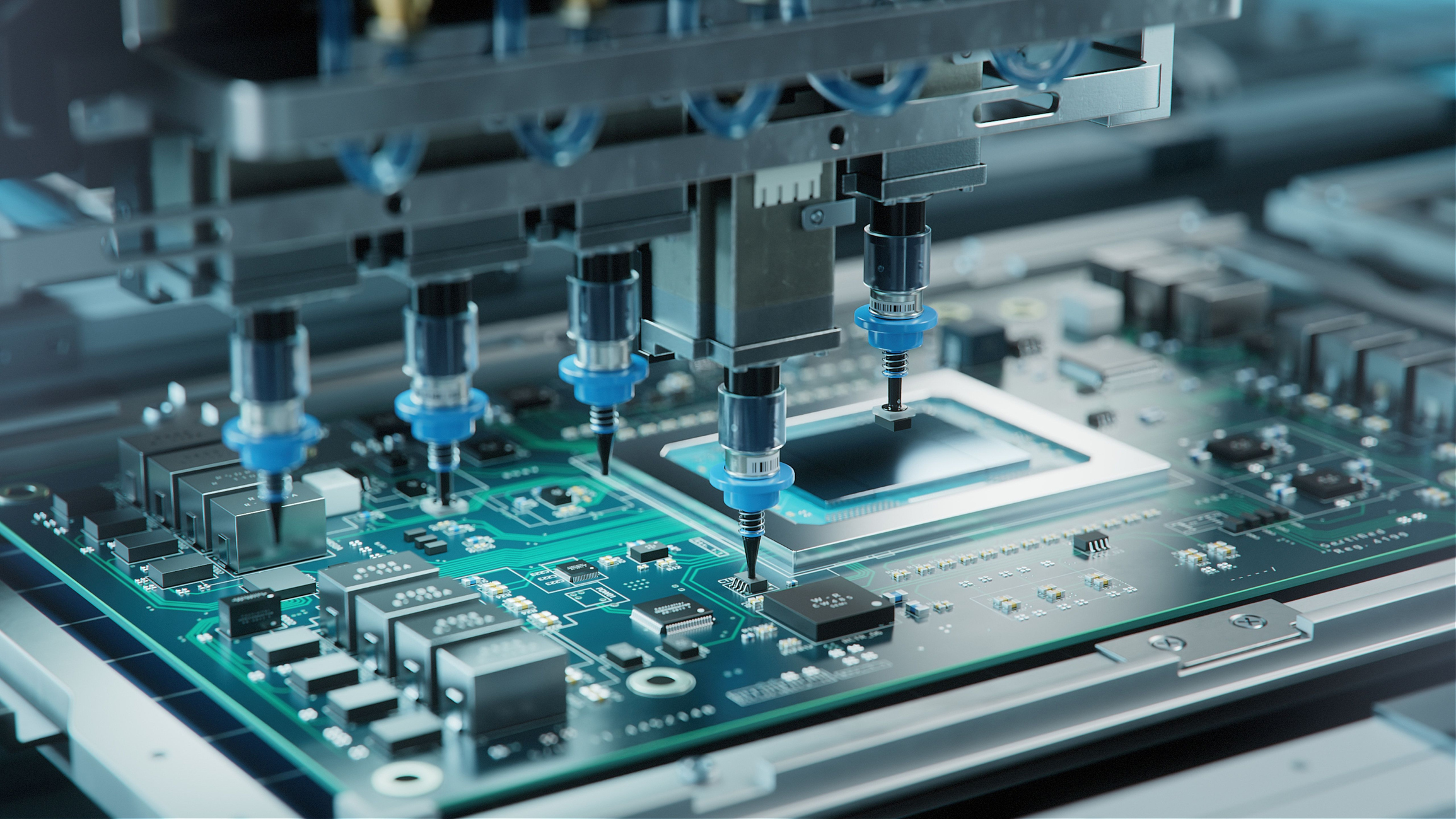
The supply chain behind autonomous systems is broader than the companies that build complete aircraft or counter-drone platforms. It also includes electronics manufacturers, PCB assembly providers, mechanical suppliers, testing partners, and final-assembly specialists.
Funet Technology Inc. is an example of this manufacturing layer. On its official Drone OEM page, the Taiwan-based company describes itself as an OEM and assembly partner for drones, supporting startups, aerospace innovators, and government contractors. Its stated capabilities include in-house PCB assembly, final drone assembly, production support, and the sourcing and integration of specialized electronic and mechanical parts.
Funet identifies defense, agriculture, logistics, inspection, and environmental monitoring among the application areas it supports. The company also describes a fully Taiwan-based manufacturing model, technical support during production and testing, and the ability to support stable output and fast lead times for drone production.
These capabilities do not make Funet a Counter-UAS provider, and its official page does not state that it supplies airport detection, tracking, jamming, or interception systems. Its relevance to the wider XPONENTIAL Europe discussion is different: it illustrates how drone and autonomous-system developers need manufacturing partners that can connect electronics, mechanical parts, assembly, testing, and production scale.
That manufacturing layer becomes more important as autonomous systems move from demonstration to deployment. A prototype may prove that an airframe, flight controller, or payload can work. A deployable product must also be repeatable, testable, maintainable, and available in a reliable supply chain. For users in inspection, logistics, public safety, defense, or critical infrastructure, those requirements can be as important as the initial technology concept.
From Technology Showcase to Deployment Roadmap
The strongest way to interpret XPONENTIAL Europe 2027 is as a platform for connecting the autonomy value chain. Airport and infrastructure operators can use the event to examine several questions at once:
| Deployment question |
Technology and supplier layer to evaluate |
| How can an airport detect unknown low-altitude activity? |
Radar, RF, electro-optical, acoustic, and multi-sensor systems |
| How can the operator determine whether a flight is authorized? |
Remote identification, airspace data, traffic-management, and command-and-control platforms |
| How can security teams coordinate an incident? |
Secure communications, situational-awareness software, workflow integration, and public-agency interfaces |
| How can autonomous systems be produced and supported at scale? |
PCB assembly, OEM production, final assembly, testing, mechanical integration, and supply-chain services |
| How can the system fit into a broader infrastructure strategy? |
Regulatory guidance, cybersecurity, civil protection, and end-user deployment planning |
This perspective also creates a more accurate role for companies such as Funet. They should not be presented as direct substitutes for airport-security integrators. Instead, they represent the manufacturing and assembly capacity that helps autonomous platforms become production-ready and supports the broader ecosystem in which airspace-security solutions are developed and deployed.
Why This Matters for European Buyers
European buyers are increasingly evaluating autonomy technologies under practical constraints: regulatory compliance, interoperability, data security, lifecycle support, and the ability to move from pilot projects to repeatable operations. A trade fair that brings together platforms, components, sensors, services, and end users can help buyers compare these layers within one sourcing and technology environment.
For airport security, the strategic question is no longer whether one product can solve the drone problem. The more useful question is how detection, identification, response coordination, autonomous inspection, manufacturing, and maintenance can be assembled into a resilient operating model.
XPONENTIAL Europe 2027 is positioned to address that question through its combination of exhibition areas, conference tracks, and industry partnerships. Funet’s Drone OEM activity adds a complementary manufacturing perspective: the future of autonomy depends not only on advanced algorithms and sensors, but also on the industrial processes that make reliable systems available in the field.
Conclusion
The expansion of drone activity around airports is redefining perimeter protection as a three-dimensional security challenge. Counter-UAS technologies remain central, but they are only one part of a larger architecture that includes airspace awareness, communications, regulation, autonomous applications, and production capability.
XPONENTIAL Europe 2027 offers a relevant setting for examining this architecture because it covers the wider autonomy and robotics value chain. By including manufacturing and assembly companies such as Funet in the discussion—while keeping their capabilities accurately defined—the industry narrative becomes more complete. The result is a clearer view of how autonomous systems move from concept and components to tested, repeatable, and deployable products.