Key Strategies for Biotechnology Companies to Optimize CDMO Partnerships, Strengthen Supply Chain Resilience, and Expand into Global Markets
As drug development costs continue to rise, biologics and advanced therapies expand, and global pharmaceutical supply chains undergo restructuring, more pharmaceutical and biotechnology companies are outsourcing drug development and manufacturing activities to specialized Contract Development and Manufacturing Organizations, or CDMOs.
Unlike traditional Contract Manufacturing Organizations, which mainly focus on production, CDMOs can participate throughout the product lifecycle. Their services may include formulation development, process design, analytical method development, clinical trial material production, technology transfer, regulatory support, scale-up, and commercial manufacturing.
For emerging biotechnology companies with limited capital, infrastructure, or manufacturing experience, working with a CDMO can reduce the cost of building production facilities, shorten development timelines, and provide access to specialized technologies. However, as the global CDMO market becomes increasingly competitive, biotechnology companies must view outsourcing as more than a simple manufacturing arrangement.
To compete internationally, companies need a comprehensive strategy covering partner selection, quality management, technology transfer, intellectual property protection, digital manufacturing, and supply chain resilience.
Biologics and Advanced Therapies Drive CDMO Market Growth
The global pharmaceutical industry is gradually expanding beyond conventional small-molecule drugs toward monoclonal antibodies, antibody-drug conjugates, cell therapies, gene therapies, nucleic acid medicines, vaccines, and other complex biological products.
These products often require specialized equipment, controlled manufacturing environments, highly trained professionals, and strict quality management systems.
Because developing these capabilities internally requires significant capital and time, many biotechnology companies choose to work with CDMOs that already possess the necessary technologies, facilities, and regulatory experience.
According to Grand View Research, the global pharmaceutical CDMO market was valued at approximately USD 166 billion in 2025 and is projected to reach USD 293.6 billion by 2033. The growth of biologics, biosimilars, targeted therapies, and other advanced treatments is expected to remain an important driver of outsourcing demand.
CDMOs are therefore evolving from production contractors into strategic partners that support biotechnology companies throughout drug development and commercialization.
Global Supply Chain Restructuring Creates New Manufacturing Opportunities
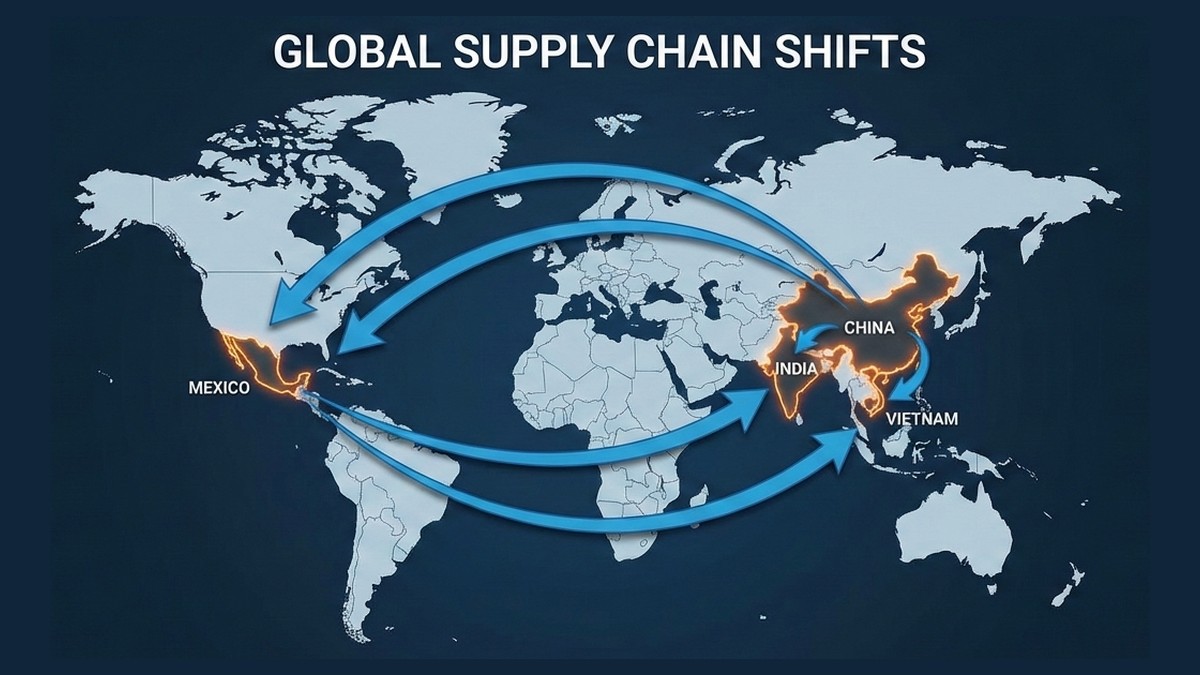
The COVID-19 pandemic, geopolitical tensions, transportation disruptions, raw material shortages, and changing trade policies have revealed the risks of concentrating pharmaceutical production in a limited number of countries or suppliers.
As a result, pharmaceutical companies are paying greater attention to supply chain diversification, regional manufacturing, local production, and alternative sourcing strategies. Instead of selecting CDMO partners based only on manufacturing costs, companies are placing more importance on delivery reliability, regulatory compliance, intellectual property protection, technology capabilities, and business continuity planning.
This transformation creates new opportunities for CDMO providers in Asia and other emerging manufacturing regions. However, biotechnology companies and CDMO providers seeking international business can no longer compete through low prices alone.
They must demonstrate that they can meet the quality and regulatory requirements of major markets such as the United States, the European Union, and Japan. They must also establish transparent supply chains, reliable delivery systems, and effective risk management procedures.
What Challenges Do Biotechnology Companies Face When Working with CDMOs?
Technology Transfer and Process Scale-Up Risks
Drug manufacturing processes developed in laboratories cannot always be directly transferred to large-scale production environments.
Differences in raw materials, equipment, production parameters, environmental conditions, and operator experience may affect product purity, stability, yield, and batch-to-batch consistency. These risks are especially significant for biologics and advanced therapies because their manufacturing processes are often highly sensitive.
Incomplete technical documentation or poor communication between biotechnology companies and CDMO partners may result in development delays, additional validation work, higher costs, or failed production batches.
Companies should therefore prepare comprehensive technology transfer packages that include process parameters, analytical methods, raw material specifications, quality standards, historical development data, and known process risks.
Unclear Quality Management Responsibilities
Outsourcing production does not eliminate the biotechnology company’s responsibility for product quality and regulatory compliance.
The biotechnology company and its CDMO partner must establish a formal quality agreement that clearly defines their respective responsibilities. The agreement should cover raw material management, production records, deviation investigations, change control, testing, product release, audits, complaints, recalls, and regulatory communication.
The U.S. Food and Drug Administration recommends using written quality agreements to define and document manufacturing responsibilities between companies involved in contract drug manufacturing.
Without clear responsibilities and communication procedures, quality problems may not be identified or resolved efficiently, increasing the risk of regulatory delays and supply interruptions.
Production Capacity and Scheduling Limitations
CDMOs with specialized capabilities may have limited production capacity. Facilities for sterile manufacturing, biologics production, antibody-drug conjugates, cell therapies, and gene therapies may need to be reserved months or even years in advance.
If biotechnology companies begin production planning too late, they may struggle to secure appropriate manufacturing slots for clinical trials or commercial launches.
Relying heavily on a single CDMO also creates concentration risk. Equipment failure, regulatory observations, quality problems, natural disasters, or geopolitical events affecting one production site could interrupt the entire product supply.
Companies should therefore forecast production requirements early and discuss long-term capacity needs with their manufacturing partners.
Intellectual Property and Data Security Risks
CDMO partnerships typically require biotechnology companies to share confidential information, including formulations, production parameters, analytical methods, product specifications, clinical material data, and technical knowledge.
Without appropriate confidentiality agreements, cybersecurity controls, data access policies, and intellectual property provisions, companies may face the risk of unauthorized disclosure or misuse of proprietary information.
Before selecting a CDMO, biotechnology companies should evaluate the provider’s data security systems, employee access controls, document management procedures, confidentiality policies, and previous compliance records.
How Can Biotechnology Companies Strengthen Their Global Competitiveness Through CDMO Partnerships?
Develop a Manufacturing Strategy During Early Drug Development
Biotechnology companies should not wait until late-stage clinical development to begin planning their manufacturing strategy.
Manufacturing feasibility, raw material availability, analytical requirements, equipment compatibility, process scalability, regulatory expectations, and future commercial demand should be considered during the early stages of product development.
By applying a design-for-manufacturability approach, companies can identify potential scale-up problems before they become expensive or time-consuming obstacles.
CDMO selection should also reflect the product’s development stage. Early-stage biotechnology companies may need flexible partners capable of rapidly developing and modifying processes. Products approaching commercialization require CDMOs with larger production capacity, stable supply networks, regulatory inspection experience, and established commercial manufacturing systems.
Select Partners with Integrated Service Capabilities
Some biotechnology companies divide process development, analytical testing, clinical material manufacturing, packaging, and commercial production among multiple suppliers.
Although this approach can provide flexibility, it may also increase communication costs, technology transfer risks, scheduling complexity, and quality management challenges.
A CDMO that offers integrated services from early process development through commercial production may reduce the number of technology transfers and improve development efficiency. Integrated project management can also help biotechnology companies maintain more consistent documentation and quality standards.
However, using an integrated CDMO does not mean that every activity must be assigned to the same provider. Companies should continue to evaluate alternative suppliers and maintain contingency plans for critical products.
Strengthen International Regulatory and Quality Capabilities
Biotechnology products intended for global markets must meet different regulatory requirements across the United States, Europe, Japan, and other regions.
A CDMO’s regulatory inspection history, quality management system, documentation practices, and experience supporting international submissions can directly affect a product’s approval and launch schedule.
Biotechnology companies should retain internal expertise in quality assurance, regulatory affairs, technical operations, and supplier management. They should not transfer all quality responsibilities to external manufacturers.
Regular audits, quality performance reviews, deviation monitoring, change control assessments, and corrective action follow-ups are necessary to ensure that manufacturing activities continue to meet regulatory expectations.
Improve Technology Transfer and Knowledge Management
Successful outsourcing depends on the biotechnology company’s ability to transfer technical knowledge clearly and systematically.
Companies should create standardized technology transfer procedures and maintain complete records of process development, analytical methods, critical quality attributes, critical process parameters, equipment requirements, and previous manufacturing results.
Cross-functional project teams involving research and development, manufacturing, quality assurance, regulatory affairs, supply chain, and commercial departments can improve communication with the CDMO.
Companies should also establish clear decision-making procedures, project milestones, escalation mechanisms, and performance indicators. These measures can reduce misunderstandings and help both parties resolve technical issues more efficiently.
Adopt Digital Manufacturing and Data Management Tools
Pharmaceutical manufacturing produces large volumes of equipment, environmental, production, laboratory, and quality data.
Digital tools such as Manufacturing Execution Systems, Laboratory Information Management Systems, electronic batch records, process analytical technologies, and real-time monitoring platforms can improve data transparency and manufacturing control.
Artificial intelligence and advanced analytics may also help companies identify process abnormalities, predict equipment problems, optimize production parameters, and improve product consistency.
When biotechnology companies and CDMOs share standardized digital data, both parties can monitor project progress more effectively and make faster decisions.
However, digital transformation must be supported by validated systems, reliable data governance, cybersecurity controls, and trained personnel. Technology alone cannot replace an effective pharmaceutical quality system.
Establish Multiple Suppliers and Backup Capacity
Supply chain resilience has become a major consideration in pharmaceutical manufacturing.
Biotechnology companies should assess whether critical raw materials, components, testing services, and manufacturing processes depend on a single supplier or location. For high-priority products, companies may consider qualifying secondary suppliers, identifying alternative raw materials, or establishing backup manufacturing capacity in another region.
A dual-source or multi-site strategy may increase initial investment and management complexity, but it can reduce the potential impact of factory shutdowns, logistics interruptions, regulatory problems, and geopolitical risks.
Companies should evaluate which products and manufacturing steps require backup capacity based on their commercial importance, replacement difficulty, lead time, and patient supply obligations.
Transform Outsourcing into a Strategic Partnership
The most valuable CDMO relationships extend beyond completing individual production orders.
Biotechnology companies and CDMOs can jointly participate in process optimization, risk assessment, cost reduction, capacity planning, regulatory preparation, and commercialization strategies.
Long-term cooperation agreements, dedicated production lines, reserved manufacturing capacity, and joint technology development programs can help both parties align their resources and expectations.
Through closer collaboration, the CDMO can better understand the customer’s product pipeline and future demand, while the biotechnology company can gain more stable access to production capacity and technical expertise
Clear communication and measurable performance indicators remain essential. Both parties should regularly review product quality, delivery performance, project timelines, costs, deviations, and improvement opportunities.
The Future CDMO Market Will Focus on Specialization and Technical Expertise
Competition in the CDMO industry is gradually shifting from cost and production capacity toward technology platforms, regulatory performance, development speed, flexibility, and global service capabilities.
Fields such as antibody-drug conjugates, cell and gene therapies, nucleic acid medicines, sterile products, high-potency active pharmaceutical ingredients, and complex biologics require specialized equipment and expertise. CDMOs with proven capabilities in these areas are more likely to establish differentiated competitive advantages.
Customers are also placing greater importance on digital transparency, supply chain resilience, and sustainable manufacturing. CDMO providers may need to improve energy efficiency, reduce manufacturing waste, optimize water consumption, and provide more detailed environmental and supply chain information.
Biotechnology companies should therefore evaluate potential partners based not only on their current production capabilities but also on their ability to support future technologies, regulatory requirements, and sustainability expectations.
CDMOs Are Becoming Essential Partners in Biotechnology Globalization
The continued expansion of the CDMO market reflects the pharmaceutical industry’s movement toward greater specialization, outsourcing, and international collaboration.
For biotechnology companies, CDMO partnerships can reduce capital investment, provide access to specialized technologies, accelerate product development, and support entry into global markets. However, outsourcing also introduces risks related to quality management, technology transfer, capacity availability, data protection, and supply chain dependence.
To strengthen global competitiveness, biotechnology companies should develop manufacturing strategies early, select partners with appropriate technical and regulatory capabilities, maintain strong internal quality management, adopt digital manufacturing tools, and establish resilient supply networks.
In the future, CDMOs will no longer function only as outsourced manufacturers. They will become strategic partners that help biotechnology companies transform scientific discoveries into commercially viable products and deliver innovative therapies to global markets.