Global Freight Transportation Trends Analysis
Photo by https://photo.urb2b.com/photo/#/shared_space/folder/75
Trend

Global Freight Transportation Trends Analysis

In recent years, the global freight market has continued to expand. In 2023, worldwide freight volume reached 11.6 billion tons, with maritime shipping still accounting for the largest share, while air and land transport have grown rapidly due to the rise of e-commerce. In the face of trends such as digitalization, automation, and low-carbon transportation, companies that leverage the latest transportation data and models will gain a competitive advantage and be better equipped to respond to future market changes.
Published: Aug 14, 2025
Global Freight Transportation Trends Analysis
Photo by https://photo.urb2b.com/photo/#/shared_space/folder/75

Global Freight Market Size and Growth

  • Market Size: The global freight market is valued at USD 2.739 trillion in 2024 and is projected to grow to USD 3.698 trillion by 2032, representing a compound annual growth rate (CAGR) of 2.7%.
  • Freight Volume: Global freight volume reached 11.61 billion tons in 2023 and is expected to grow to 14.72 billion tons by 2032.

Modes of Transportation and Trends

  1. Heavy and Specialized Transport
  2. This includes the transportation of large equipment such as construction cranes and wind turbines. Such shipments require specialized vehicles and permits and face both technical and regulatory challenges. Future trends include the adoption of autonomous vehicles and drones to improve efficiency and safety.

  3. Maritime Freight
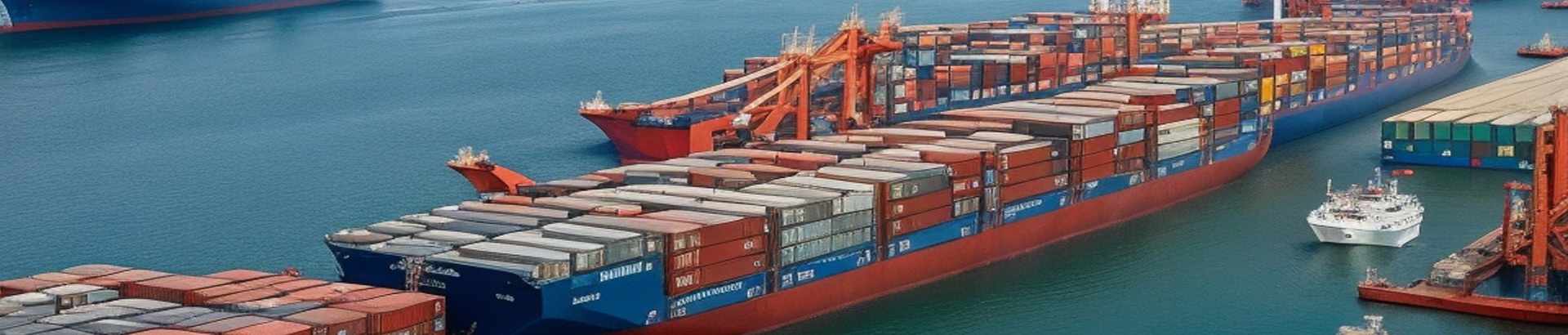
  4. Maritime shipping remains the primary mode for long-distance cargo transport. In 2023, global maritime freight volume reached 11.61 billion tons, with the Asia-Pacific region accounting for 40.48% of the market share.

  5. Air Freight
  6. Taking Hong Kong International Airport as an example, cargo volume is projected to reach 4.9 million tons in 2024, a 14.0% increase from 2023, with export freight rising by 20.2%.

  7. Land Freight
  8. The rise of e-commerce has increased demand for medium and heavy trucks, contributing to higher carbon emissions. For example, UPS has seen a 65% increase in deliveries since 2009.

Environmental and Digitalization Trends

  • Environmental Impact: Transportation accounts for approximately 15% of global emissions, driving the adoption of low-carbon freight solutions and electric vehicles as key measures for emission reduction.
  • Digitalization Applications: Integration of advanced technologies such as IoT, AI, and data analytics is transforming freight management, improving operational efficiency, and enhancing supply chain visibility.

Leading Freight Companies

Honour Lane Shipping (HLS)

    Founded in 2001 with headquarters in Hong Kong and branches in China, Taiwan, and Singapore, Honour Lane Shipping ranks as the 33rd largest global maritime freight forwarder, handling 402,000 TEU annually. The company specializes in shipping services from Asia to major global ports, offering maritime, air, warehousing, and supply chain management services while actively pursuing digital transformation to improve operational efficiency.

Kuehne+Nagel

    One of the world’s largest logistics companies, headquartered in Switzerland, Kuehne+Nagel handles over 4.3 million TEU annually. Its services cover maritime, air, land transport, and contract logistics, with more than 1,300 offices worldwide. The company emphasizes digitalization and automation to provide efficient and reliable logistics solutions.

Sinotrans Limited

    Sinotrans is one of China’s largest integrated logistics service providers, handling over 4.3 million TEU annually. Its business spans maritime, air, and land transport, warehousing, and supply chain management, with an extensive global network. Sinotrans actively expands its international market presence and continuously improves service quality and operational efficiency.

Conclusion

When selecting freight logistics partners, companies should consider global network coverage, professional capabilities, digitalization level, and service quality. Leading companies in international freight can provide efficient, reliable logistics solutions, meeting diverse business needs and supporting global trade growth.

Published by Aug 14, 2025 Source:Hlsholding

Further reading

You might also be interested in ...

Headline
Trend
Why RF Filters Matter More in Satellite Systems After 2026
As the global satellite communications industry continues to expand beyond 2026, competition is no longer defined only by the number of satellites in orbit. Buyers, project owners, system integrators, and engineering teams are now paying closer attention to link quality, interference control, spectrum efficiency, and long-term system reliability. In this context, RF filters are evolving from basic supporting components into critical decision points in satellite system design and procurement. Recent industry signals show that several forces are reshaping demand at the same time: the continued growth of LEO constellations, the development of 5G NTN, stronger expectations for resilient communications, and a more crowded spectrum environment. Together, these trends are increasing the strategic importance of RF front-end design, especially RF filters.
Headline
Trend
REACH, RoHS, And ESG: What Buyers Must Verify In Rubber Parts Suppliers
Global sourcing standards for rubber components have changed. Price, lead time, and dimensional accuracy are still important, but they are no longer enough on their own. Buyers now need clear proof that materials meet environmental requirements, production records can be traced, and supporting documents are available when needed. If a supplier cannot provide that visibility, the risk does not disappear—it simply moves downstream into qualification delays, shipment issues, customer complaints, or compliance failures.
Headline
Trend
Why Natural Stretch Fabrics Are Emerging as a New Textile Trend
As brands look for lower synthetic content, simpler material composition, and more responsible sourcing options, natural stretch fabrics are gaining attention across apparel development and textile supply chains.
Headline
Trend
Aluminum Forging in 2026: Market Growth, Key Applications and Buyer Considerations
Market Outlook, Key Applications, and Strategic Sourcing Considerations for Global Buyers
Headline
Trend
Sugar Reduction and Plant Based Beverage Reformulation: Why Soy Milk Powder Is Gaining Attention in 2026
How sugar reduction, plant based demand, and private label development are reshaping powdered beverage formulation in 2026
Headline
Trend
Commercial Vehicle Growth Is Lifting DOT Air Fitting Demand
Market Outlook, Procurement Priorities, and Supplier Evaluation for DOT Air Fittings in Commercial Vehicles
Headline
Trend
Robotic Coffee Arms in F&B Retail Why Automated Beverage Service Is Expanding
How robotic coffee arms are entering F&B retail as a practical format for consistency, uptime, and space efficiency
Headline
Trend
Pineapple Leaf Fiber Yarn Specifications: A Practical Guide for Textile Buyers
PALF yarn is a natural textile material made from agricultural by-products. This article explains its key properties, including fiber length, strength, moisture behavior, and blending performance. It also outlines practical considerations for textile manufacturing and sourcing, helping buyers evaluate its suitability for different production needs.
Headline
Trend
Why Beverage Powder Brands Are Looking Beyond Price When Choosing Manufacturing Partners
In a more volatile market, beverage powder brands are rethinking how they evaluate suppliers. Price still matters, but more companies are prioritizing stability, development support, and long-term manufacturing alignment.
Headline
Trend
How Rising Material Costs Are Changing Tracheostomy Tube Sourcing Trends
Rising costs are changing more than pricing expectations. They are also reshaping how the market evaluates supply continuity, product breadth, and long-term sourcing stability.
Headline
Trend
From Black Box to Data Hub: A Systems Perspective on Smart Tool Management
Smart Tool Management: From Passive Assets to an Intelligent Data Ecosystem
Headline
Trend
How ESG Is Reshaping Global Medical Manufacturing: Why Sustainable Materials Are Becoming an OEM/ODM Standard
The global push toward sustainability is transforming the medical manufacturing ecosystem. Medical OEM/ODM companies, healthcare brands, and hospital systems are increasingly incorporating ESG—Environmental, Social, and Governance—criteria into supplier selection and long-term sourcing strategies. In sectors where medical-grade plastic components and precision molding play a critical role, material sustainability, recyclability, and process transparency have quickly emerged as strategic decision factors.
Agree