Understanding Sealless Containment and Chemical Compatibility
Understanding Sealless Containment and Chemical Compatibility
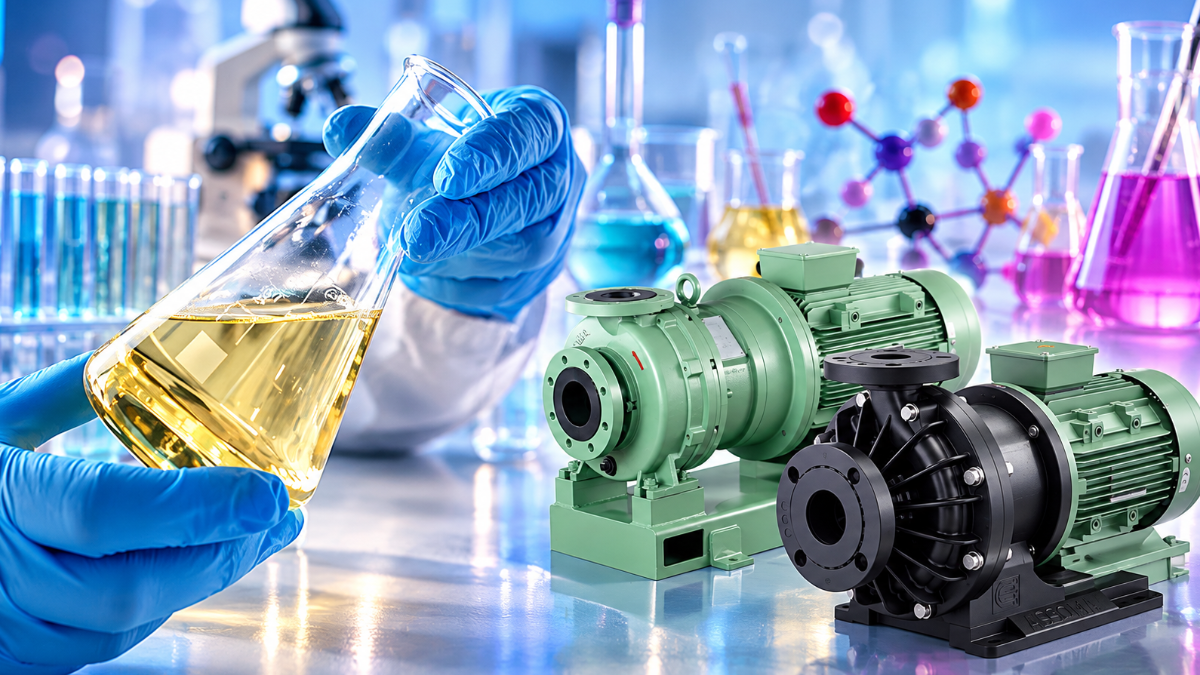
Chemical processors are rethinking pump selection as they work to reduce fugitive emissions, protect operators, and avoid costly product loss. A centrifugal magnetic drive pump can remove the rotating shaft seal, one common path for process-fluid leakage. That makes sealless designs worth considering for hazardous, volatile, or high-value liquids.
For teams comparing corrosion-resistant chemical pumps, selecting wetted materials for the complete process chemistry matters as much as eliminating the shaft seal.
The phrase “zero-emission pump,” however, needs a clear definition. A sealless pump can prevent routine leakage through a dynamic shaft seal under suitable operating conditions. It cannot guarantee that no liquid or vapor will ever escape from the pump, its static joints, connected piping, or the wider process. The most useful buying question is therefore not “Is it zero-emission?” but “Which leak path does this design remove, and what risks remain in my service?”
Key takeaways
- A magnetic drive pump transfers torque through a containment shell, so it does not need a dynamic shaft seal as its primary containment device.
- Sealless construction can reduce a recurring leak path, but it does not eliminate every possible release or replace the plant’s inspection, maintenance, and emergency-response procedures.
- Chemical compatibility, minimum flow, liquid lubrication and cooling, and dry-running protection are central to reliability.
- Buyers should compare full life-cycle cost, including electricity, maintenance, monitoring, downtime, and the cost of lost or released product.
What does “zero-emission pump” mean in chemical processing?
In a conventional centrifugal pump, a rotating shaft passes through the pump casing. A mechanical seal or packing is used at that point to limit leakage. Seals can wear, lose flush, run dry, or fail as operating conditions change. A magnetic drive pump transfers power from the motor to the impeller through magnets across a stationary containment shell. Because the rotating assembly stays inside the pressure boundary, the pump does not need a dynamic shaft seal.
When evaluating a sealless pump, ask the supplier to identify the primary containment boundary, the static sealing points, and any secondary containment or leak-detection options. This gives the project team a practical basis for review without assuming that “sealless” means “nothing can leak.”
The remaining release paths matter. Static gaskets and O-rings can age or be installed incorrectly. A containment shell can be damaged or corrode if the material is wrong. Piping connections, drains, vents, sampling points, and downstream equipment can also leak. A magnetic drive pump reduces the risk associated with one important interface; it is not a substitute for a complete containment plan.
For this reason, “zero-emission” is best treated as a design goal or market shorthand, not an absolute guarantee. When setting a specification, state the actual target: for example, eliminate routine emissions through the pump shaft seal, reduce maintenance interventions on a specific service, or meet a documented leakage-monitoring requirement.
Why chemical plants are considering sealless pumps
The shift is driven by several operating concerns at once. A process leak can expose workers, release a hazardous or volatile liquid, contaminate a work area, waste product, and trigger cleanup or production downtime. A sealless design can remove the rotating shaft-seal leak path, while the plant’s own inspection, maintenance, and emergency-response procedures continue to cover the rest of the equipment and piping.
The business case can extend beyond compliance. If a pump handles a toxic solvent, concentrated acid, or expensive intermediate, avoiding a seal failure may reduce exposure risk, product loss, cleanup work, and unscheduled maintenance. These benefits are application-specific: the value depends on what the pump handles, how often it runs, the history of seal problems, and the cost of an interruption.
Energy use also belongs in the discussion. A pump can lower leak risk while still wasting electricity if it is oversized, operates far from its best-efficiency point, or throttles flow for long periods. “Zero-emission” should not be used as a synonym for “low-carbon.” The motor, pump hydraulics, operating schedule, and electricity source all affect the system’s energy-related emissions.
Which pump design fits a chemical duty?
Sealless pumps are not the only way to control leakage. Mechanical-seal systems, canned-motor pumps, and positive-displacement pumps may be better for some duties. The table below is a first-pass comparison for a selection discussion; the final choice depends on fluid properties, pressure, flow, temperature, and site practices.
| Pump approach |
How it contains the process fluid |
Where it may fit |
Main questions for the buyer |
| Sealless centrifugal magnetic drive pump |
Transfers torque through a containment shell without a dynamic shaft seal |
Continuous transfer of compatible, relatively clean liquids where routine seal leakage is a concern |
Can the pump stay flooded and within its minimum-flow, temperature, viscosity, and solids limits? |
| Centrifugal pump with a single mechanical seal |
Uses a mechanical seal around the rotating shaft |
General services where seal maintenance is manageable and leakage controls are suitable |
What is the seal life, flush plan, leak history, and consequence of a failure? |
| Centrifugal pump with a dual seal system |
Uses two seals with a pressurized barrier or buffer arrangement |
Higher-consequence services where a monitored seal-support system is acceptable |
Is the support system reliable, monitored, and maintained, and how is barrier fluid managed? |
| Canned-motor pump |
Places the rotor inside a sealed motor containment barrier |
Selected services that benefit from a compact sealless arrangement |
Can the motor and wetted parts meet the fluid, heat, and service requirements? |
| Diaphragm or other positive-displacement pump |
Moves a measured volume using a reciprocating or rotating displacement mechanism |
Low-flow, viscous, shear-sensitive, or solids-bearing duties when the selected design allows them |
Are pulsation, pressure relief, flow control, and diaphragm or rotor compatibility acceptable? |
No row is automatically the safest or most efficient choice. Match the pump design to the process data, operating limits, maintenance capability, and consequences of a failure. Ask suppliers to explain the design basis and identify any limits that affect the specified duty.
How to select a centrifugal magnetic drive pump
The most dependable selection starts with the process data sheet, not the pump label. A centrifugal magnetic drive pump needs to match the actual liquid and operating envelope. A mismatch can shorten bearing life, reduce flow, overheat the containment area, or stop the pump from delivering the required duty.
1. Describe the liquid as it will actually be pumped
Provide the full chemical composition and concentration, including expected changes during startup, shutdown, cleaning, or batch transitions. Record normal and upset temperatures, viscosity, specific gravity, vapor pressure, solids content and size, crystallization risk, and any tendency to polymerize or gas off. “Acid service” or a trade name alone is not enough to confirm compatibility.
Check every wetted component, not just the casing. The impeller, internal bearings, containment shell, gaskets, O-rings, and any lining all contact the fluid or its vapor. A polymer lining can offer corrosion resistance, but it is not a universal solution: temperature, permeation, pressure, thermal cycling, and mechanical shock can change what is suitable. Ask the pump supplier to confirm the materials against the complete chemistry and operating range.
2. Confirm the hydraulic duty and the suction conditions
State the required flow and total dynamic head across the real system curve, including normal variations and the minimum and maximum operating cases. Confirm net positive suction head available (NPSHa) at the pump inlet and compare it with the pump’s required NPSH (NPSHr) with an agreed margin. Poor suction conditions can cause cavitation, noise, vibration, and damage.
Also check whether the pump will run continuously, intermittently, in parallel, or at changing flow. Ask for the pump curve and efficiency data at the expected operating point. A right-sized pump that runs near its efficient range may save more energy than a nominally high-efficiency model selected for the wrong duty.
3. Understand the lubrication and cooling path
Many magnetic drive pumps use the pumped liquid to lubricate internal bearings and carry away heat. That design makes operating discipline important. Dry running, loss of prime, a blocked line, or operation below the required minimum flow can overheat internal parts. Viscous liquid, solids, gas entrainment, crystallization, or an unsuitable temperature may also challenge the internal circulation path.
Ask what protection is available for dry running, low flow, high temperature, or magnetic decoupling, and decide whether the application needs sensors or interlocks. Confirm startup, shutdown, flushing, venting, and restart steps with the supplier. If solids are present, specify their concentration, hardness, and size instead of assuming the pump can pass them.
4. Check containment and failure response
“No dynamic shaft seal” narrows the leak risk, but buyers still need to understand the pump’s primary containment shell, static seals, and any secondary containment or detection options. Ask what indication appears if the containment boundary is damaged, how the pump should be isolated, and whether the process design includes a safe collection or drain route.
The operating plan should cover inspection, vibration or temperature trends, and the response to alarms. In services with toxic or volatile fluids, connect pump alarms and isolation steps to the site’s process-safety procedures. A sealless design does not remove the need to inspect the pump, static joints, and connected equipment.
5. Compare total cost and emissions over the service life
Purchase price is only one part of the decision. Estimate the life-cycle cost using energy, maintenance labor, seals or spare parts, monitoring, lost product, waste handling, downtime, and installation. For energy, begin with measured input power and operating hours:
Annual electricity use (kWh) = measured pump-system power (kW) × annual operating hours
Then apply the site’s electricity tariff and, if needed, the applicable grid emissions factor to estimate operating cost and energy-related emissions. Compare alternatives at the same flow and head. Include the cost of seal-support systems for a dual-seal pump and the cost of containment monitoring or additional maintenance for any sealless option.
To estimate the emissions benefit, use the facility’s own leak and maintenance records. Compare the previous pump’s seal leaks, repair events, product loss, and monitoring results with the new pump’s recorded performance. Do not attribute all site VOC reductions to a pump replacement: valves, connectors, vents, and other equipment remain part of the emissions inventory.
A practical procurement checklist
Before issuing a purchase order, the owner, process engineer, maintenance lead, and environmental or safety team can align on the following:
- What chemical composition, concentration, temperature range, and upset conditions will the pump see?
- What are the required flow, head, operating points, duty cycle, and NPSHa?
- Which wetted materials, lining, containment shell, bearings, and static seals are compatible?
- What minimum flow and liquid properties are needed for internal lubrication and cooling?
- What failure modes need alarms, dry-run protection, secondary containment, or automatic isolation?
- What performance tests, hazardous-area documents, and operating instructions does the project require?
- What service, spare parts, training, and repair support are available at the plant’s location?
- How will the team measure energy use, leaks, downtime, and maintenance before and after installation?
Before ordering, align the project data sheet, required flow and head, material selection, test records, and operating limits. Ask each supplier to confirm these details in writing and to identify any proposed deviations clearly.
How to move from a leak problem to a pump upgrade
Start with a focused review rather than replacing every pump in the unit. Rank pumps by leak history, fluid hazard, product value, downtime impact, and annual operating hours. Review maintenance records and inspection notes to identify chronic seal failures or repeated exposure concerns.
Next, select one suitable service for a pilot. Record the baseline: flow and head, electrical power, seal repairs, leak observations, inspection and maintenance activity, downtime, and product loss. Confirm that the new pump can meet the duty and operating limits, then define what success means before installation. Useful measures may include fewer seal-related work orders, no routine shaft-seal leak reports, lower total maintenance hours, or an agreed energy use at the required duty.
After startup, verify performance under normal and off-design conditions. Train operators to recognize dry-running risk, abnormal temperature or vibration, and changes in flow. Keep the material compatibility record, pump curve, operating limits, and maintenance instructions with the asset documentation. This turns a pump change into a repeatable process improvement rather than a one-time equipment purchase.
Where ASSOMA fits
ASSOMA INC. manufactures sealless centrifugal magnetic drive pumps and related chemical-handling products. Its product information describes plastic and lined pump options for corrosive and hazardous chemical service. Buyers evaluating the company should match a specific model’s materials, curve, temperature and pressure limits, and operating requirements to their own duty; a general product category is not a substitute for that review. ASSOMA pump range · ASSOMA chemical-industry applications
ASSOMA also describes application support that includes pump selection and performance testing. As with any supplier, purchasers can request the applicable technical data, material confirmation, test records, service arrangements, and written clarification of any deviations from the project specification.
For a project-specific discussion, inquire about ASSOMA with the liquid composition, concentration, temperature range, flow, head, and operating schedule. These details help determine whether a sealless centrifugal pump is suitable and what additional protection the installation may need.
Frequently asked questions
1. Is a magnetic drive pump truly zero-emission?
Not in an absolute sense. It removes the dynamic shaft seal as a routine leakage path, but static seals, the containment shell, piping, and other process equipment can still release fluid. Define the target as reducing or eliminating a specific leak path under specified conditions.
2. Can a centrifugal magnetic drive pump handle any chemical?
No. Compatibility depends on the complete liquid composition, concentration, temperature, pressure, and wetted materials. Solids, high viscosity, crystallization, gas entrainment, dry running, or operation outside the pump curve may also limit service.
3. Does a sealless pump remove the need for inspection?
No. Static seals, the containment shell, and connected piping can still require inspection and maintenance. Follow the pump’s operating instructions and the plant’s process-safety procedures.
4. When is a dual mechanical seal a better choice?
A dual-seal arrangement may suit a duty that needs a managed barrier-fluid system or falls outside a magnetic drive pump’s hydraulic or material limits. Compare the complete seal-support system, monitoring, utilities, maintenance, and failure response with the sealless alternative.
5. What should buyers compare besides purchase price?
Compare energy at the required duty, maintenance and spare parts, leak history, product loss, monitoring, installation, downtime, and local service support over the expected service life.