Learn what buyers should check when importing a vertical knee milling machine, including EU CE requirements, U.S. OSHA and NRTL considerations, machine guards, emergency stops, customs documents and pre-shipment inspections.
Importing a vertical knee milling machine is a major purchasing decision. The machine must suit the work, fit the installation site and meet the safety and documentation requirements of its destination market. A missed detail such as a mismatched electrical configuration, a guard omitted from the final order or incomplete paperwork can lead to installation delays, extra costs or corrective work after delivery.
The key is to check the machine as it will actually be supplied. A CE mark, UL mark or certificate may cover a particular product, panel or configuration. Buyers should confirm what was evaluated, which model and options are included, and whether the delivered machine matches that evidence.
Why safety compliance should be checked before ordering
A vertical knee milling machine has a rotating cutter and spindle, moving table and knee, and electrical and drive components. During setup and machining, operators may work close to the cutting area. Potential hazards include contact with the cutter, entanglement in rotating parts, ejected workpieces or chips, and unexpected movement during adjustment or maintenance.
These hazards affect more than workplace safety. They also influence procurement, installation and customs preparation. If the buyer discovers late that the machine needs a different guard, a local electrical evaluation or revised documentation, the project may require new parts, inspection, translation or engineering work.
Before placing an order, buyers should align four things:
- The machine: exact model, voltage, frequency, phase, accessories and safety configuration.
- The destination market: applicable machinery and workplace rules, plus any local electrical acceptance requirements.
- The evidence: declarations, manuals, wiring diagrams and product-specific certificates or reports.
- The delivery file: commercial and transport documents that match the machine being shipped.
This early review helps the buyer distinguish product compliance from site readiness. A machine can have the right paperwork and still need site-specific installation checks; a shipment can clear customs without that clearance proving the machine is ready for safe use.
What CE compliance means for a vertical knee milling machine in the EU
CE marking is the manufacturer’s declaration that a product meets the applicable EU requirements. It is not a general quality award, and buyers should not assume that every CE-marked component makes the entire machine compliant.
For machinery placed on the EU market before 20 January 2027, the Machinery Directive 2006/42/EC is the main machinery framework. From 20 January 2027, Regulation (EU) 2023/1230 applies and replaces that Directive. For a purchase that may be delivered or placed on the market around the transition date, buyers should confirm which rules apply to the specific machine and timing. The order date alone may not settle that question.
For a complete machine, the manufacturer’s conformity work generally includes a risk assessment, appropriate protective measures, technical documentation, instructions, a conformity assessment, an EU Declaration of Conformity (DoC) and CE marking. The importer should check that the declaration identifies the actual machine—such as its model or type—and that the machine is supplied with the required instructions and safety information for the destination market.
The technical file does not usually need to be handed to every buyer in full. However, the manufacturer must be able to make the required documentation available to market surveillance authorities when requested. Buyers can ask the supplier to confirm that the file exists, who is responsible for providing it and how the delivered machine configuration is covered.
Harmonised standards can help demonstrate conformity with the essential health and safety requirements they address. Standards relevant to machinery risk assessment, guards and emergency stops include ISO 12100, ISO 14120 and ISO 13850. ISO 16090-1 addresses safety requirements for milling machines within its scope. The applicable standard depends on the machine type and intended use. For CE purposes, confirm the current reference and status in the European Commission’s harmonised standards information; an ISO or EN standard is not automatically harmonised just because it is relevant to machine safety.
A notified body is not automatically required for every vertical knee milling machine. The conformity assessment route depends on the machine category and applicable legislation. Ask the manufacturer to identify the procedure used and explain whether any third-party assessment applies to the specific model.
What U.S. buyers should know about OSHA, UL and NRTL approval
The United States does not use CE as its general machinery approval mark. OSHA requirements address workplace safety, and OSHA’s general machine-guarding rule, 29 CFR 1910.212, specifically lists milling machines among the machines that may require point-of-operation guarding. Employers are responsible for ensuring workplace equipment is used safely and meets applicable rules.
UL is a safety testing and certification organization. OSHA recognizes UL LLC as a Nationally Recognized Testing Laboratory (NRTL) within a defined scope. Other NRTLs also exist. OSHA requires NRTL approval for certain equipment in specific circumstances, including some electrical equipment, but this does not mean every imported milling machine universally needs the same whole-machine listing.
The buyer should ask whether the machine, its electrical equipment or its control panel needs NRTL approval for the intended installation. The answer may depend on the applicable OSHA provision, electrical code, authority having jurisdiction (AHJ), buyer specification and facility requirements. Ask for the certification file or listing details, then check that the mark applies to the product, model, standard and configuration being supplied.
A panel certification deserves particular care. UL 508A covers industrial control panels. A UL 508A label on a panel does not, by itself, demonstrate that the complete milling machine—including the connected motor, mechanical guards and other equipment—has been evaluated. If the site requires a machine-level evaluation, a panel-only mark may not meet that requirement.
For manual milling machines, ANSI B11.8 is a relevant U.S. machine-tool safety standard. For electrical installation, the buyer may also need to check applicable national, state or local electrical requirements and the facility’s preferred standard for industrial machinery. Confirm the standard editions and acceptance criteria with the project’s safety or electrical authority before shipment.
How guards and emergency stops should be assessed
A guard is effective only if it controls access to a real hazard without creating another hazard or making routine work impractical. The right arrangement depends on the machine’s design, the tasks performed and the risk assessment. A buyer should inspect both the standard configuration and every option that will be installed.
The table below gives common safety features to discuss with the manufacturer. It is a practical review guide, not a universal parts list: the required design and placement depend on the applicable rules and machine-specific risk assessment.
| Safety feature |
What buyers should check |
Why it matters |
| Cutter and spindle guard |
Whether the guard limits access to the cutting area while allowing the operator to see and position the work |
Reduces the risk of contact with the rotating tool and helps contain chips |
| Belt, gear and drive covers |
Whether fixed covers are present and can only be removed for service using the intended procedure |
Helps prevent contact with rotating or pinch-point hazards |
| Movable guards and interlocks |
Where access doors are used, whether the interlock stops or prevents hazardous motion when opened |
Prevents operation when access to a hazard is open, where the risk assessment requires it |
| Workholding and table travel |
Whether the workpiece can be clamped securely and the table’s full travel avoids collisions or trapping points |
Helps reduce ejection, crush and pinch risks |
| Emergency stop |
Whether the operator can reach the device from the normal operating position and whether it latches until deliberately reset |
Provides a quick way to initiate an emergency stop; it does not replace guards |
| Electrical isolation |
Whether the main disconnect is accessible, identified and suitable for the machine’s power supply |
Supports safe isolation for maintenance and servicing |
| Labels and instructions |
Whether warnings, operating instructions and maintenance information are clear and suitable for the destination market |
Helps operators understand safe operating limits and residual risks |
Emergency-stop buttons are often red with a yellow background, but color alone does not show that the safety function is adequate. The button should be accessible without reaching across the cutter or another danger zone. Its effect, location and number should follow the machine’s risk assessment and applicable standards. Resetting an emergency stop should not, by itself, restart the spindle.
An emergency stop also does not isolate all energy. It should not be treated as a substitute for the disconnecting means or the site’s lockout/tagout procedure during maintenance, cleaning or tool changes. Buyers should ask the supplier to explain how the stop function works and how energy is isolated before servicing.
A procurement checklist for suppliers
A written checklist helps keep the machine specification, compliance documents and delivered configuration aligned. The questions below can be included in a quotation request or purchase specification.
| Procurement question |
Evidence to request |
| Which regulations and standards were used for the target market? |
A written list of applicable legislation and standards, with editions where available |
| Does the declaration identify the exact machine? |
The EU DoC, where applicable, showing the machine model or type and matching the order |
| What safety features are included in this quote? |
A final configuration list covering guards, switches, stops and optional accessories |
| What power supply does the machine require? |
Voltage, frequency, phase, current and wiring information for the ordered model |
| What has a UL or NRTL mark evaluated? |
The relevant listing or certification details, including scope, product category and model |
| Which instructions will arrive with the machine? |
Operating, installation, maintenance and safety information in the required language |
| What will be checked before shipment? |
A written inspection or functional-check record for the ordered configuration |
Review the answers before finalizing the purchase order. If a guard, switch, control panel or power option is optional, make clear whether it is included. A catalog description may not show which accessories will be supplied with a particular quote.
Customs clearance and compliance checks in practice
Customs clearance and product-safety compliance are related parts of an import project, but they answer different questions. Customs procedures deal with matters such as classification, customs value, origin, duties, taxes and import formalities. Product-safety rules address whether the machine may be placed on the market or used under the applicable rules.
For each shipment, the importer and customs broker should confirm the likely tariff classification for the exact machine, its country of origin, declared value and required import documents. The commercial invoice, packing list and transport documents should describe the same model and shipment quantities. If the machine has accessories packed separately, identify them consistently so the declared goods and physical cargo can be reconciled.
A separate compliance file makes an inspection easier. Depending on the destination and transaction, it may include:
- The order specification and final machine configuration.
- The EU DoC and CE information, where applicable.
- Product-specific NRTL or other certification details, if required by the site or authority.
- Manuals, wiring diagrams, risk-assessment information and test records agreed with the supplier.
- Model and serial number records, nameplate photographs and pre-shipment inspection photographs.
- The commercial invoice, packing list, bill of lading or other transport document, and origin documents if required.
Before shipment, conduct a document-to-machine review. Compare the model and serial number, electrical data, guards, control equipment and accessories against the purchase order, declaration and certification records. A photograph of a label is useful only if it can be tied to the actual machine and does not stand in for scope documentation.
When the machine arrives, record the crate condition and compare the received machine with the approved configuration before installation. Check the nameplate, power supply, guards, switches, emergency stop and manuals. If local rules or the facility require inspection, arrange it before operation. Customs release alone should not be treated as confirmation that all product-safety, electrical and workplace requirements have been met.
Common sources of avoidable delay include an invoice description that does not match the machine, a declaration for a different model, missing destination-language instructions, an electrical configuration that does not match the site, or a certification mark whose scope covers only a panel or component. Confirming these points before the machine is packed is usually simpler than resolving them at the port or during commissioning.
What buyers can confirm with TOP-ONE MACHINERY
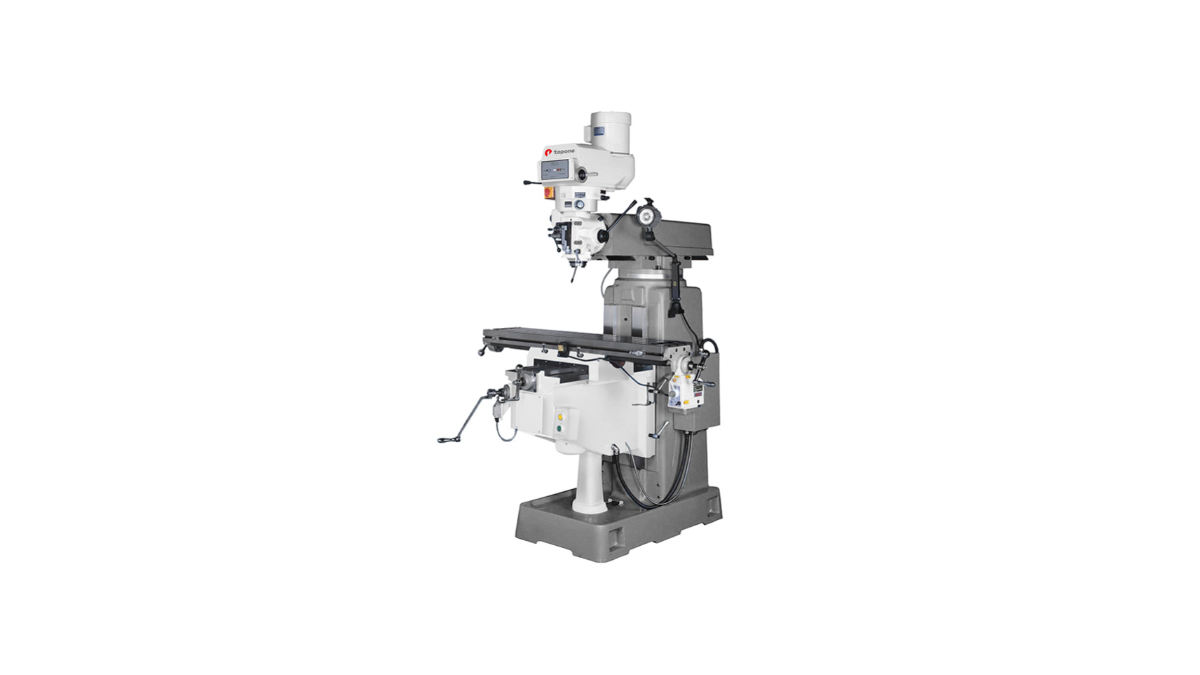
TOP-ONE MACHINERY CO., LTD. lists multiple models in its manual vertical knee milling machine range. When evaluating any supplier’s machine, buyers should match the selected model and options to their installation and target-market requirements, then request model-specific compliance information.
For a vertical knee milling machine quote, useful details to send include the destination country, required power supply, intended use, preferred guard and control configuration, and any written requirements from the plant or local authority. These details help the manufacturer respond to the actual machine and site under review. A product listing alone does not establish that every model or optional configuration carries the same destination-market certifications.
To discuss product compliance documents or certification scope, Inquire about TOPONE product compliance and certifications.
Frequently asked questions
1.Does a CE mark mean that a machine has been independently tested?
Not necessarily. CE marking is the manufacturer’s declaration that the product meets applicable EU requirements. The conformity assessment route depends on the machine category and legislation. Ask for the DoC and the basis for the assessment; do not assume that every machine has a third-party test certificate.
2.Does a vertical knee milling machine need a UL mark to enter the United States?
There is no single answer for every installation. OSHA requires NRTL approval for certain equipment in specific circumstances, and buyers or local authorities may have additional acceptance requirements. Confirm the requirement for the machine and its electrical equipment with the site’s safety or electrical authority.
3.Is a UL 508A label enough to show that the whole machine is certified?
No. UL 508A applies to industrial control panels. A panel label does not, by itself, establish that the connected machine has been evaluated as a complete unit. Check the product category, model and certification scope.
4.Does an emergency stop replace a machine guard?
No. An emergency stop helps initiate a stop when an emergency occurs. It does not prevent normal access to a cutting hazard and should not be used as a substitute for appropriate guards. It also does not replace energy isolation for maintenance.
5.Does customs release prove that an imported machine complies with safety rules?
No. Customs release addresses import formalities and applicable customs controls. Product compliance, workplace safety and site acceptance may require separate documents and checks.