CNC Swiss-type lathes deliver the precision and production efficiency medical components demand.
The medical device industry operates under some of the most stringent quality and safety standards of any manufacturing sector globally. From tiny bone screws and dental implants to complex components for endoscopes and cardiovascular delivery systems, the parts used in modern medicine demand absolute perfection. A single micro-level deviation can lead to component failure, compromised patient safety, and devastating regulatory consequences.
For manufacturing engineers, machine shop owners, and procurement specialists, the challenge is twofold: how to consistently achieve sub-micron accuracy on incredibly complex, slender parts, and how to do so at a cost-effective, scalable production rate.
The answer increasingly lies in CNC Swiss-type lathes. Originally developed for the Swiss watchmaking industry to produce tiny, intricate gears, Swiss lathe technology has evolved to become the backbone of modern medical device manufacturing. This article explores the unique demands of medical machining, details how Swiss lathes solve these critical challenges, and provides a comprehensive guide to optimizing your production floor for these high-value components.
The High-Stakes Demands of Medical Device Machining
To understand why CNC Swiss lathes are so critical, we must first examine the unique metallurgical and geometric challenges inherent in medical component manufacturing.
1. Complex Geometries and Micro-Sized Components
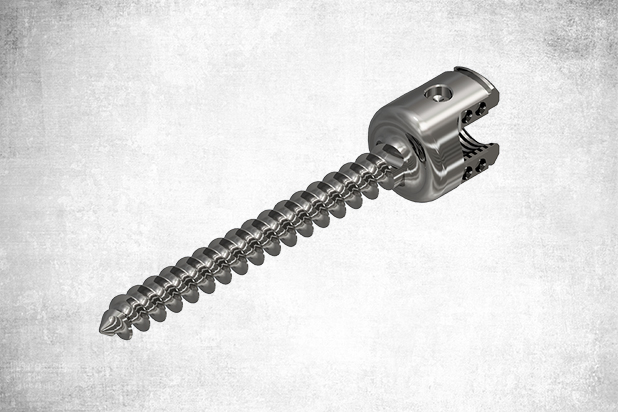
Many medical implants and instruments are exceptionally small. Bone screws, for example, must feature precise thread profiles, cannulated (hollow) centers, and custom drive heads (such as Torx or hex) to allow surgeons to implant them securely. Dental implants require complex, micro-textured surfaces and precise internal geometries to facilitate osseointegration (bonding with the bone). Machining these features on parts that are often less than 2mm in diameter requires specialized toolpath control and extreme machine rigidity.
2. Difficult-to-Machine Biocompatible Materials
Medical devices must be biocompatible, corrosion-resistant, and capable of withstanding the harsh environment of the human body. As a result, manufacturers rely on high-strength, exotic materials, including:
* Titanium (Grades 5 and 23 / Ti-6Al-4V): Highly valued for its strength-to-weight ratio and biocompatibility, but notorious for high tool wear and heat generation during machining.
* Cobalt-Chrome (CoCr): Extremely hard and wear-resistant, making it ideal for joint replacements but incredibly difficult to cut.
* Stainless Steels (316L, 17-4 PH, 455): Commonly used for surgical instruments and structural components; requires rigid setups to prevent work hardening.
* PEEK (Polyetheretherketone): A high-performance thermoplastic used in spinal implants. While easier to cut than metal, it is highly sensitive to thermal deformation and burr formation.
These materials demand high cutting forces, precise thermal management, and exceptional machine stability to prevent tool breakage and surface finish degradation.
3. Surface Integrity and Zero-Defect Tolerances
In medical manufacturing, a rough surface finish is more than just an aesthetic flaw; it can act as a breeding ground for bacteria or cause premature mechanical failure due to stress concentration. Tolerances of $\pm 0.005 \text{ mm}$ (5 microns) or tighter are commonplace. Additionally, parts must be entirely burr-free. Manual deburring is highly discouraged because it introduces human error and inconsistency into a validated medical manufacturing process.
The Mechanics of Swiss-Type Lathes: Why They Excel at Slender Parts
Conventional CNC lathes rotate the workpiece while the cutting tool moves along the X and Z axes. While highly effective for short, thick parts, this configuration struggles when machining long, thin components. As the tool pushes against a slender workpiece, the material naturally bends or deflects away from the tool. This deflection causes dimensional inaccuracies, taper errors, and poor surface finishes.
CNC Swiss lathes solve this fundamental physics problem through a revolutionary design feature: the sliding headstock and guide bushing.
How the Guide Bushing Eliminates Deflection
In a Swiss-type lathe, the bar stock is held securely within a chuck inside the headstock, which slides along the Z-axis. The material feeds forward through a high-precision guide bushing.
The critical differentiator is that all cutting action takes place immediately adjacent to the guide bushing (usually within 1mm to 2mm of support).
Because the material is supported right at the point of cut, structural deflection is virtually eliminated. This allows manufacturers to machine incredibly long, thin parts with high length-to-diameter (L/D) ratios—often exceeding 20:1 or even 30:1—without the workpiece bending, vibrating, or whipping.
Comparing Conventional CNC Lathes and CNC Swiss Lathes
To help procurement and operations managers make informed capital equipment decisions, the table below highlights the core performance differences between these two machine architectures when applied to medical-grade components:
| Feature / Metric |
Conventional CNC Lathe |
CNC Swiss-Type Lathe |
| Primary Support Mechanism |
Chuck or collet at one end; optional tailstock/steady rest. |
Sliding headstock with a supportive guide bushing. |
| Max Length-to-Diameter (L/D) Ratio |
Typically limited to 3:1 or 4:1 without support. |
Easily handles 20:1 to over 30:1 ratios. |
| Deflection & Vibration Risk |
High on long, slender parts; leads to taper errors. |
Extremely low; cutting forces are supported by the bushing. |
| Surface Finish (Ra) |
Moderate; susceptible to chatter marks on thin profiles. |
Exceptional (often under 0.4 $\mu\text{m}$); highly stable. |
| Secondary Operations |
Often requires moving parts to a milling machine. |
Done in-machine via sub-spindles and live tooling. |
| Ideal Medical Applications |
Large orthopedic joint cups, housing components. |
Bone screws, dental implants, distal tips, guide pins. |
The comparison above demonstrates how the physical architecture of a Swiss lathe inherently resolves the geometric limitations that conventional turning centers face when processing long, micro-diameter components.
Technical Advantages: How Swiss Lathes Optimize Medical Machining
Beyond eliminating part deflection, modern CNC Swiss-type lathes incorporate several advanced engineering features that make them uniquely suited for the medical device industry.
                  [ BAR FEEDER ]
                        │
                        ▼
             [ SLIDING HEADSTOCK (Z1) ]
                        │
                        ▼
               [ GUIDE BUSHING ] ◄─── [ Cutting Tool cuts right here ]
                        │              (Zero Deflection Zone)
                        ▼
               [ COMPLETED PART ]
1. Superior Surface Finishes and Dimensional Stability
Because the cutting zone is located directly next to the guide bushing, the workpiece experiences maximum rigidity. This rigidity minimizes microscopic vibrations (chatter), which are the primary cause of poor surface finishes.
When machining titanium bone screws, a Swiss lathe can consistently achieve mirror-like surface finishes (low $R_a$ values) straight out of the machine. This reduces or entirely eliminates the need for secondary polishing processes, speeding up the production cycle and lowering the cost per part.
2. Elimination of Secondary Setups (Done-in-One)
Medical parts are rarely simple turned pins; they usually require cross-drilling, milling, slotting, and back-working.
Modern Swiss lathes feature a main spindle and an independent sub-spindle (or pick-off spindle), along with extensive live tooling capabilities (motorized rotary tools).
* While the main spindle is machining the front features of a bone screw (such as the threads and point), the sub-spindle can grab the finished end of a previous part and perform back-working operations (such as drilling out a cannulated center or milling a drive slot).
* Once completed, the sub-spindle ejects the finished part into a parts catcher, and the cycle continues uninterrupted.
This "done-in-one" capability eliminates the need to manually transfer parts to a secondary milling machine. Reducing human handling not only slashes labor costs but also eliminates the risk of damage, contamination, and alignment errors associated with multiple setups.
3. Advanced Thread Whirling for Bone Screws
One of the most impressive technologies utilized on Swiss lathes in medical manufacturing is thread whirling.
Bone screws often feature deep, specialized, coarse thread profiles (such as buttress or variable-pitch threads) designed to grip human bone securely. Trying to cut these threads using standard single-point turning tools is slow, puts high stress on the material, and often results in poor thread quality.
Thread whirling involves a specialized attachment mounted on the Swiss lathe's tool post. This attachment features a high-speed rotating ring lined with multiple custom-ground carbide inserts. The ring rotates around the bar stock at a high velocity while the bar slowly rotates and feeds through.
Benefits of Thread Whirling:
* Single-Pass Machining: The entire depth of the thread is cut in a single pass, drastically reducing cycle times.
* Better Surface Finish: The orbital motion of the whirling head produces clean, burr-free thread flanks.
* Extended Tool Life: Cutting forces are distributed across multiple inserts, extending tool longevity when cutting tough alloys like Titanium Grade 5.
Maximizing Efficiency: Multi-Axis Simultaneous Machining
In high-volume medical manufacturing, every second saved per part translates to thousands of dollars in increased profitability over a production run. CNC Swiss lathes achieve ultra-low cycle times through multi-axis configuration and simultaneous machining.
Multi-Axis Architecture
While a standard lathe has 2 axes (X and Z), high-end Swiss-type lathes can feature 7, 8, 9, or even more axes of motion. These axes control:
* The Main Spindle (Z1, X1, Y1, C1): For primary turning, milling, and indexing.
* The Sub-Spindle (Z2, X2, Y2, C2): For pick-off and back-end machining.
* The Tool Posts and B-Axis: For angular drilling and contour milling.
Overlapping Cycles and Tool Path Optimization
With a multi-axis CNC Swiss lathe, the control system can execute multiple operations at the exact same time. For example, a machine can perform balanced turning (where two tools cut the same part simultaneously to balance cutting forces and double the material removal rate) or run simultaneous operations on both the main and sub-spindles.
┌─────────────────────────────────────────────────────────────┐
│                    SIMULTANEOUS MACHINING                   │
├──────────────────────────────┬──────────────────────────────┤
│       MAIN SPINDLE (Z1)      │       SUB-SPINDLE (Z2)       │
├──────────────────────────────┼──────────────────────────────┤
│ • Thread Whirling            │ • Back-Drilling              │
│ • OD Turning                 │ • Hex/Torx Milling           │
│ • Cross-Drilling             │ • Slotting & Deburring       │
└──────────────────────────────┴──────────────────────────────┘
               ▲                              ▲
               └───────────────┬──────────────┘
                    [ Concurrent Execution ]
By overlapping these cycles, a medical part that would take five minutes to produce across three different machines can be completed in under 60 seconds on a single multi-axis Swiss lathe.
Selection Guide: What to Look for in a Medical Swiss Lathe
If you are a procurement specialist, shop owner, or manufacturing engineer looking to invest in a Swiss-type CNC lathe for medical applications, several critical factors must guide your purchase:
1. Thermal and Structural Stability
Titanium and cobalt-chrome require high cutting forces, which generate significant heat. Look for machines built with heavy, rigid cast-iron beds (such as Meehanite casting) that absorb vibration. Advanced thermal compensation systems—which monitor machine temperature and automatically adjust the axes to compensate for metal expansion—are essential for maintaining sub-micron accuracy over a 24-hour production run.
2. Guide Bushing Flexibility (Convertible Swiss Lathes)
While the guide bushing is essential for long, slender parts, it does have one drawback: it leaves a longer "remnant" (unmachined bar stock at the end of each bar), which can lead to material waste. Since medical-grade titanium is expensive, this waste can add up.
Many modern manufacturers opt for convertible Swiss lathes. These machines can be run in "Swiss mode" (with the guide bushing) for long parts, or quickly converted to "chucker mode" (without the guide bushing) for shorter parts (like dental implants). In chucker mode, the remnant length is significantly reduced, saving thousands of dollars in raw material costs over time.
3. B-Axis Capability for Complex Angles
Many orthopedic implants require angled holes or complex, curved surfaces. A Swiss lathe equipped with a fully programmable, continuous B-axis (rotational axis for the tool head) allows for 5-axis simultaneous milling. This is incredibly valuable for machining the complex geometries found in bone plates, spinal cages, and customized surgical tools.
Industry Spotlight: High-Performance Swiss-Type CNC Lathes by Jinn Fa
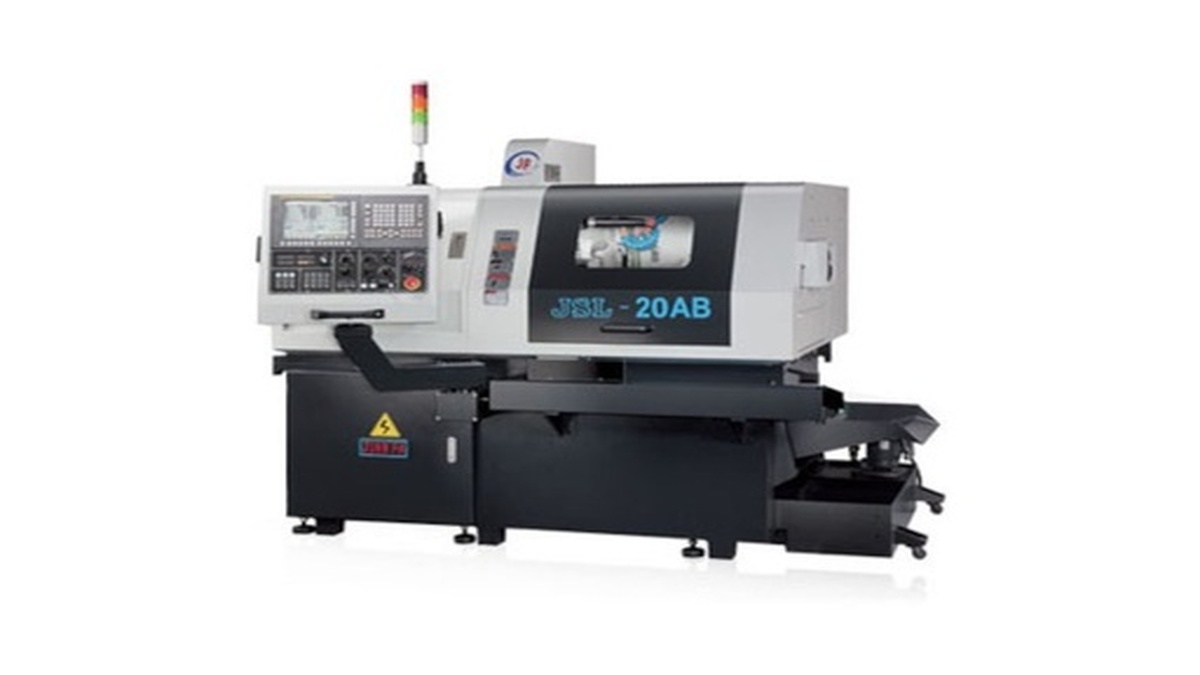
For manufacturers seeking to implement these advanced capabilities, partnering with an experienced machine tool builder is crucial. Jinn Fa Machine Industrial Co., Ltd. is a globally recognized manufacturer specializing in high-precision machine tools, including their industry-leading line of Swiss-Type CNC Lathes.
Jinn Fa’s Swiss-type machines are engineered specifically to meet the rigorous demands of the medical, aerospace, and electronics sectors. Their machines combine robust mechanical architecture with cutting-edge control systems to deliver several key advantages for medical device production:
- Uncompromising Rigidity: Built with high-grade casting and precision linear guideways, Jinn Fa lathes provide the structural damping necessary to machine tough biocompatible alloys like Titanium and Cobalt-Chrome without tool chatter.
- Multi-Axis Versatility: Offering configurations with sub-spindles, live tooling, and Y-axis capabilities, Jinn Fa machines enable complete "done-in-one" machining of highly complex medical parts, eliminating secondary setups and reducing cycle times.
- High-Speed Precision: Equipped with advanced built-in motorized spindles and ultra-precise guide bushing systems, these lathes ensure exceptional dimensional stability and mirror-like surface finishes that meet strict medical regulatory standards.
- Cost-Effective Efficiency: By optimizing tool layouts and reducing material waste, Jinn Fa’s Swiss lathes help contract manufacturers improve their margins on high-volume medical screw and implant production runs.
Whether you are scaling up production of orthopedic bone screws or developing micro-surgical instruments, Jinn Fa’s technological solutions provide the reliability and precision required to stay competitive in the modern medical manufacturing landscape.
Frequently Asked Questions (FAQ)
Q1: What is the main difference between a Swiss lathe and a conventional CNC lathe?
The primary difference is the support mechanism. In a conventional lathe, the workpiece is held stationary in a chuck, and the tool moves along the part. In a Swiss-type lathe, the workpiece moves along the Z-axis through a guide bushing, and the cutting tool operates immediately adjacent to this bushing. This design eliminates material deflection, allowing for the high-precision machining of long, slender parts.
Q2: Why is titanium so difficult to machine, and how does a Swiss lathe help?
Titanium has low thermal conductivity, meaning heat generated during cutting does not easily dissipate through the chip; instead, it concentrates on the cutting tool edge, leading to rapid tool wear. It is also highly elastic, which can cause the material to "spring back" or deflect away from the tool. The extreme rigidity of a Swiss lathe, combined with high-pressure coolant systems and the support of the guide bushing, prevents deflection and manages heat buildup, making titanium machining highly predictable.
Q3: Can a Swiss lathe operate without a guide bushing?
Yes. Many modern Swiss-type CNC lathes are "convertible." They can be configured with a guide bushing for machining long, slender parts (Swiss mode) or converted to run without a guide bushing (chucker mode) for shorter parts. Chucker mode is highly beneficial for reducing material waste (remnants) when machining expensive metals like titanium.
Q4: What is thread whirling, and why is it used for bone screws?
Thread whirling is a specialized machining process where a high-speed rotating ring equipped with multiple cutting inserts orbits around a slowly rotating workpiece. It is used to cut deep, precise medical thread profiles (like those on bone screws) in a single pass. It provides superior surface finishes, eliminates burrs, and significantly extends tool life compared to traditional single-point turning.
Q5: How do multi-axis Swiss lathes improve manufacturing efficiency?
Multi-axis Swiss lathes feature main and sub-spindles that can work simultaneously. While the main spindle is turning and milling the front of a part, the sub-spindle can perform back-working operations (like drilling, slotting, or deburring) on the back end of a previously cut part. This parallel processing eliminates the need for manual secondary setups, reducing labor, cycle times, and the risk of handling-induced defects.
Summary and Actionable Next Steps
The medical device manufacturing sector will only continue to demand higher precision, faster turnaround times, and lower production costs. Relying on outdated, multi-step machining setups is no longer a viable option for shops wanting to remain competitive.
By investing in CNC Swiss-type lathe technology, manufacturers can:
1. Achieve sub-micron tolerances on complex, slender geometries.
2. Eliminate secondary operations through "done-in-one" multi-axis machining.
3. Successfully machine challenging materials like Titanium, Cobalt-Chrome, and PEEK with exceptional surface finishes.
4. Boost profitability by dramatically reducing cycle times and minimizing manual labor.
If you are ready to elevate your medical manufacturing capabilities, consult with industry experts who understand the nuances of high-precision machining.
Contact Jinn Fa experts for medical machining solutions to discuss your specific production requirements, explore machine configurations, and discover how advanced Swiss lathe technology can optimize your manufacturing floor.

(4059)(20260924)(原).jpg)
(2367)(20260924)(原).jpg)