For an international buyer, selecting a liquid packaging line is not only a question of filling accuracy, line speed, or machine price. It is also a question of what happens before shipment, on site, and after the line begins production.
Distance can make small uncertainties more expensive. A line may need to accommodate a particular liquid, bottle, cap, label, target output, and factory layout. Once the equipment is delivered, the buyer also needs a practical route for installation, operator support, future format changes, maintenance, and spare parts.
That is why service should be evaluated as part of the equipment decision—not as a separate issue to address after a purchase order is placed.
The following seven questions help international buyers compare suppliers on the parts of a packaging-line project that are easy to overlook during an initial quotation.
Q1. Will the supplier begin with production requirements, not a standard machine?
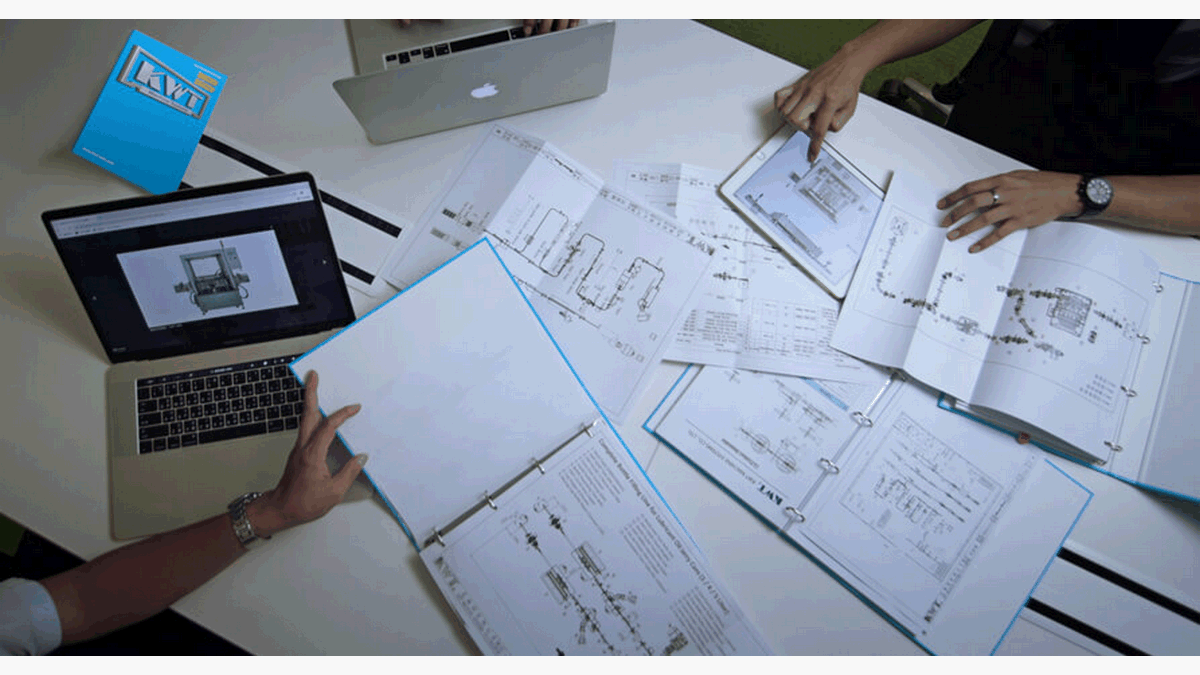
A useful proposal starts with the operating conditions the line must handle. Buyers should be ready to define the product, fill volume, container and closure formats, target output, available footprint, utilities, and any expected future changes.
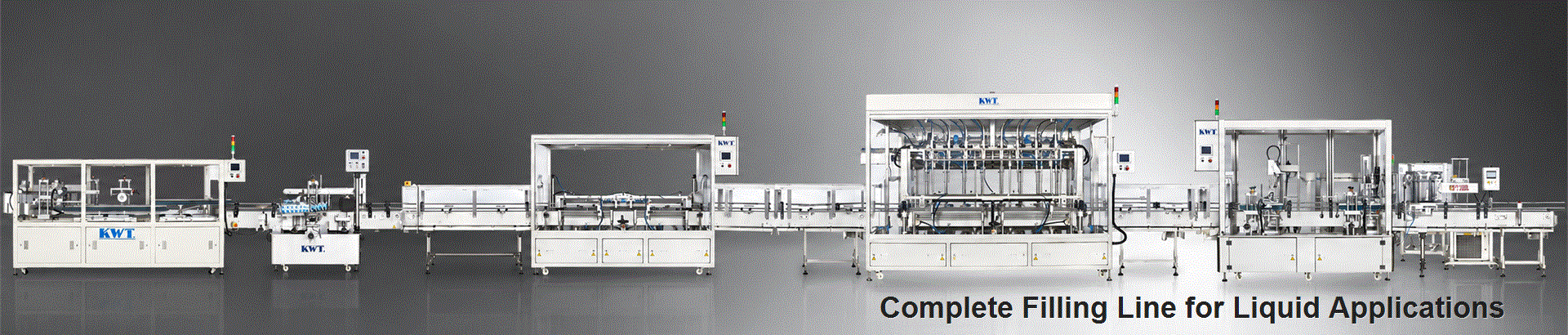
These details affect far more than the filler. Bottle handling, filling, capping, labeling, conveying, and downstream packaging must work together at an appropriate production rhythm. A line selected only from a catalog speed or an individual‑machine price can create an integration problem later.
Ask the supplier how it will turn your product and packaging requirements into a line configuration. The answer should make clear which assumptions have been made, which samples or drawings are needed, and which elements are included in the proposed scope.
Q2. Who is responsible for the interfaces between machines?
An automatic line is a connected system. A filler that performs well on its own cannot deliver reliable output if bottles arrive inconsistently, caps cannot be supplied at the required rate, labels do not track the line speed, or downstream packing becomes the constraint.
Buyers should ask who is responsible for the interfaces between each process: bottle unscrambling or rinsing, filling, capping, labeling, inspection, conveying, and any secondary packaging. This is especially important when the project includes existing equipment or modules supplied by different parties.
The goal is not to insist that one supplier must manufacture every component. It is to establish a clear integration responsibility and a shared view of how the complete line is expected to operate.
Q3. What will happen during installation and commissioning?
Before ordering, ask what the supplier’s on‑site role includes. Does the scope cover installation guidance, line setup, initial operating support, and commissioning? What information must the factory prepare in advance, such as utilities, layout access, production samples, operators, and packaging materials?
Clear answers help a buyer plan the handover realistically. They also reduce the risk that an installation is delayed because the machine arrives before the site, materials, or operating team are ready.
The question becomes even more important for overseas projects. A buyer should know the primary technical contact, how site visits are arranged, and which issues the local team will be expected to resolve during ramp‑up.
Q4. How will operators and maintenance staff be prepared to run the line?
Equipment reliability depends partly on how well a line is operated and maintained after handover. Training should therefore be treated as part of production readiness, rather than as an optional add‑on.
Ask whether the supplier can provide operator guidance, production support, troubleshooting help, and maintenance advice. The most useful training is linked to the actual equipment configuration and product formats in the project. It should help the factory understand routine checks, safe adjustments, cleaning and changeover procedures, and the first actions to take when an issue occurs.
For lines that will handle new bottle sizes, cap types, or product formats over time, buyers should also ask how operation support will be provided for those changes. This is often where a line’s flexibility is tested in real production.
Q5. What support is available when the production situation changes?
The line delivered today may not be the line the factory needs two years from now. New container shapes, closure types, fill volumes, label formats, or product properties can change the operating requirements.
Buyers should ask the supplier how it assesses a new format before changes are made. The answer may involve reviewing the product and pack information, confirming the parts or adjustments required, and defining the support needed for a new production setup.
This question shifts the conversation from a narrow definition of after‑sales service to a longer‑term operating relationship. It also helps determine whether the initial line configuration leaves a realistic path for future expansion.
Q6. How are preventive maintenance and technical troubleshooting handled?
Unexpected downtime is rarely caused by one issue alone. Wear items, routine adjustments, lubrication, component condition, and delayed small repairs can all affect how consistently a line performs.
Ask the supplier whether it offers preventive‑maintenance guidance or scheduled service options, and how its technical team supports troubleshooting. The buyer should also understand which maintenance tasks the factory will own, which information should be recorded, and when the supplier needs to be involved.
The purpose is not to outsource all maintenance. It is to create a disciplined approach that helps the factory prepare for service needs before they become extended shutdowns.
Q7. What is the plan for spare parts and technical support?
Spare‑parts planning deserves attention before the line is shipped. Buyers should ask which components are recommended for initial stock, how replacement and change parts are identified, what technical information is supplied with the equipment, and who will respond to a machine‑specific inquiry.
For an overseas operation, this conversation should distinguish between normal consumable or wear parts, format‑specific change parts, and components that could create a longer interruption if they fail. Clear part identification, a documented support contact, and an agreed approach to planned stock can reduce uncertainty when maintenance is required.
Service is part of line performance
The best packaging‑line decision is not simply the one with the fastest quoted cycle or the lowest initial price. It is the one that matches the factory’s products and packages, assigns responsibility for system integration, and gives the operating team a credible plan for installation, training, maintenance, technical support, and future changes.
For international buyers, these questions should be raised before the order is finalized. They make the supplier’s role visible early, when the project scope can still be clarified and compared.
KWT Machine Systems publicly describes its liquid packaging‑line support as beginning with needs assessment and equipment configuration, and extending through manufacturing, integration, installation, commissioning, and after‑sales support. Its public service information also describes on‑site technical support, training, preventive‑maintenance guidance, spare‑parts support, and assistance for new formats.
If you are planning a liquid packaging line for lubricant oil, household products, chemical liquids, food and beverage, or pharmaceutical applications, explore KWT’s liquid packaging line planning and integration approach or contact the KWT team with your product, container, cap, output, and factory requirements.
The hardest part of replacing an old motor is usually not finding a newer model with similar power. It is making sure the new motor fits the machine, handles the actual load, and works with the existing control system.