What problems do magnetic systems solve for procurement teams, plant owners, and manufacturing managers?
For buyers and decision-makers in machine tools, metalworking, automation lines, and heavy workpiece handling, several operational concerns regularly affect equipment selection. These include workholding stability, changeover efficiency, machining accuracy, ease of system integration, and long-term maintenance control. When a clamping solution is not stable enough, the result can be machining deviation, increased rework, higher downtime risk, and disruption to delivery schedules and production planning.
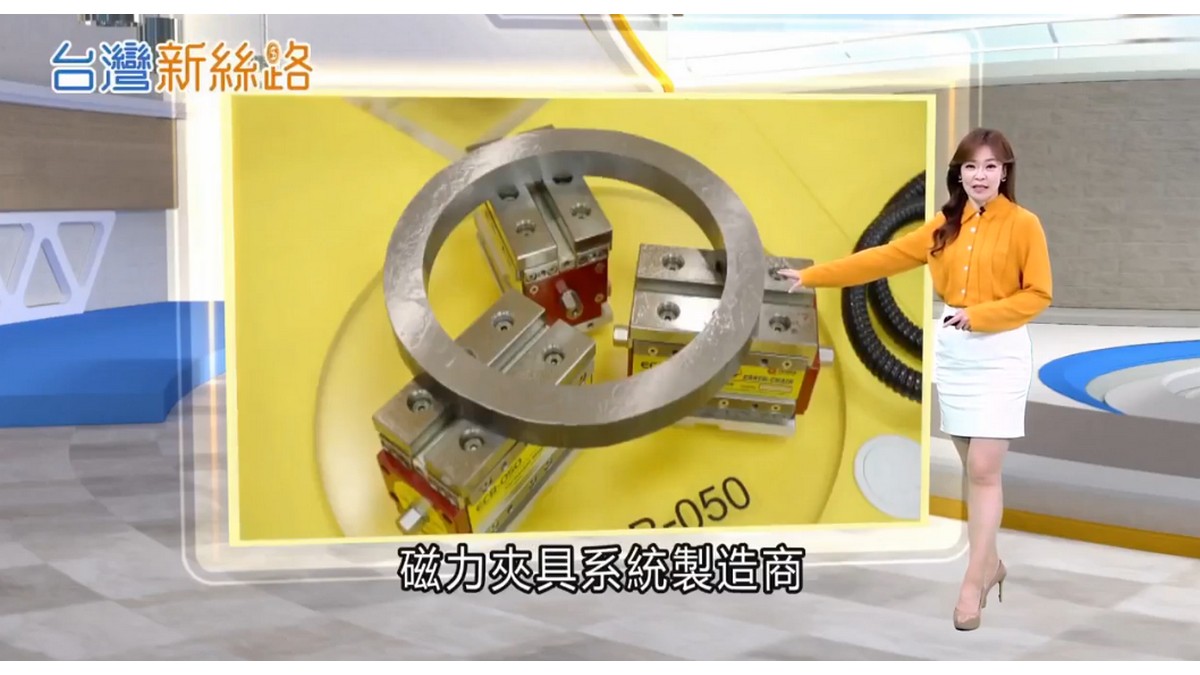
Earth-Chain Enterprise Co., Ltd. was recently featured in the Taiwanese TV program Taiwan New Thinking, where the company shared its development direction in rare-earth magnetic technology, magnetic system integration, and smart manufacturing applications. Based on the interview, the company’s focus is not limited to product performance alone. It also addresses how more stable, efficient, and integration-friendly magnetic systems can help manufacturers reduce operational risk, lower management burden, and improve overall machining performance.
Why is rare-earth magnetic technology gaining attention in industry?
According to the interview, rare-earth materials are widely used in advanced industries such as semiconductors, electric vehicles, precision equipment, and energy systems. In industrial applications, the value of rare-earth magnetic materials goes beyond the material itself. Their importance lies in enabling higher magnetic density, more stable workholding performance, and equipment designs better suited for high-efficiency machining environments.
The video indicates that Earth-Chain has applied rare-earth magnetic materials to lifting magnets, magnetic chucks, and related industrial workholding systems. For procurement teams and manufacturing managers, the practical value of these technologies can be understood in several areas.
Improved workholding stability and reduced machining deviation
In precision machining and heavy cutting environments, unstable workholding remains a common challenge. If a workpiece cannot be fixed securely, it may lead to machining error, rework, or wasted material. A magnetic system that provides stronger and more stable holding force may help improve process consistency and production quality.
Shorter changeover and loading time
For factories engaged in high-mix, low-volume production, automation, or cycle-time-sensitive operations, changeover speed directly affects throughput. Magnetic workholding solutions that simplify fixture switching can help reduce downtime and lower manual adjustment effort.
Better equipment integration efficiency
Procurement teams do not evaluate equipment based on standalone performance alone. They also need to assess whether a solution can integrate smoothly with existing production lines, automation equipment, and workpiece handling workflows. The interview suggests that Earth-Chain continues to move toward more system-oriented and automation-compatible development, which is relevant for manufacturers planning broader plant-level integration.
What capabilities highlighted in the report may be relevant to the market?
Based on the Taiwan New Thinking interview and Earth-Chain’s official public content, the company has long invested in magnetic technology and industrial application development, extending its solutions to lifting magnets, magnetic chucks, workholding systems, and automation-related integration. For readers of a professional industry platform, several capabilities stand out as relevant.
Integrated R&D and manufacturing capability
The interview indicates that the company continues to strengthen both internal development and manufacturing capability. For procurement professionals, this may suggest stronger product consistency, greater customization flexibility, and more efficient technical communication during implementation, especially for special workpieces or demanding machining conditions.
Experience across industrial application fields
According to the interview content, Earth-Chain’s magnetic technologies have been applied in machine tools, metalworking, railway-related systems, high-speed rail applications, and wind power sectors. For industrial buyers, cross-sector application experience can serve as an important indicator of supplier maturity and technical adaptability.
From standalone products to solution-oriented support
In modern manufacturing, individual components or equipment functions are often not enough to solve broader production challenges. Buyers and plant owners are increasingly concerned with whether a solution can reduce implementation risk, improve line efficiency, and support future expansion and automation. The direction presented in the interview suggests that Earth-Chain is positioning magnetic technology not only as a product offering, but as part of a more comprehensive manufacturing solution.
Conclusion: When evaluating magnetic systems, the key is not only specification, but total manufacturing value
For industrial buyers and equipment decision-makers, selecting a magnetic system supplier should not be based only on force specifications or individual product parameters. What often matters more is the supplier’s overall solution capability, including workholding stability, implementation efficiency, system integration, application experience, and technical support.
The information presented through Earth-Chain’s TV interview reflects a broader shift in magnetic technology—from the role of a standalone component or individual machine accessory toward a higher-value industrial system solution. For manufacturers facing production upgrades, automation projects, and stricter machining requirements, this direction offers practical reference value.