A neutral overview of how automated work handling is changing cylindrical grinding, from part consistency and labor efficiency to safety and smart manufacturing integration.
Automatic loading and unloading CNC cylindrical grinding machines are becoming more common in precision manufacturing environments where stable quality, shorter cycle times, and repeatable handling matter as much as the grinding process itself. Instead of relying on an operator to place and remove each workpiece by hand, these systems combine the grinder with automated handling equipment such as robotic arms, gantry units, conveyors, or dedicated exchange devices. The result is a more continuous production flow that reduces idle time between cycles and supports more consistent output.
In cylindrical grinding, even small variations in workpiece positioning, clamping, or handling rhythm can affect dimensional accuracy, surface finish, and overall process stability. Automated loading and unloading addresses this issue by making the transfer process more repeatable. It also helps manufacturers run medium to high volume jobs with less interruption, especially when similar parts must be processed over long production periods.
What Automatic Loading and Unloading Mean in Cylindrical Grinding
In practical terms, automatic loading and unloading refers to a system in which raw parts are delivered to the machine, positioned for grinding, and then removed after machining with limited manual intervention. The machine tool remains the core of the process, but a handling system is added so that the work cycle includes part transfer as an integrated step rather than a separate manual task.
This handling system can take several forms. A multi-axis robot is often selected for flexible part movement and orientation. A gantry structure may be more suitable when the workpieces are heavier or when the cell layout favors linear motion over articulated movement. For highly standardized parts with predictable dimensions, a workpiece exchange device or magazine-style system may offer a simpler and more economical approach.
The right method depends on several factors, including part geometry, weight, tolerance requirements, fixture design, and the required level of production flexibility. Manufacturers processing shafts, gears, valve components, tooling parts, and similar round workpieces often adopt automation when they need both precision and repeatable material flow.
Why Manufacturers Are Moving Toward Automation
One of the main reasons is productivity. In a manual process, the machine may sit idle while an operator unloads a finished part, retrieves the next blank, checks orientation, and starts the next cycle. Automation reduces this non-cutting time. While the actual grinding operation still determines a large share of the cycle time, the transfer stage becomes more predictable and usually faster.
Another reason is consistency. When handling is repeated in the same sequence with the same programmed motion, variation caused by human fatigue or inconsistent loading practice is reduced. This is especially important in cylindrical grinding, where stable setup conditions contribute to tighter dimensional control and more uniform surface quality.
Labor considerations also influence adoption. Automatic loading and unloading does not simply remove manual work. In many cases, it allows one operator to oversee more than one machine or cell, shifting labor from repetitive handling to supervision, inspection, and process support. In sectors facing labor shortages or high demand for skilled machine operators, this can be a significant operational advantage.
Key Benefits of Automatic Loading and Unloading CNC Cylindrical Grinding Machines
1. Better use of machine time
Automated handling reduces waiting time between grinding cycles. This helps increase spindle utilization and supports higher output over long runs.
2. More repeatable workpiece transfer
Consistent loading position and handling rhythm can improve process stability, especially for parts that require strict concentricity, diameter control, or surface finish performance.
3. Improved suitability for unattended or low-intervention production
When the machine, loader, and part supply system are properly integrated, manufacturers can extend production time with fewer interruptions. This is one of the reasons automated grinding cells are often discussed in relation to lights-out or reduced supervision production.
4. Better integration with in-process measurement and monitoring
Advanced grinding systems increasingly use sensors, acoustic monitoring, vibration analysis, force-related signals, and other feedback methods to track wheel condition and process performance. In an automated cell, these monitoring functions become more valuable because they support quality consistency during longer production runs.
5. Potential safety improvement
Moving operators away from repeated close-range interaction with the loading zone can reduce some manual handling and exposure risks. However, automation only improves safety when the cell is properly guarded, interlocked, and designed according to applicable standards and regulations.
Common Automation Configurations
There is no single standard setup for all automatic loading and unloading CNC cylindrical grinding machines. The most common configurations include the following:
Robotic arm systems
These systems offer flexibility for varying part sizes, shapes, and handling paths. They are useful when the production line must adapt to different products or when orientation control is important.
Gantry loading systems
Gantry solutions are often chosen for heavier workpieces or layouts requiring stable linear travel. They can be effective where floor space, movement path, and payload favor an overhead approach.
Magazine, conveyor, or exchange systems
These are often used for standardized parts produced in repeating batches. They may provide a practical balance between simplicity and throughput when part variation is limited.
In many real production environments, the automation choice is less about which system is most advanced and more about which one best fits the workpiece family and factory conditions.
Where These Machines Are Commonly Used
Automatic loading and unloading cylindrical grinding systems are especially relevant in industries where high precision round parts are produced in recurring quantities. Typical applications include automotive shafts and transmission parts, hydraulic and pneumatic components, aerospace parts, tooling, molds, precision mechanical components, and selected medical or surgical instruments.
These sectors value precision, but they also depend on stable output over time. That combination makes cylindrical grinding a strong candidate for automation when process repeatability and production continuity are priorities.
The Role of Sensors and Smart Manufacturing
The broader development of grinding technology is moving beyond basic machine automation toward monitored and adaptive processes. Recent technical literature on grinding systems highlights the growing use of sensor-based monitoring, including acoustic emission, force, vibration, imaging, and temperature related measurement. These tools help detect wheel wear, process drift, and quality related changes before they turn into larger production problems.
In an automatic loading and unloading environment, this matters because a machine may process many parts in sequence with little direct operator intervention. If the cell includes reliable sensing and feedback, manufacturers are in a better position to maintain quality, plan maintenance, and reduce unplanned downtime. This is one reason automated cylindrical grinding is increasingly discussed within the wider context of Industry 4.0 and smart manufacturing.
Safety Should Be Considered Part of the System
Automation can reduce direct manual contact with the handling area, but it also introduces new safeguarding requirements. Machine guarding, perimeter protection, interlocked access, and appropriate robotic cell design remain essential. Authoritative safety guidance on machine guarding and robotics consistently emphasizes that hazardous motion must be isolated from worker access and that protective measures must match the machine's operating risks.
For buyers and plant planners, this means an automatic loading and unloading solution should be evaluated as a complete cell rather than as a grinder plus a loader added later. Safety design, access control, maintenance access, and operator interaction all affect real world performance.
What Buyers Usually Evaluate Before Adoption
Before selecting an automated cylindrical grinding solution, manufacturers often look at the following questions:
- What type of workpieces will be loaded and unloaded
- How much variation exists in size, geometry, or orientation
- What tolerances and surface finish targets must be maintained
- Whether the production mix is stable or changes frequently
- How much floor space is available for guarding and part flow
- Whether in process gauging or condition monitoring is required
- How the automation system will affect staffing, maintenance, and training
The most suitable machine is not always the one with the most complex automation package. In many cases, the better choice is the configuration that aligns with the actual production pattern and makes repeatable quality easier to maintain.
A Practical Market Perspective
From a market standpoint, demand for automatic loading and unloading CNC cylindrical grinding machines reflects a broader shift in manufacturing priorities. Buyers are not only seeking precision. They are also looking for equipment that supports stable throughput, easier labor allocation, traceable process control, and integration into connected production environments.
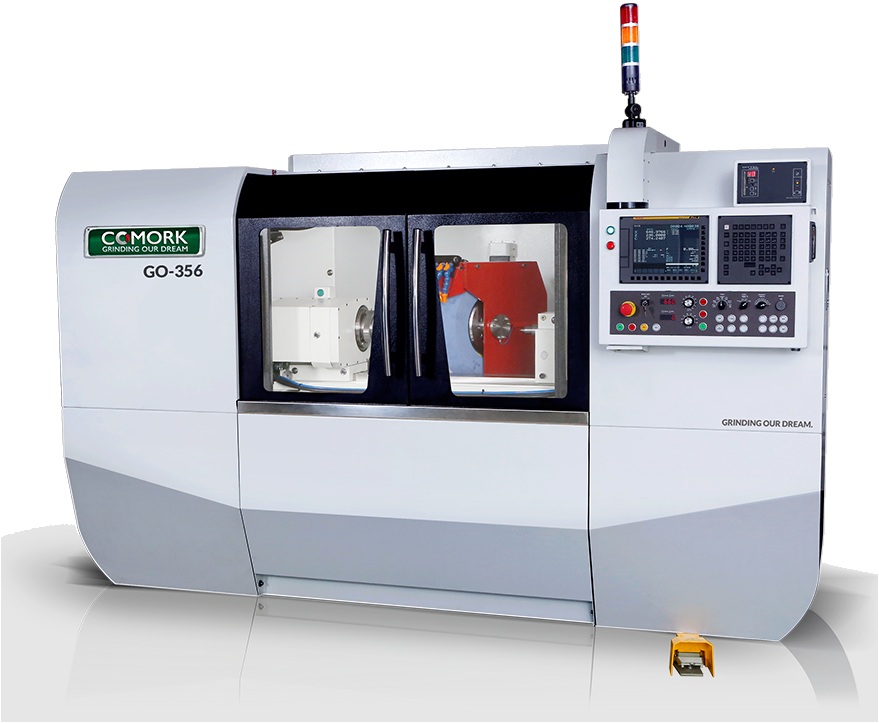
For companies evaluating available options, it can be useful to compare how builders approach automation, workpiece range, monitoring functions, and application fit. For example, COMORK presents its GO-356 CNC cylindrical grinding machine as a precision oriented platform with automation capability and application suitability for components such as shafts, gears, turbine parts, surgical tools, and molds. In cases where a manufacturer is assessing whether an automated cylindrical grinding setup fits a particular workpiece or production target, contacting suppliers such as COMORK for application discussion may help clarify machine scope, automation options, and practical implementation details.
Conclusion
Automatic loading and unloading CNC cylindrical grinding machines is not simply about replacing manual part transfer. Their value lies in creating a more stable and continuous grinding process that supports precision, throughput, and production consistency. When matched to the right workpiece type and supported by suitable guarding, sensing, and cell design, these systems can improve both operational efficiency and process control.
As manufacturing moves toward higher repeatability and smarter production management, automated cylindrical grinding is likely to remain an important area of development. For decision makers, the key question is not whether automation is broadly beneficial, but which type of automation best matches the technical and operational realities of the parts being produced.

(4059)(20260924)(原).jpg)
(2367)(20260924)(原).jpg)