A practical introduction to how agricultural aluminum tripod ladders are used, why their design suits orchard work, and what buyers now look for in the category
An agricultural aluminum tripod ladder is a specialized access tool developed for work in orchards, groves, and other outdoor growing environments where standard ladders are often less practical. Unlike conventional four leg ladders intended for flat, hard surfaces, tripod orchard ladders are designed to work on soft, uneven, and sloped ground. That difference is not cosmetic. It directly affects stability, mobility, and worker confidence during harvesting, pruning, and tree care.
For agricultural operations, ladder choice influences more than convenience. It affects productivity, fatigue, and safety throughout the season. In fruit growing environments where workers move repeatedly from tree to tree and often work on irregular terrain, a ladder that is easy to carry and stable in the field becomes a practical necessity rather than a simple accessory.
What Is an Agricultural Aluminum Tripod Ladder
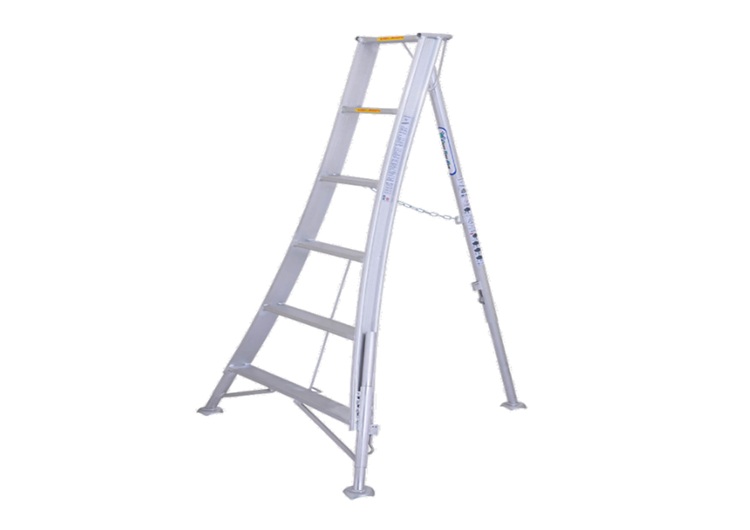
An agricultural aluminum tripod ladder is a three legged ladder designed for orchard and field use. Two front rails support the climbing side, while a single rear pole provides the third point of contact. This tripod structure allows the ladder to settle more effectively into uneven soil than a standard four leg design.
The ladder is commonly used in fruit orchards, pruning work, harvesting, hedge maintenance, and other outdoor tasks that require access to elevated branches or crop areas. In these environments, the single rear leg can often be positioned more easily between branches or into areas where a wider rear frame would be harder to place.
Why the Tripod Design Is Used in Orchards
The key advantage of the tripod design is ground adaptability. Orchard terrain is rarely level, and soft soil is common. A conventional ladder may rock or fail to achieve stable contact on sloped or irregular ground. A tripod orchard ladder is built around a different principle. Its three points can settle into the soil and maintain support with less dependence on a perfectly even surface.
Safety guidance for orchard ladders consistently emphasizes this point. These ladders are intended to work with the ground rather than against it. When they are used correctly, the rails and tripod leg can penetrate the soil slightly, helping the structure remain secure. This design is one reason tripod ladders remain a standard tool in many orchard environments.
Why Aluminum Is a Popular Material Choice
Material choice also matters. Aluminum remains a popular option because it helps reduce carrying fatigue while still offering sufficient strength for regular agricultural use. In orchard work, where ladders are repositioned constantly, a lighter product can improve workflow and reduce physical strain across long shifts.
Aluminum also offers corrosion resistance and a clean balance between weight and durability. For growers and field crews, that means easier transport, simpler handling, and reduced maintenance concerns compared with heavier materials. This is especially relevant in outdoor settings where equipment may be exposed to moisture, soil, and repeated seasonal use.
Typical Uses in Agriculture and Orchard Management
Agricultural aluminum tripod ladders are most closely associated with fruit growing, but their usefulness extends beyond harvesting alone. They are used for pruning, training branches, thinning fruit, inspecting trees, and maintaining hedges or tall crop structures.
This broad use case explains why the category remains relevant even as orchard operations modernize. Not every agricultural task can be replaced by platforms or mechanized lifting equipment. In many settings, growers still need a portable and quickly repositioned tool that allows precise hand work at height.
What Safety Questions Should Buyers and Users Ask
For many readers, the first practical question is whether a tripod orchard ladder is actually safer on farm terrain than a standard ladder. The answer depends on correct application. Tripod orchard ladders are specifically intended for soft and uneven ground, and safety guidance stresses that they should be used only in the environment they are designed for. They are not interchangeable with ordinary household ladders.
Another common question is what safe use looks like in daily work. In practice, it includes proper setup, correct orientation on slopes, regular inspection, avoiding overreach, and maintaining three points of contact while climbing. Workers are also advised not to stand too high on the ladder and to reposition it rather than lean beyond a stable working zone.
What Buyers Commonly Look For Today
When buyers compare agricultural aluminum tripod ladders, they usually consider more than ladder height. Weight, load capacity, step width, stability on slopes, transport convenience, and adjustability all play a role in the decision.
A practical buying question is whether the ladder will be used mainly for harvesting, pruning, or general orchard maintenance. A wider step can improve footing confidence during longer tasks. Adjustable legs or height options may help adapt the ladder to different orchard conditions. Base design is also important because field stability depends not only on the tripod concept itself, but on how the ladder contacts the ground and supports the operator during movement.
Current product offerings in the market reflect these concerns. CHIAO TENG HSIN, for example, presents agricultural ladder models that emphasize lightweight aluminum construction, adjustable legs, wide steps, and stable footing for uneven surfaces. For growers or distributors comparing configurations in this category, contacting manufacturers such as CHIAO TENG HSIN can be useful when more specific application or product questions arise.
How to Choose the Right Ladder for the Job
The best ladder is not always the tallest or the lightest. The more useful question is whether the ladder fits the crop, terrain, worker needs, and daily working pattern. A ladder used in citrus, apples, pears, or hedging may need different dimensions or features depending on canopy structure and field conditions.
For that reason, ladder selection is best approached as an application decision rather than a simple product purchase. Buyers usually get better results when they match ladder height, step comfort, field stability, and carrying weight to the actual work rather than relying on nominal specifications alone.
Conclusion
The agricultural aluminum tripod ladder remains an important tool because it is designed around the real conditions of orchard work. Its tripod structure improves suitability for uneven ground, while aluminum construction supports mobility and ease of handling. Together, these characteristics make it useful for harvesting, pruning, inspection, and other field tasks where balance, access, and speed all matter.
As agricultural work continues to balance safety, labor efficiency, and practical field performance, interest in well designed orchard ladders is likely to remain steady. For growers and buyers alike, understanding how tripod design, material choice, and application fit work together offers a clearer way to evaluate the category.

(4059)(20260924)(原).jpg)
(2367)(20260924)(原).jpg)