How automation, application needs, and production efficiency are influencing the next stage of double column bandsaw machine adoption
Double column bandsaw machines continue to hold an important position in modern metal cutting, especially in sectors that process large workpieces, structural materials, and demanding alloys. While the broader machine tools market is evolving under the influence of automation, digitalization, and production efficiency, this equipment category is also moving in a clearer direction. Buyers are no longer evaluating saws only by cutting capacity. They are paying closer attention to stability, repeatability, labor efficiency, system intelligence, and long term operating value.
For manufacturers in steel service centers, heavy fabrication, machinery production, automotive supply chains, and infrastructure related processing, the double column design remains relevant because it addresses a specific operational challenge. It offers a rigid structure for handling heavier materials and larger cutting sections with more consistent performance than lighter duty alternatives. That value proposition is becoming even more important as factories face pressure to improve throughput while keeping scrap, downtime, and labor dependency under control.
Why Double Column Bandsaw Machines Remain Relevant
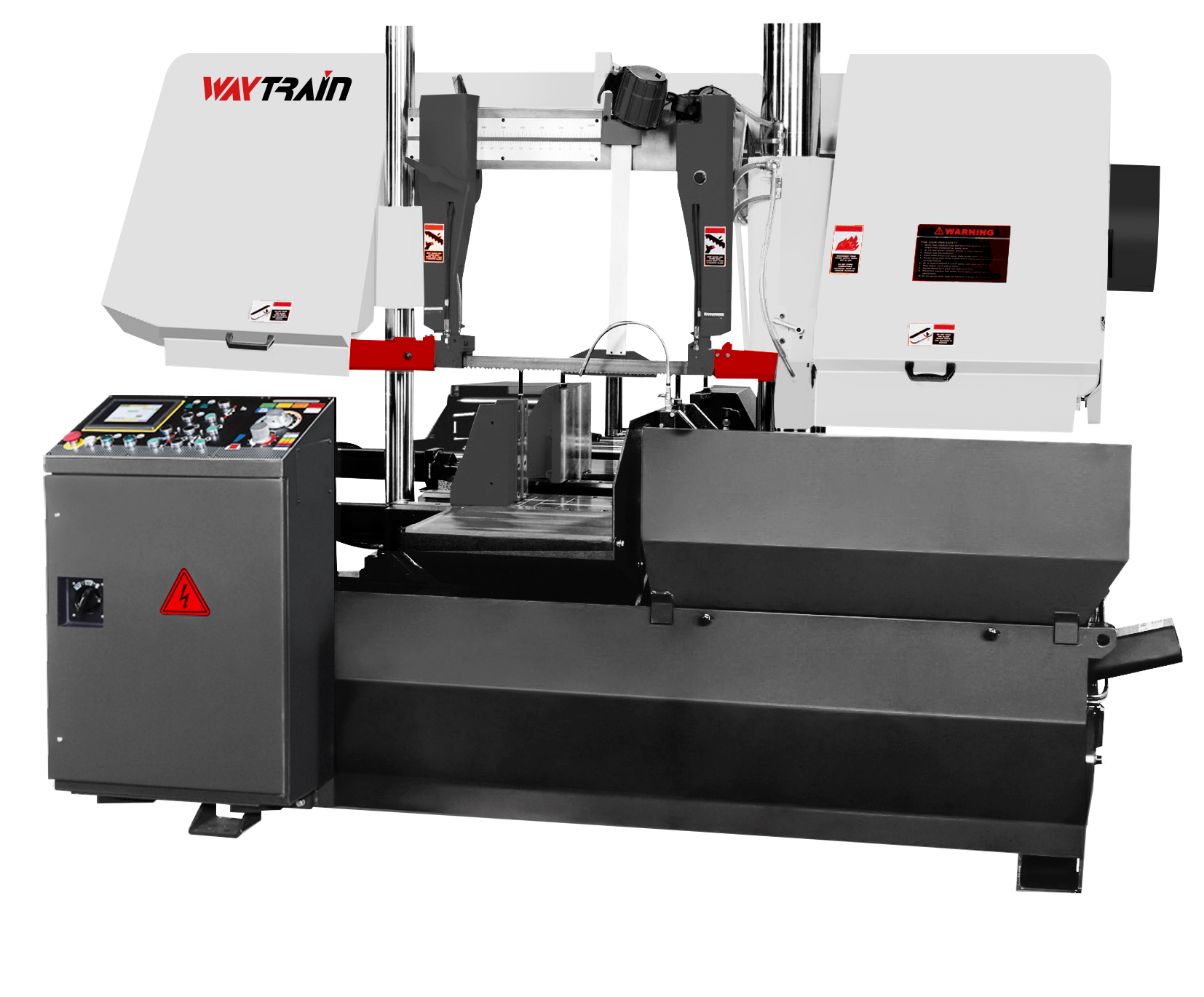
A double column bandsaw machine is generally chosen for stability under load. The saw frame moves along two columns, helping maintain alignment during cutting and reducing the chance of deflection when processing larger or tougher materials. In practical terms, this makes the machine especially suitable for bundle cutting, solid stock cutting, structural sections, and high duty cycle production.
This is one reason the category continues to attract demand from operations that cannot rely on light or entry level sawing equipment. As more manufacturers seek consistent upstream cutting before machining, welding, forging, or assembly, the role of accurate first stage material preparation is becoming more visible. The market is responding by favoring machines that can support both productivity and process control.
Market Direction Is Being Shaped by Broader Machine Tool Trends
The strongest signals affecting this segment come from the wider machine tools industry. Current market analysis in the machine tools sector points to continued growth led by CNC adoption, industrial automation, electrification, aerospace demand, and Asia Pacific manufacturing investment. Even though double column bandsaw machines represent a specialized category within metal cutting, purchasing priorities are increasingly aligned with these same forces.
In other words, customers expect sawing systems to fit into a smarter production environment. A machine that only cuts well is no longer enough. It also needs to support predictable workflow, easier operation, and cleaner integration with production planning.
Trend 1: Higher Demand for Automation in Material Cutting
One of the clearest market trends is the shift from basic hydraulic automation to more programmable and intelligent cutting workflows. This includes NC or CNC controlled length setting, automatic indexing, servo assisted feeding, job memory, alarm systems, and user interfaces that reduce operator dependency.
The reason is straightforward. Material preparation often sits at the beginning of the process chain. If sawing becomes a bottleneck, the effects spread downstream. Automated double column bandsaw machines help reduce that risk by making cutting cycles more repeatable and less dependent on manual adjustment.
This trend is visible across suppliers that emphasize programmable controls, automatic feed functions, and mass production suitability. It also reflects a broader industrial reality. Manufacturers are trying to maintain output despite labor shortages, training gaps, and tighter demands for consistency.
Trend 2: Greater Focus on Stability, Accuracy, and Repeatability
In many industries, cutting accuracy is no longer treated as a secondary machine feature. It affects material utilization, downstream machining time, fit up quality, and total production cost. Double column bandsaw machines are gaining attention because their structure supports better cutting stability when compared with less rigid formats used in heavy duty applications.
This is particularly relevant for users cutting alloy steel, thick sections, large bars, and structural profiles. When the machine frame remains stable and blade guidance is properly controlled, operators can expect more consistent results and fewer issues tied to blade deviation or uneven surfaces.
As end users pursue leaner manufacturing and tighter process control, repeatability becomes a practical buying criterion rather than a marketing term. Machines that can maintain cutting quality over long runs are more likely to gain attention in serious production environments.
Trend 3: Productivity Is Being Evaluated Through Total Process Efficiency
The market is also moving away from a narrow view of speed. Faster cutting still matters, but buyers increasingly evaluate productivity through total cycle efficiency. This includes material handling, indexing accuracy, setup simplicity, blade life, chip removal, maintenance visibility, and operator workload.
That shift explains why features such as automatic chip conveyors, hydraulic blade tension systems, abnormal condition alerts, and optimized operator interfaces are appearing more often in product positioning. These functions may not always define the cut itself, but they influence whether a machine performs reliably over time.
For many factories, the real question is not how quickly a saw completes one cut. It is how steadily the system supports daily production with fewer interruptions.
Trend 4: Smarter Human Machine Interfaces Are Becoming More Important
Another notable trend is the growing value of operator usability. Industrial buyers have long cared about machine durability, but interface quality is now receiving more attention because it affects training time, error frequency, and operating confidence.
A more intuitive control environment can shorten the learning curve and help less experienced operators manage routine work more safely. This is particularly useful in shops where workforce turnover is a concern or where one operator may be responsible for multiple machines.
Product offerings in this segment increasingly highlight human machine interface upgrades, abnormal condition notifications, encoder controlled cutting length setting, inverter controlled blade speed, and other assistance functions intended to simplify operation and improve workflow visibility. In a market that increasingly values easier machine management, such details align with real buyer priorities.
Trend 5: Buyers Are Looking for Equipment That Supports Longer Term Operating Value
Cost sensitivity has not disappeared, but purchasing decisions are becoming more lifecycle oriented. Instead of comparing only initial machine prices, more buyers are asking how a saw will affect maintenance frequency, blade consumption, labor input, uptime, and overall reliability.
This is one reason why accessories and support options also matter more than before. Vise pressure regulation, blade breakage detection, vibration control, remote monitoring compatibility, and application specific configuration can all influence the long term return on investment.
In this environment, suppliers that can explain machine suitability by workload, material type, and production pattern are often in a stronger position than those that compete on specification sheets alone.
Trend 6: Demand Is Closely Linked to Heavy Industry and Infrastructure Activity
Double column bandsaw machine demand remains strongly connected to industries that process heavy or large format materials. Steel service centers, construction related fabrication, transportation equipment, industrial machinery, energy projects, and automotive supply chains all contribute to the installed base for this type of saw.
When these sectors expand capacity or raise standards for throughput and consistency, sawing equipment demand tends to strengthen as well. Regional manufacturing investment in Asia Pacific is particularly relevant because it continues to support broader machine tool demand and production line modernization.
That does not mean the market is driven only by macro growth. Replacement demand also matters. Many factories are upgrading from older semi automatic or less efficient systems to gain better automation, cleaner operation, and more predictable output.
Trend 7: Application Matching Is Becoming More Important Than General Specification Claims
Not every production environment needs the same kind of double column bandsaw machine. Some users require mass production capability for repeated straight cuts. Others prioritize large rectangular capacity, bundle cutting, or compatibility with longer stock. As a result, machine selection is becoming more application driven.
This trend favors suppliers that present machines in practical operating terms rather than abstract technical language. Buyers increasingly want to understand how a system fits their material range, cut lengths, throughput goals, and manpower conditions.
That is also where supplier communication becomes important. A neutral market view suggests that end users should not choose equipment based only on headline specifications. They should evaluate machine structure, control logic, support responsiveness, and the supplier’s ability to discuss real production needs. For companies still comparing machine configurations or application fit, it can be useful to speak directly with manufacturers, including WAY TRAIN, when more specific technical questions arise.
What Buyers Are Likely to Prioritize Next
Looking ahead, the most competitive double column bandsaw machines are likely to share several characteristics. They will support stable cutting under demanding loads, offer practical automation, simplify operation, reduce avoidable downtime, and fit more easily into connected manufacturing environments.
This does not necessarily mean every machine will become a fully digital node overnight. However, the direction is clear. Even conventional equipment categories are expected to provide better data visibility, stronger process consistency, and easier control.
For the market as a whole, that means the conversation is shifting from machine ownership to production capability. Buyers are asking what a machine helps the factory achieve, not only what components it contains.
Conclusion
The market for double column bandsaw machines is being shaped by a combination of traditional industrial needs and newer manufacturing expectations. Heavy duty cutting, structural rigidity, and large capacity remain core reasons for adoption. At the same time, automation, usability, repeatability, and operating efficiency are becoming more influential in buying decisions.
As manufacturing environments continue to modernize, demand is likely to favor machines that balance mechanical strength with practical intelligence. For companies involved in metal processing, this makes the double column bandsaw machine less of a conventional shop tool and more of a production asset tied directly to throughput, quality, and workflow stability.




(3796)(20260924)(原).jpg)
(4005)(20260924)(原).jpg)