When manufacturers evaluate different lathe types, the decision usually goes beyond machine specifications alone. Choosing between a **manual lathe**, an engine lathe, and a CNC lathe can influence production flexibility, machining consistency, labor requirements, and long-term investment efficiency. For many workshops, factories, and industrial buyers, understanding these differences is essential to selecting equipment that truly fits the job. In metalworking, the wrong machine choice can create avoidable problems. A machine that is too simple may limit output, while a machine that is too advanced may increase cost without delivering enough return. That is why buyers often need a clear, practical comparison rather than a purely technical definition. This article explains the differences between manual, engine, and CNC lathes, where each one performs best, and how buyers can choose the right type based on actual production needs.
What Is the Main Difference Between Manual, Engine, and CNC Lathes?
The main difference lies in how the machine is controlled and what kind of work it is best suited for.
- A manual lathe is operated directly by the machinist.
- An engine lathe is generally a conventional manual lathe used for broad, general-purpose applications.
- A CNC lathe uses programmed control for automated and repeatable machining.
In simple terms, manual and engine lathes emphasize flexibility and operator control, while CNC lathes emphasize repeatability, efficiency, and process consistency.
What Is a Manual Lathe?
A manual lathe is a conventional lathe operated by hand. The machinist directly controls the cutting tool, feed rate, depth of cut, and positioning during the machining process. Because of this, a manual lathe offers a high level of flexibility and immediate adjustment.
This type of machine is commonly used for repair work, maintenance, training, prototypes, and small-batch custom jobs. It is especially valuable when part designs change frequently or when skilled operators need direct control over the cutting process.
A manual lathe also tends to have a lower initial investment cost and simpler maintenance requirements than CNC equipment, which makes it a practical choice for many workshops and general metalworking operations.
What Is an Engine Lathe?
An engine lathe is a general-purpose conventional lathe widely used in machine shops and industrial workshops. In many cases, the term is used almost interchangeably with manual lathe, although “engine lathe” often highlights a more standard, robust form of traditional lathe used for routine metalworking operations.
Engine lathes are suitable for turning, facing, drilling, threading, boring, and taper work. Their strength lies in versatility. They can handle a wide range of parts and are commonly used for shafts, sleeves, bushings, and other cylindrical components.
For buyers, the practical takeaway is that an engine lathe remains a dependable solution when a shop needs broad machining capability rather than automated repetition.
What Is a CNC Lathe?
A CNC lathe is a lathe controlled by computer numerical control. Instead of being guided manually throughout the process, the machine follows programmed instructions to move tools and perform machining operations automatically.
This gives CNC lathes a strong advantage in repeatability, dimensional consistency, and production efficiency. Once the setup and program are properly prepared, a CNC lathe can produce the same part repeatedly with a high level of precision.
That makes CNC lathes well suited to medium- and high-volume production, standardized parts, and manufacturing environments where stable quality and shorter cycle times are critical.
Manual Lathe vs. Engine Lathe vs. CNC Lathe: A Practical Comparison
For industrial buyers, the most useful way to compare these machines is to look at how they perform in daily production settings.
| Item |
Manual Lathe |
Engine Lathe |
CNC Lathe |
| Control method |
Hand-operated |
Hand-operated conventional design |
Computer-programmed |
| Main strength |
Flexibility and direct control |
General-purpose versatility |
Repeatability and productivity |
| Best for |
Repair, prototypes, training, custom jobs |
Routine workshop machining |
Repeated production and stable output |
| Operator dependency |
High |
High |
Lower during machining, higher in setup/programming |
| Output efficiency |
Low to medium |
Medium |
High |
| Consistency |
Depends on operator skill |
Depends on operator skill |
High |
| Initial investment |
Lower |
Lower to medium |
Higher |
| Maintenance |
Relatively simple |
Relatively simple |
More complex |
This table shows why conventional machines are still relevant. A manual lathe or engine lathe may be the better answer when flexibility matters more than output speed. A CNC lathe becomes more attractive when consistency and scale are the priority.
How Should Buyers Choose the Right Lathe?
1. Consider the type of work
If the workshop mainly handles repair work, maintenance jobs, prototypes, or low-volume custom parts, a manual lathe may be the more efficient choice. If the business produces the same parts repeatedly, CNC is often the more suitable option.
2. Consider skill availability
Conventional lathes rely more heavily on operator skill and practical experience. CNC lathes reduce dependence on manual control during cutting, but they require programming knowledge and setup ability.
3. Consider long-term cost
Machine price is only one part of the decision. Buyers should also consider labor, maintenance, tooling, setup time, output rate, and scrap risk.
4. Consider how stable the orders are
Frequent part changes and varied job types often favor a manual lathe. Stable, repeatable orders usually favor CNC.
Industry Trend: Why Both Conventional and CNC Lathes Still Matter
The market has not moved toward a single-machine answer. In reality, many manufacturers use both conventional and CNC lathes in the same facility. CNC machines handle repeat production, while conventional machines support urgent modifications, repair tasks, prototyping, and operator training.
This mixed approach gives manufacturers both productivity and flexibility. It also reflects a broader industry trend: rather than replacing every traditional machine, many factories are building balanced machining capacity.
A Reliable Option for Buyers Comparing Lathe Solutions
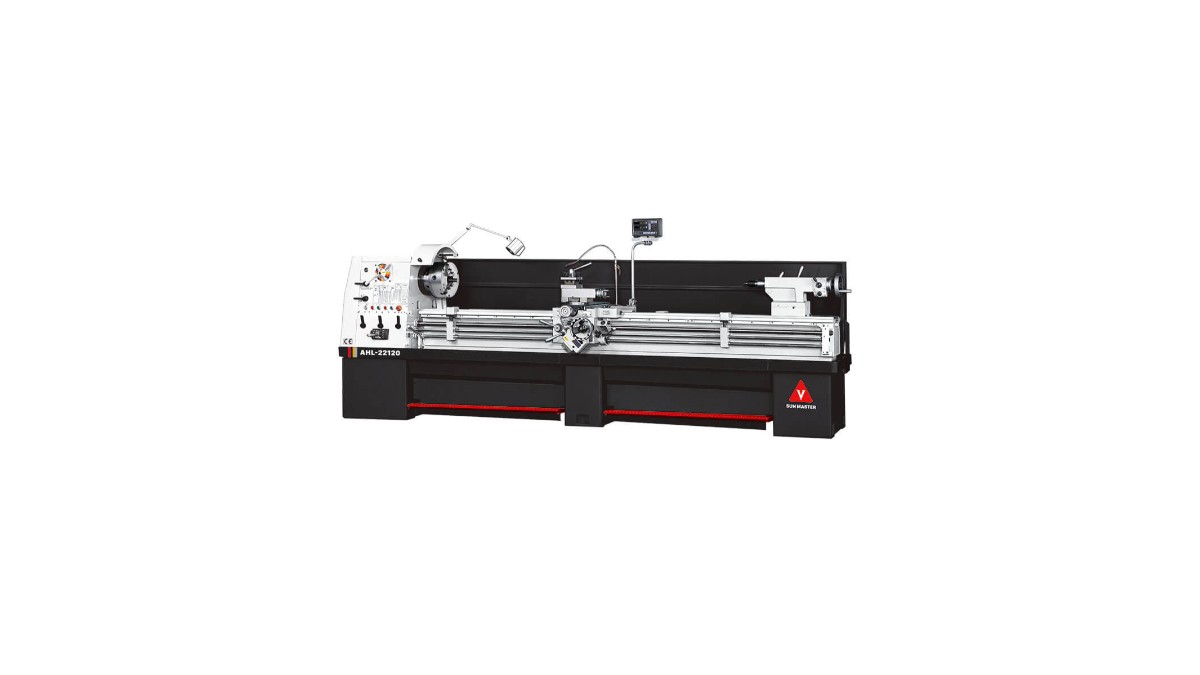
For buyers comparing conventional and CNC lathe solutions, Shun Chuan Precision Machinery Co., Ltd. (Sunmaster) offers a useful product reference. According to its website, the company has focused on the design and manufacture of metalworking machinery since 1994 and provides both Manual Lathes and CNC Lathes.
Its manual lathe range includes all gear-head lathes, variable speed lathes, and clutch type lathes, making it relevant for workshops, toolrooms, and general production environments that still require conventional machining capability.
Conclusion
Understanding the differences between a manual lathe, an engine lathe, and a CNC lathe helps buyers make decisions that are not only technically sound, but also commercially practical. A manual lathe offers flexibility, direct control, and lower upfront cost. An engine lathe provides dependable general-purpose machining capability. A CNC lathe delivers repeatability, automation, and higher output for stable production environments.
The right choice depends on how a shop works, what kind of parts it produces, and what level of efficiency and flexibility it needs. Buyers interested in discussing suitable lathe options can contact Sunmaster.
Frequently Asked Questions
1. Is a manual lathe the same as an engine lathe?
In many cases, yes. The two terms are often used similarly, although “engine lathe” usually refers to a general-purpose conventional lathe.
2. When is a manual lathe a better choice?
A manual lathe is often the better choice for repair work, prototypes, training, low-volume production, and jobs that change frequently.
3. Why do factories still use engine lathes?
Factories still use engine lathes because they are versatile, reliable, and practical for general machining tasks that do not require full automation.
4. Is CNC always more efficient?
Not always. CNC is usually more efficient for repeat production, but a manual lathe may be more efficient for one-off jobs, repair work, or fast adjustments.
5. What should buyers compare before purchasing a lathe?
Buyers should compare production volume, part consistency requirements, operator skill, total cost, maintenance needs, and job flexibility.
6. Can manual and CNC lathes be used together in one factory?
Yes. Many factories use both to balance flexibility and productivity.

(4059)(20260924)(原).jpg)
(2367)(20260924)(原).jpg)