In the competitive world of polymer container manufacturing, choosing the right blow molding machine is a strategic decision. A poorly selected machine can lead to inefficiencies, excessive costs, or frequent downtime. In this guide, we present a neutral, buyer-oriented roadmap to help procurement engineers, plant owners, and OEM decision-makers evaluate and select blow molding equipment that truly matches their production needs.
Understand the Key Blow Molding Types & Their Use Cases
Before diving into vendor comparisons, one must match the process type to the intended product. The three primary blow molding variants are:
| Type |
Typical Applications |
Advantages & Constraints |
| Extrusion Blow Molding (EBM) |
Jugs, drums, containers, large hollow parts |
Flexible, ability for multi-layer coextrusion; but wall thickness control can be challenging (Wiki) |
| Injection Blow Molding (IBM) |
Small bottles, medical containers, precision necks |
Very tight tolerances, minimal trimming; but lower throughput and higher tooling cost |
| Injection Stretch Blow Molding (ISBM) |
PET bottles, cosmetic containers, carbonated beverage bottles |
Enables biaxial orientation and strength for PET; but requires preform handling |
Advice: Always start by mapping your target SKUs (size range, material, neck features) to the optimal blow molding variant. Misalignment here is the root cause of many post-purchase regrets.
Critical Selection Criteria for Buyers
Below is a refined checklist of major factors buyers should compare across machine quotes and vendors:
- Capacity versus Actual Output
Many vendors quote theoretical maximum throughput, but real yield (including downtime, changeovers, rejects) is lower. It’s prudent to size your machine at ~20–30% margin above projected steady-state demand. (watertankmachine)
- Energy Efficiency & Utility Consumption
Power, compressed air, cooling water, and auxiliary consumption all contribute heavily to OPEX. Machines with servo drives, efficient heating zones, or smart control systems reduce lifetime cost.
- Automation & Changeover Flexibility
Fully autonomous machines reduce labor, but come with higher capital cost. If your production mixes many SKUs, pay attention to mold changeover time, tooling interfaces, and flexibility.
- Mold/Tooling Compatibility & Support
The machine must match your mold interface, clamping force, cooling channels, and parison control needs. Vendor willingness to co-design molds or provide mold adaptation is a plus. (cmppin)
- Process Control & Sensors
Real-time monitoring (pressure, temperature, wall thickness) and closed-loop control help maintain consistent quality and reduce rejects. Some advanced systems adapt parameters cycle to cycle.
- After-Sales Service & Spare Parts Supply
With global operations, having rapid access to spare parts, local technicians, or remote diagnostics is essential to minimize downtime disruptions.
- Total Cost of Ownership vs. Purchase Cost
Always run a “five-year TCO” model factoring in depreciation, utilities, maintenance, spare parts, staffing, and scrap. A cheaper upfront machine may cost more in the long run.
- Vendor Reputation & Track Record
Look for manufacturers with a proven history of installations in your target region or product domain. Ask for case studies, customer references, especially on uptime and service responsiveness.
Vendor Showcase: Five Prominent Machine Manufacturers
To give you concrete examples in the market, here are five recognized names in blow molding / extrusion / PET/stretch blow machine supply. (These are illustrative, not endorsements.)
| Manufacturer |
Specialty / Strengths |
Notes for Buyers |
| Parker Plastic Machinery |
Full electric, extrusion, accumulator, stretch systems |
Well-established in many regions; good for turnkey installations |
| Yan Kang |
PET and beverage packaging solutions |
Strong presence in bottled beverage markets with high-speed ISBM |
| Krones AG |
Comprehensive packaging and processing lines, including blow molding modules |
Good for end-to-end line integration |
| SIPA |
Focus on PET and multi-layer stretch/blow machines |
Strong in beverage & consumer goods bottle markets |
| Bekum |
Extrusion blow molding machines (especially accumulator types) |
Good track record for industrial containers and drums |
In your RFQ comparisons, you should ensure each vendor addresses your checklist of criteria above, and see how their machines perform under your real test conditions (e.g. trial runs, sample runs).
Structuring an RFQ / Evaluation Process
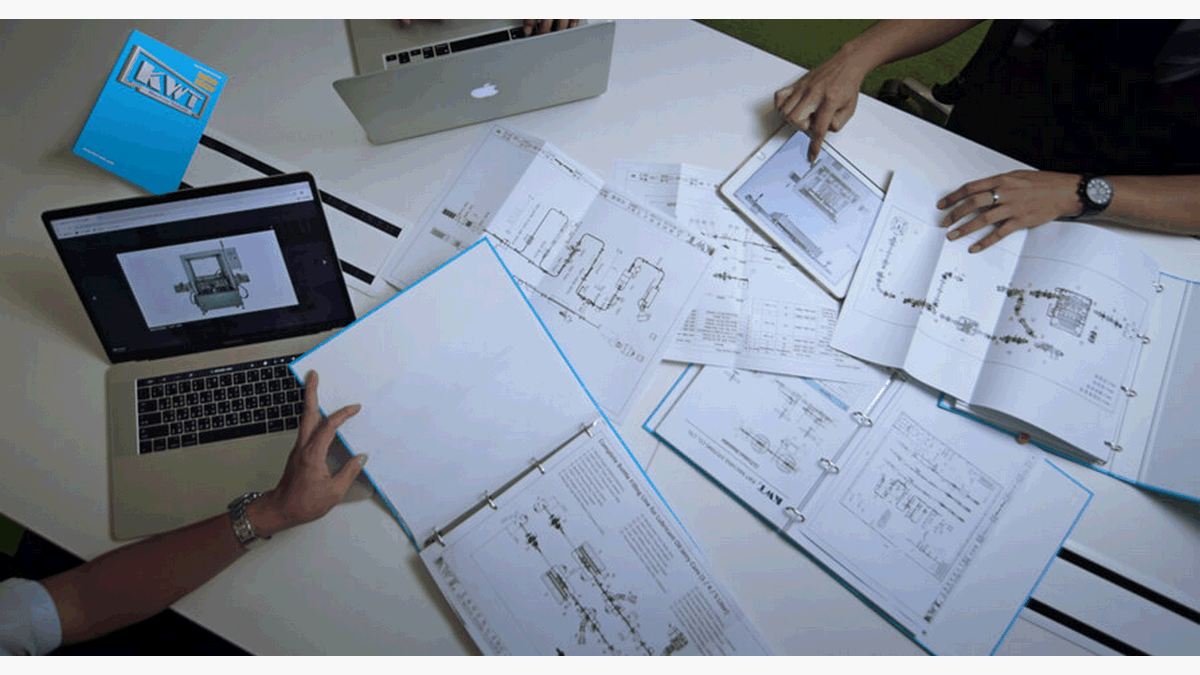
To ensure apples-to-apples comparisons, your RFQ should include:
- Detailed list of SKUs (volumes, geometry, material, wall thickness, neck specs)
- Expected annual throughput, SKU mix, future growth plans
- Utilities available (power, air, water) at site
- Quality/control requirements (tolerances, thickness variation, reject rate)
- Tooling/mold plans or interfaces
- Requested support levels: local service, remote diagnostics, spare parts lead times
When you get vendor proposals, you might structure a scorecard (for example, weighting each factor above) and assign each vendor a normalized score. You may also ask vendors to submit a sample run at your SKU or invite you to factory audits.
Pitfalls & Risk Mitigation
- Over-specification: Buying a huge machine “for the future” wastes capital.
- Underestimating auxiliary costs: E.g. poor cooling or air supply can bottleneck production.
- Vendor overpromising: Always verify claims by visiting live installations or obtaining references.
- Poor spare parts strategy: Confirm the availability and cost of critical spares before acceptance.
- Ignoring digital readiness: If the machine lacks modern control / Industry 4.0 interfaces, future upgrades may be expensive.
Conclusion
Selecting a blow molding machine is a mission-critical step that impacts both CAPEX and long-term profitability. By mapping your product SKUs to the right process type, applying a rigorous evaluation checklist, soliciting detailed vendor proposals, and comparing via consistent scorecards, you can make a defensible, data-driven choice. Incorporate life-cycle cost modeling, insist on trial runs, and build strong service partnerships. These steps will help you arrive at a machine decision that aligns with both near-term goals and scalability.


(4059)(20260924)(原).jpg)
(2367)(20260924)(原).jpg)