Knowledge

Biodegradable Straw Making Machines: Key Technologies Driving Sustainable Packaging Production

This article examines how biodegradable straw making machines are supporting the shift toward sustainable packaging production. It covers PLA and paper straw manufacturing technologies, automation trends, production challenges, and key factors manufacturers should consider when selecting biodegradable straw production equipment.
Published: May 27, 2026
Biodegradable Straw Making Machines: Key Technologies Driving Sustainable Packaging Production

Why the Packaging Industry Is Moving Toward Biodegradable Straws

The shift away from single-use plastics is driven by environmental regulations, ESG requirements, and increasing consumer demand for sustainable packaging. Governments across Europe, North America, and Asia have introduced restrictions on plastic straws, accelerating adoption of biodegradable alternatives in foodservice industries.

As a result, manufacturers are transitioning toward production systems that support PLA straws, paper straws, and plant-fiber-based materials. This has increased demand for efficient and scalable biodegradable straw making machines.


Common Technologies Used in Biodegradable Straw Making Machines

PLA Straw Extrusion Systems

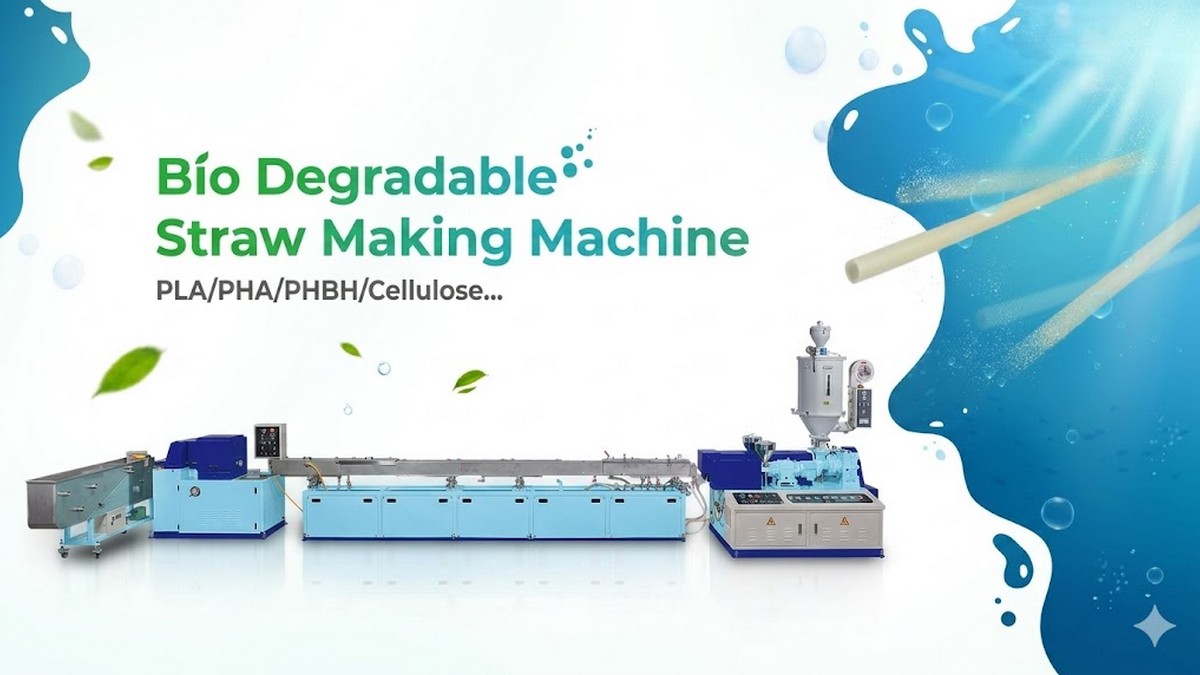
PLA (Polylactic Acid) is widely used due to its biodegradable properties and plastic-like usability. Production systems typically include extrusion, cooling, and precision cutting modules.

Example equipment: Jumbo Steel Machinery provides industrial PLA straw production solutions, including their PLA Straw Making Machine designed for stable extrusion and automated operation.

Paper Straw Manufacturing Systems

Paper straw production involves spiral winding, adhesive bonding, drying, and cutting processes. Machines must ensure structural strength and moisture resistance during high-speed production.

Plant Fiber and Alternative Materials

Alternative materials such as bagasse, bamboo fiber, and rice-based composites require customized forming systems due to varying density and processing behavior.


Key Factors When Evaluating Production Equipment

Production Stability

Stable output, precise cutting, and consistent material feeding are essential for maintaining quality in large-scale production environments.

Automation and Efficiency

  • PLC control systems
  • Servo synchronization
  • Automatic counting and inspection
  • Smart monitoring systems

Material Flexibility

Modern manufacturers prefer equipment capable of handling multiple biodegradable materials to adapt to changing market demands.

Food Safety Compliance

Machines must meet food-grade standards, including stainless steel components, hygienic design, and international certifications such as CE compliance.


Manufacturing Challenges in Biodegradable Straw Production

Material Sensitivity

Biodegradable materials such as PLA and paper require precise process control due to narrow operating conditions and sensitivity to temperature and moisture.

Efficiency vs Sustainability

Manufacturers must balance production speed, energy consumption, and material waste reduction to achieve both economic and environmental goals.

Durability Performance

Ensuring straws maintain strength during beverage use remains a key challenge, particularly for paper-based products exposed to liquids.


Future Trends in Biodegradable Straw Manufacturing Technology

Smart Manufacturing

IoT-based monitoring, predictive maintenance, and real-time production analytics are becoming standard features in modern machinery.

Fully Integrated Production Lines

Future systems will combine forming, cutting, inspection, and packaging into fully automated production lines.

Material Innovation

New compostable materials are driving demand for more flexible and modular machine designs.


Conclusion

Biodegradable straw making machines are a key enabler of sustainable packaging transformation. As regulations tighten and demand increases, manufacturers must invest in efficient, flexible, and compliant production systems to remain competitive.

Companies such as Jumbo Steel Machinery Co., Ltd. continue to play a role in developing advanced PLA straw production technologies that support industrial-scale sustainability.

Published by May 27, 2026

Further reading

You might also be interested in ...

Headline
Knowledge
Choosing Between C-Frame and H-Frame Hydraulic Presses for Metal Stamping
This article provides a comprehensive guide for manufacturers on choosing between C-frame and H-frame hydraulic presses for metal stamping operations. It begins by analyzing the structural differences: C-frame presses are highlighted for their three-sided accessibility and space-saving design, making them ideal for light to medium-duty tasks. In contrast, H-frame presses are recognized for their superior stability and rigidity, making them the preferred choice for high-tonnage, high-precision, and heavy-duty applications. The article features a detailed comparative table evaluating both types based on tonnage capacity, footprint, and cost. It also outlines critical selection factors such as precision requirements and budget constraints. Finally, the guide naturally introduces leading global manufacturers, including Yeh Chiun, Schuler, AIDA, Komatsu, and Beckwood, helping readers make informed investment decisions tailored to their specific production needs.
Headline
Knowledge
What Do Fruit Juice Suppliers Provide? A Practical Guide for Beverage and Food Brands
A practical overview of ingredient formats, supplier services, and sourcing considerations for beverage and food product development.
Headline
Knowledge
Understanding HVLP Technology: How Low Pressure High Volume Saves Paint and Costs
A practical guide to how HVLP spray systems improve coating efficiency, reduce waste, and support better cost control.
Headline
Knowledge
Why Skin and Immune Formulation Matters More Than Coat Appearance in Companion Animal Health
Skin and coat concerns in companion animals often signal a broader formulation challenge rather than a surface-level issue alone. Recurrent dryness, itching, dull coat condition, and visible sensitivity are frequently linked to barrier weakness, immune imbalance, nutrient utilization, and digestive stability. Products positioned only around coat shine or a single trending ingredient may therefore fall short in daily use. More effective formulation usually begins with a broader biological view: skin health is closely shaped by the interaction between barrier function, immune response, microbiota balance, and life-stage needs.
Headline
Knowledge
Why Food Safety Certifications Matter More Than Ever in Bubble Tea Supply Chains
Bubble tea supply chains are under greater scrutiny than before. Flavor innovation still drives demand, but in cross-border trade, growth increasingly depends on whether ingredients can move through approval processes smoothly, meet market-specific expectations, and remain consistent across repeated shipments. Certifications such as ISO 22000, HACCP, FSSC 22000, HALAL, and KOSHER are no longer just supporting documents. They now influence market access, supplier credibility, risk control, and the ability to maintain stable commercial relationships over time.
Headline
Knowledge
How to Choose a Health Supplement Manufacturer: A B2B Buyer’s Guide to MOQ, Sampling, and Hidden Costs
Choosing a health supplement manufacturer is not just a purchasing decision. For B2B buyers, it is a commercial, technical, and operational decision that directly affects product quality, launch timing, working capital, and long-term supply stability. A manufacturer that looks competitive on paper may still create problems later if its MOQ structure is inflexible, its samples do not reflect production reality, or its quotation leaves out key cost items. That is why buyers evaluating contract manufacturing health supplements partners should look beyond unit price. The better question is not simply “Who can make this product?” but “Which manufacturer can support this project with the right balance of cost transparency, technical fit, and execution reliability?” This guide breaks that decision into five practical steps, with special attention to MOQ, sampling, and hidden costs, three of the most common sources of confusion in supplement sourcing.
Headline
Knowledge
Automatic Loading and Unloading CNC Cylindrical Grinding Machines: How Automation Improves Precision, Throughput, and Process Stability
A neutral overview of how automated work handling is changing cylindrical grinding, from part consistency and labor efficiency to safety and smart manufacturing integration.
Headline
Knowledge
Oil Seal Cross Reference: How to Match Part Numbers, Dimensions, and Seal Types Correctly
A practical guide to using oil seal interchange tables correctly and understanding what still needs to be verified
Headline
Knowledge
Agricultural Aluminum Tripod Ladder: Why It Matters in Orchard Work and Modern Field Safety
A practical introduction to how agricultural aluminum tripod ladders are used, why their design suits orchard work, and what buyers now look for in the category
Headline
Knowledge
Tire Curing Press Machine: How It Shapes Tire Quality, Efficiency, and Modern Production
A practical look at how tire curing press machines work, why they matter in tire manufacturing, and what manufacturers now expect from modern curing systems
Headline
Knowledge
How Fresh Tea Bag Suppliers Maintain Quality from Tea Sourcing to Final Packaging
A closer look at sourcing discipline, production controls, and packaging strategies behind reliable fresh tea bag quality.
Headline
Knowledge
SoM vs CoM vs SBC: How to Choose the Right Embedded Architecture for Industrial IoT Projects
How SoM, CoM, and SBC choices affect integration flexibility, deployment scale, and long term industrial IoT planning
Agree