A PCR pump must be assessed as a dispensing mechanism and as part of the complete cosmetic package.
A cosmetic bottle is relatively straightforward compared with the pump mounted on top of it. A lotion pump contains parts that must move, recover their shape, maintain a seal and dispense a reasonably consistent amount of product. Changing one of those parts to post-consumer recycled (PCR) plastic can affect how the mechanism performs.
That is why a cosmetic brand comparing PCR lotion pumps should look beyond the recycled percentage. The important questions concern which components contain PCR, whether the pump works with the formula, and how the finished bottle-and-pump combination will be assessed for recycling. European packaging rules add another layer, but regulatory targets do not replace functional testing.
Why PCR Is Harder to Introduce Into a Pump Than Into a Simple Container
Recycled polymers can vary with feedstock, processing and grade. A design using PCR therefore needs attention to dimensions, resilience, sealing surfaces and the strength of its moving components. The same recycled material may be suitable for one moulded part but require a different formulation or design in another.
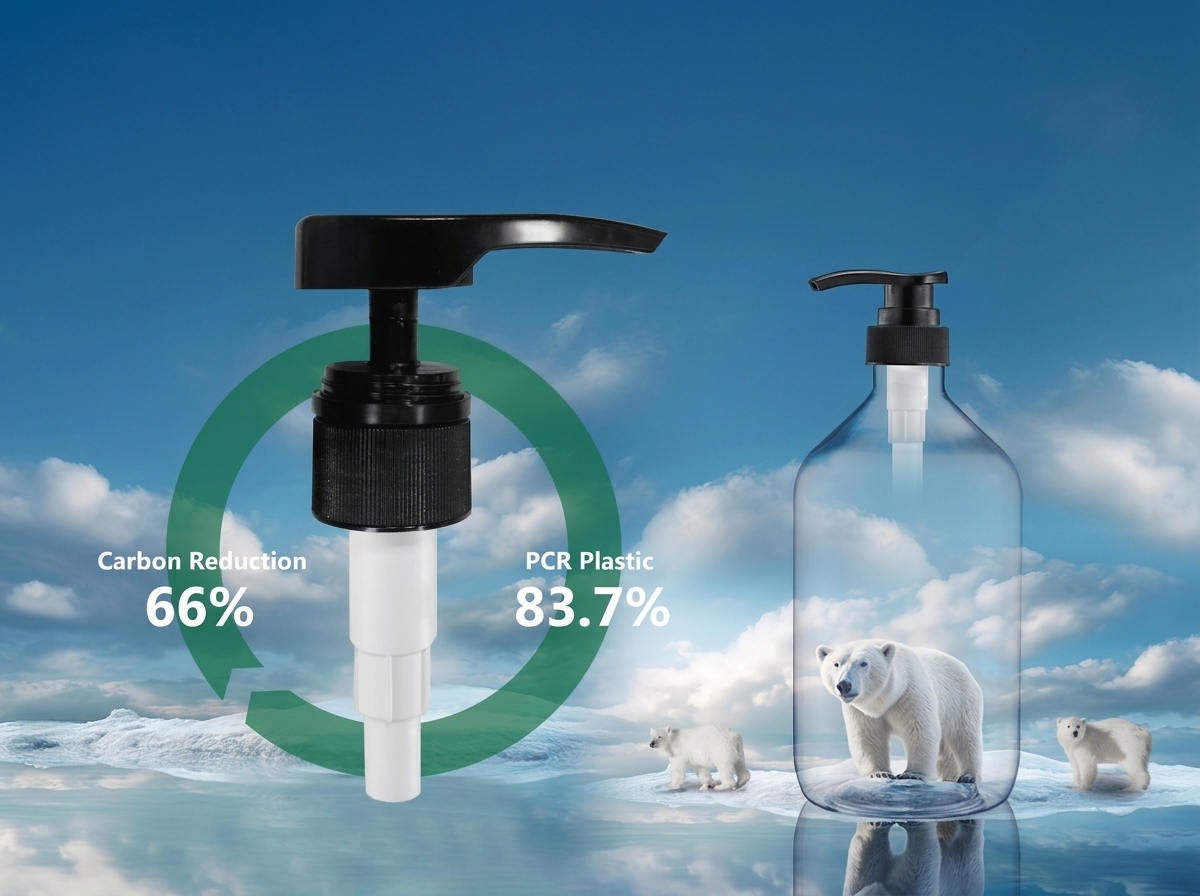
This is a documented development challenge rather than a theoretical concern. Living Fountain's account of its PCR dispensing pump project with cosmetics brand O'right describes a pump comprising 11 parts, with component-by-component testing and repeated adjustments during development. The company reports that the resulting design used more than 80% PCR plastic. That figure belongs to the particular project described; it should not be read as the standard PCR level of every lotion pump sold by the company.
For packaging buyers, the more useful lesson is how many functions a change of material can affect. A sample should be evaluated as a complete mechanism, not only as a resin declaration.
Four Checks Before Approving a PCR Pump
1. Identify Where the Recycled Material Is Used
A claim such as “80% PCR” is incomplete unless its weight basis is clear. It might describe the plastic content of a complete pump, selected plastic parts, or one production specification. These are not the same claim.
Ask for a component-level material breakdown: resin type, PCR content by weight, the components included in the calculation and the origin or traceability documentation for the recycled feedstock. Different pump sizes or actuator designs should not automatically inherit the same percentage.
2. Test the Pump With the Actual Cosmetic Formula
Dispensing performance depends on both packaging construction and product characteristics. A low-viscosity cleanser and a thick lotion may behave differently in the same pump.
For the proposed formula, packaging evaluation may need to consider priming, dispensed amount, return action, leakage, compatibility with wetted materials and performance after storage. The relevant conditions should reflect intended shelf life and use, including how the product will be transported and dispensed.
In the European Union, the Cosmetics Regulation (EC) No 1223/2009 requires packaging-material information to be considered in the cosmetic product safety report. The Commission's safety-report guidelines discuss purity, stability and potential interaction between packaging and the formula. This does not mean every pump change calls for an identical test programme; it means the actual material-and-formula combination matters.
3. Evaluate Recyclability as a Complete Package
A high PCR percentage does not prove that the used package will be easy to recycle. Pumps may combine several polymers and, in some designs, a metal spring. Colour, attachment methods and the compatibility of components with the intended recycling stream can also matter.
Replacing a metal spring with a plastic alternative can be one design approach, but “metal-free” is not a recyclability certification. A claim tested for one pump, bottle resin and colour should not be assumed to apply to another configuration.
The RecyClass recyclability methodology illustrates why the specific packaging design and its recycling stream need to be considered together. Buyers comparing suppliers should request evidence for the proposed *assembled package*, not a general statement about a single material.
4. Read the EU PPWR Requirements in the Correct Scope
The EU Packaging and Packaging Waste Regulation (Regulation (EU) 2025/40) includes recycled-content and design-for-recycling provisions. Under Article 7, the initial recycled-content targets include 10% for specified contact-sensitive plastic packaging whose main component is not PET and 30% for specified contact-sensitive PET packaging, subject to the regulation's scope and exceptions.
The applicable start is 1 January 2030 or three years after the relevant implementing act enters into force, whichever is later. The recycled-content targets use an annual average per manufacturing plant; they should not be presented as an unconditional, identical requirement for every individual pump.
Article 7 also includes an exception for certain plastic parts representing less than 5% of the packaging unit's total weight. This is not a blanket exemption for pumps on glass bottles, and the weight of the cosmetic formula is not the packaging weight. The packaging configuration must be assessed under the regulation rather than decided from the bottle material alone.
Recycled content and design for recycling are separate requirements. A pump that meets a material-content target does not automatically establish that the complete package meets a recyclability criterion.
What a Useful Supplier Comparison Looks Like
| Purchasing question | Evidence that helps answer it |
| Which parts contain PCR? | Component-level bill of materials, resins and PCR percentage basis |
| Will it dispense the finished formula reliably? | Compatibility, stability, leakage and dispensing results for the intended formulation |
| Is the complete package suitable for its recycling stream? | Assessment covering the pump, bottle, closure, materials and colour |
| What PPWR category may apply? | Description and weights of the empty packaging components and the relevant material categories |
| Will production match the approved sample? | Agreed material specifications, design revision control and acceptance criteria |
This information also helps separate two purchasing decisions that can otherwise become confused: selecting an environmentally preferable design and confirming that the supplier can manufacture it consistently.
Frequently Asked Questions
Q: Is a higher PCR percentage always a better lotion pump?
A: Not necessarily. The recycled-content claim should be assessed alongside dispensing, sealing, compatibility and recycling performance. Two different pump designs may use different PCR percentages and still serve different product requirements.
Q: Does a PCR lotion pump automatically comply with the EU PPWR?
A: No. The PPWR addresses multiple aspects of packaging, including the applicable recycled-content category and design for recycling. One supplier material declaration does not establish the compliance of the finished packaging format.
Q: Can an approval for one bottle-and-pump combination be applied to another bottle?
A: Not automatically. Changes in polymer, colour, closure design or material separation can affect recyclability. The evidence needs to match the packaging configuration being supplied.
From Recycled Resin to a Working Dispenser
The practical challenge with PCR lotion pumps is not simply replacing virgin plastic. It is doing so while preserving the mechanism's function and designing a package that can be evaluated for circularity and the market's applicable rules.
Manufacturing examples such as Living Fountain's PCR dispensing pump development show why material testing and multi-component design matter. For a cosmetic brand, the purchase decision should ultimately rest on the specific pump design, the formula it will dispense and the evidence available for the finished package.