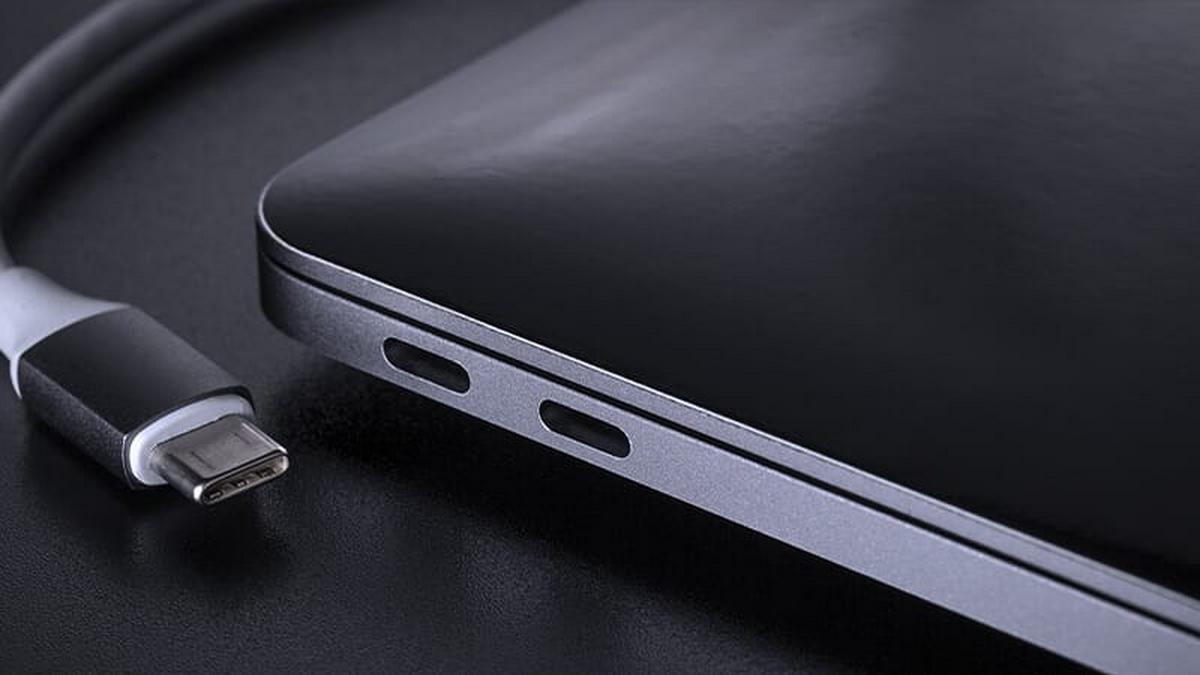
USB-C charging has become common in consumer electronics, but its potential now extends to equipment with more demanding power requirements.
Commercial displays, docking stations, industrial tablets, and selected healthcare devices increasingly depend on reliable power connections that support portability and flexible installation.
Traditional adapters often use proprietary connectors and fixed output voltages, making replacement and equipment upgrades more complicated. USB Power Delivery 3.1 (USB-PD 3.1) addresses some of these limitations by supporting up to 240W through a standardized USB-C interface. The advantage, however, is not simply higher wattage. Its practical value depends on equipment compatibility, power requirements, and the operating environment.
What Makes USB-PD 3.1 Different From Earlier Power Delivery Standards?
Earlier USB Power Delivery implementations supported up to 100W. USB-PD 3.1 introduced Extended Power Range (EPR), adding higher voltage levels that allow compatible USB-C connections to deliver up to 240W.
| Power Range |
Maximum Power |
Supported Fixed Voltage Levels |
| Standard Power Range (SPR) |
100W |
5V, 9V, 15V, 20V |
| EPR |
140W |
Adds 28V |
| EPR |
180W |
Adds 36V |
| EPR |
240W |
Adds 48V |
USB-PD works through communication between the adapter and connected equipment. Rather than supplying an arbitrary voltage, the adapter advertises supported power profiles, allowing the device to request an appropriate output. This capability makes USB-C suitable for a wider range of equipment, but not every application benefits from EPR.
For example, a device requiring 65W may operate adequately with a compatible Standard Power Range adapter. Equipment requiring more than 100W may benefit from EPR, provided the required voltage and current are supported.
A 240W rating indicates maximum output capability, not the power every connected device will receive.
How Does USB-PD 3.1 Improve Commercial Power Infrastructure?
Reducing Dependence on Proprietary Adapters
Commercial installations may include laptops, displays, communication equipment, and portable terminals with different charging connections. When each device requires a dedicated adapter, replacement parts must be matched to specific models. This becomes inconvenient when equipment is upgraded or moved between locations. Standardized USB-C PD connections can reduce these difficulties when devices share compatible charging requirements.
For example, a compatible USB-PD adapter could support a portable terminal at one workstation and a higher-power device elsewhere, provided both devices accept its available output profiles. This flexibility is particularly useful where equipment configurations change frequently.
Supporting More Convenient Equipment Operation
A standardized charging interface can make daily equipment handling more straightforward. In shared workstations, compatible devices can connect to existing USB-C charging infrastructure without requiring a different proprietary connector for each model. For portable equipment, easier access to compatible replacement adapters can also reduce disruptions caused by lost or damaged accessories.
However, connector compatibility does not guarantee charging compatibility. USB-C ports may support different power levels, and some equipment may require additional functionality or proprietary charging arrangements.
Where Can USB-PD 3.1 Benefit Medical Equipment?
Portable monitoring equipment, healthcare electronics, and certain medical accessories may benefit from standardized charging, particularly when mobility and charging convenience are important. However, USB-PD 3.1 support does not automatically make a power adapter suitable for medical applications. Medical equipment may require additional electrical safety, electromagnetic compatibility, and reliability assessments based on its intended use.
For instance, equipment connected to patients may need to satisfy applicable IEC 60601-1 requirements, while electromagnetic compatibility may be evaluated under IEC 60601-1-2. Power interruptions also deserve attention. If a USB-C connection becomes disconnected or power negotiation fails, the equipment must respond appropriately. Depending on the application, this may require battery backup or other protective measures. Consequently, medical integration should be evaluated at the complete system level, including the adapter, cable, device circuitry, and operating conditions.
Can Standardized USB-C Charging Reduce Electronic Waste?
USB-PD 3.1 can support more sustainable equipment management by making compatible power accessories reusable across different devices. When an existing adapter remains compatible with replacement equipment, there may be less need to purchase and dispose of another proprietary charger. This can be particularly relevant in commercial installations where equipment is periodically upgraded.
However, the environmental benefit depends on actual reuse. Replacing functional adapters solely to adopt a newer charging standard may offer little advantage. Longer accessory lifespans, suitable power ratings, and compatibility with future equipment are therefore more meaningful than adopting USB-PD 3.1 simply because it is newer.
What Should Be Checked Before Integrating USB-PD 3.1?
Before replacing a conventional adapter with USB-C PD, several technical requirements should be confirmed.
| Evaluation Factor |
What to Verify |
| Power Demand |
Continuous consumption and peak power requirements |
| Output Profiles |
Supported voltages and currents match device requirements |
| USB-C Cable |
Appropriate current rating and EPR support where required |
| Thermal Performance |
Safe operation under expected loads and temperatures |
| Safety Requirements |
Applicable equipment and power supply standards |
| Connection Reliability |
Behavior during disconnection and power renegotiation |
These checks help distinguish applications that genuinely benefit from USB-PD 3.1 from those where an existing power architecture remains more appropriate.
In particular, devices that cannot negotiate USB-PD power directly may require additional circuitry or design modifications. Changing the connector alone is insufficient.
EDAC POWER's USB-C PD Solutions for Commercial Applications
EDAC POWER's USB PD Charger includes a range of USB-C power adapters designed to accommodate different power requirements, including models supporting USB-PD 3.1 and high-power applications. With GaN-based designs available across selected models, the lineup offers options for equipment requiring compact power solutions, flexible output configurations, and integrated protection features. Specific capabilities and supported power profiles vary by model.
EDAC POWER also provides customized solutions for specific PD requirements. Its broader power supply portfolio covers commercial, industrial, and medical applications, although medical suitability must be confirmed for the particular product and intended equipment.
Choosing USB-PD 3.1 for the Right Applications
USB-PD 3.1 expands the range of equipment that can use standardized USB-C power delivery, particularly where requirements exceed the previous 100W limit.
For commercial installations, its value depends on whether compatible connections can simplify equipment operation and accessory management. For medical applications, electrical safety and system reliability remain essential.
The decision should therefore begin with actual power demands, supported charging profiles, and application-specific requirements—not the maximum wattage advertised on the adapter.