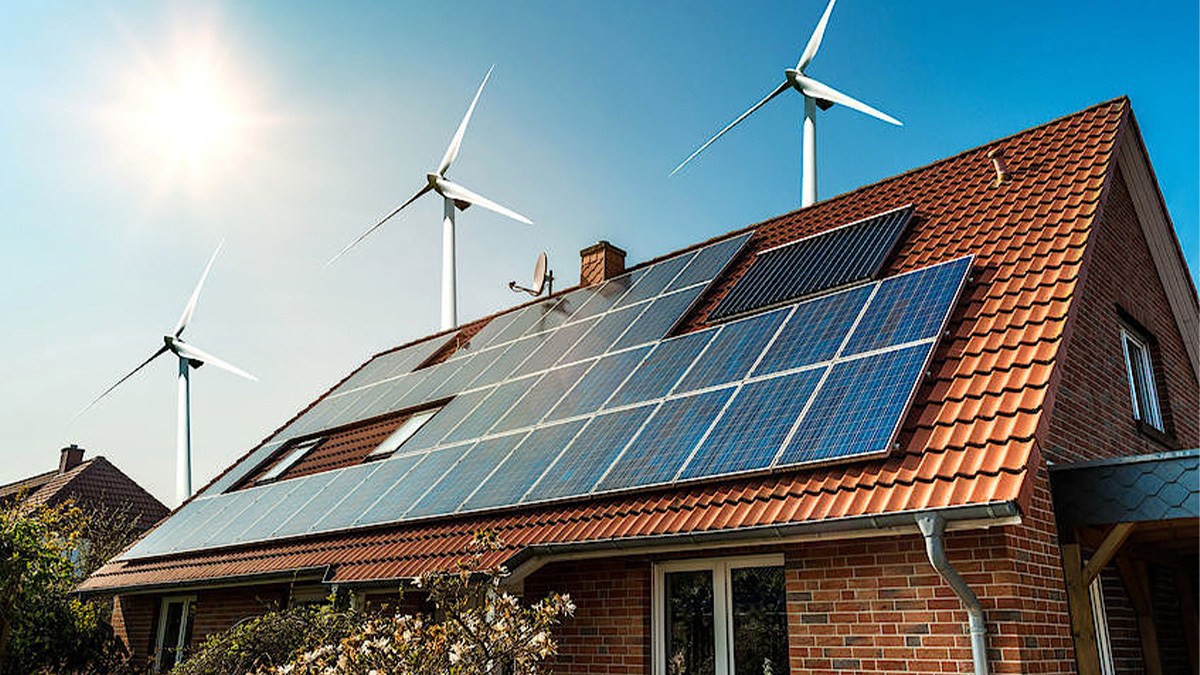
Taiwan’s solar generation reached 12.9 billion kWh in 2023, providing almost 48% of Taiwan’s total renewable energy generation. The focus of the government on energy security and sustainability aligns with the expansion of solar energy infrastructure. The growing electricity demand is pushing the need for additional solar photovoltaic (PV) installations, particularly in industrial and commercial sectors, which are significant consumers of electricity in Taiwan. Moreover, the energy requirements of the industrial sector are driving the adoption of large-scale solar PV projects. In parallel, Taiwan's battery market is expected to reach USD 0.77 billion by 2025 and grow at a CAGR of 14.3% to USD 1.49 billion by 2030. The government plans to accumulate 590 MW of battery-based energy storage by 2025, with significant contributions from both public and private sectors.
Business Opportunities and Investment Trends
Ongoing developments in renewable energy require close integration between energy generation, battery storage, deregulated power markets, and international collaboration.
Energy Storage Integration
As renewable energy sources like solar and wind become more widespread, integrating them with reliable energy storage systems is critical to overcoming their inherent intermittency. Battery Energy Storage Systems (BESS) are essential for grid stability. BESS store surplus electricity during peak generation and release it when demand is high or supply is low, helping to balance the grid and support services such as frequency regulation.
In Taiwan, the government aims to deploy 590 MW of battery-based energy storage by 2025. Analysts estimate that integrating storage systems with solar and wind projects could generate over US$1 billion in economic value—especially as energy demand rises and grid resilience becomes a national priority. Key players such as ProLogium Technology are developing advanced battery technologies to support this growth, including solid-state batteries tailored for both electric vehicles and grid-level applications.
Corporate Power Purchase Agreements (CPPAs)
The liberalization of Taiwan’s electricity market has facilitated the rise of Corporate Power Purchase Agreements (CPPAs)—long-term contracts through which private companies directly purchase renewable energy from generators. These agreements allow companies to lock in fixed electricity prices, hedge against market volatility, and meet sustainability targets under global ESG frameworks.
Taiwan’s Ministry of Economic Affairs has actively encouraged CPPA adoption as part of its broader Renewable Energy Development Act. By 2024, CPPA-traded green electricity had reached 2.49 terawatt-hours (TWh)—a 30% increase from the previous year. Large manufacturers, data centers, and global tech firms are among the most active participants. For example, Taiwan Semiconductor Manufacturing Company (TSMC) signed the island’s first CPPA for offshore wind energy, signaling the model’s growing appeal across industries.
International Collaborations and Foreign Investment
Taiwan's clean energy ecosystem is drawing substantial interest from international investors and multinational corporations seeking both business opportunities and sustainable energy sources for their regional operations.
A notable example is Google, which in 2024 acquired a stake in New Green Power, a major Taiwanese solar developer owned by BlackRock. Through this partnership, Google secured access to up to 300 megawatts (MW) of solar-generated electricity. This move aligns with the tech giant’s global goal of operating entirely on carbon-free energy by 2030. It also reflects a broader trend among global corporations seeking to decarbonize their supply chains and data centers through localized green energy procurement in Asia.
Furthermore, Taiwan’s strategic location, strong intellectual property protection, and stable regulatory environment make it an attractive hub for clean energy investments. With supportive policies, grid modernization initiatives, and an active private sector, Taiwan is well-positioned to become a renewable energy leader in the Asia-Pacific region.
Key Taiwanese Solar Companies
Taiwan is home to several globally competitive solar manufacturers that play a vital role in advancing solar energy technologies. These companies are known for their high-efficiency products, innovation in next-generation solar cells, and expanding international market presence.
United Renewable Energy Co. Ltd. (URE)
URE is a premier Taiwanese solar manufacturer formed in 2018 through the merger of Neo Solar Power, Gintech Energy, and Solartech Energy. The company specializes in high-efficiency solar modules and cells, including mono-crystalline PERC and bifacial modules.
URE has completed over 500 megawatts (MW) of solar projects in the United States and more than 250 MW in Taiwan—enough combined to power hundreds of thousands of homes. The company continually invests in advanced solar cell technologies to improve energy efficiency and performance. One such move includes upgrading its manufacturing facilities to produce TOPCon M10 solar cells—a next-generation technology that offers higher energy conversion rates. TOPCon (Tunnel Oxide Passivated Contact) reduces energy loss and increases output, while M10 refers to a larger, industry-standard silicon wafer size (182 mm) used to make higher-power solar modules in line with global market demands.
Motech Industries, Inc.
Founded in 1981, Motech is one of the world's top producers of solar cells, offering a range of photovoltaic solutions, including mono- and multi-crystalline silicon solar cells, modules, and complete PV systems.
Motech was the first Taiwanese manufacturer to start TOPCon production in 2020 and aims to boost conversion efficiency rates to 24.5%. With a strong international footprint, Motech has been expanding its market share by catering to overseas clients seeking high-quality, non-China solar products.
TSEC Corporation
TSEC specializes in the development and manufacturing of high-performance solar modules, catering to both domestic and international markets. The company offers a range of products, including PERC, bifacial, and TOPCon modules, with power outputs ranging from 390 Wp to 605 Wp. TSEC has upgraded its production lines from PERC M10 to TOPCon M10, aligning with global technology transitions.
Advancements in Battery Technology
Taiwan's battery market is poised for significant expansion. Prominent Taiwanese battery manufacturers include:
ProLogium Technology
Founded in 2006, ProLogium Technology is a pioneer in solid-state battery innovation, specializing in lithium ceramic batteries for electric vehicles (EVs) and energy storage systems. Their proprietary technology features a ceramic separator, silicon anode, and nickel manganese cobalt (NMC) cathode, offering high energy density and rapid charging capabilities.
ProLogium has established the world's first giga-level solid-state lithium ceramic battery factory in Taoyuan, Taiwan, and plans to commence mass production at a new facility in Dunkirk, France, by 2027.
Amita Technologies Inc.
Established in 2000, Amita Technologies Inc. is a leading manufacturer of lithium-ion polymer batteries in Taiwan. The company develops various lithium-ion battery types, including Lithium Nickel Cobalt Manganese Oxide (NMC), Lithium Iron Phosphate (LFP), and Lithium Titanate Oxide (LTO), catering to applications ranging from electric transport to energy storage systems.
CSB Battery Technologies Inc.
CSB Battery Technologies Inc. is a global manufacturer of valve-regulated lead-acid (VRLA) batteries, supplying products to over 100 countries. Their batteries are widely used in uninterruptible power supply (UPS) systems, telecommunications, and renewable energy storage. CSB's product lines, such as the GP Series and HRL Series, are known for their high reliability, long service life, and maintenance-free operation.
Taiwan's advanced solar and battery manufacturing capabilities, coupled with supportive policies and a focus on innovation, create a conducive environment for business opportunities and investments in clean energy solutions.