Market Outlook, Procurement Priorities, and Supplier Evaluation for DOT Air Fittings in Commercial Vehicles
The global commercial vehicle market is entering 2026 with a more constructive but still uneven outlook. After a volatile period shaped by demand cycles, supply-chain adjustment, fleet replacement timing, and regional policy differences, truck and bus production is expected to move into a steadier phase. S&P Global Mobility has described the global truck and bus market as moving from an uneven 2024–2025 period into cautious growth, with heavy truck production above six tons expected to trend upward before reaching a possible peak around 2028.
For buyers of safety-critical pneumatic components, this matters because growth in commercial vehicles does not only increase demand for engines, axles, electronics, and body systems. It also raises demand for smaller but essential components used in compressed air brake systems. Among these, the dot air fitting has become a more visible procurement category for OEMs, trailer builders, fleet maintenance teams, distributors, and aftermarket parts planners.
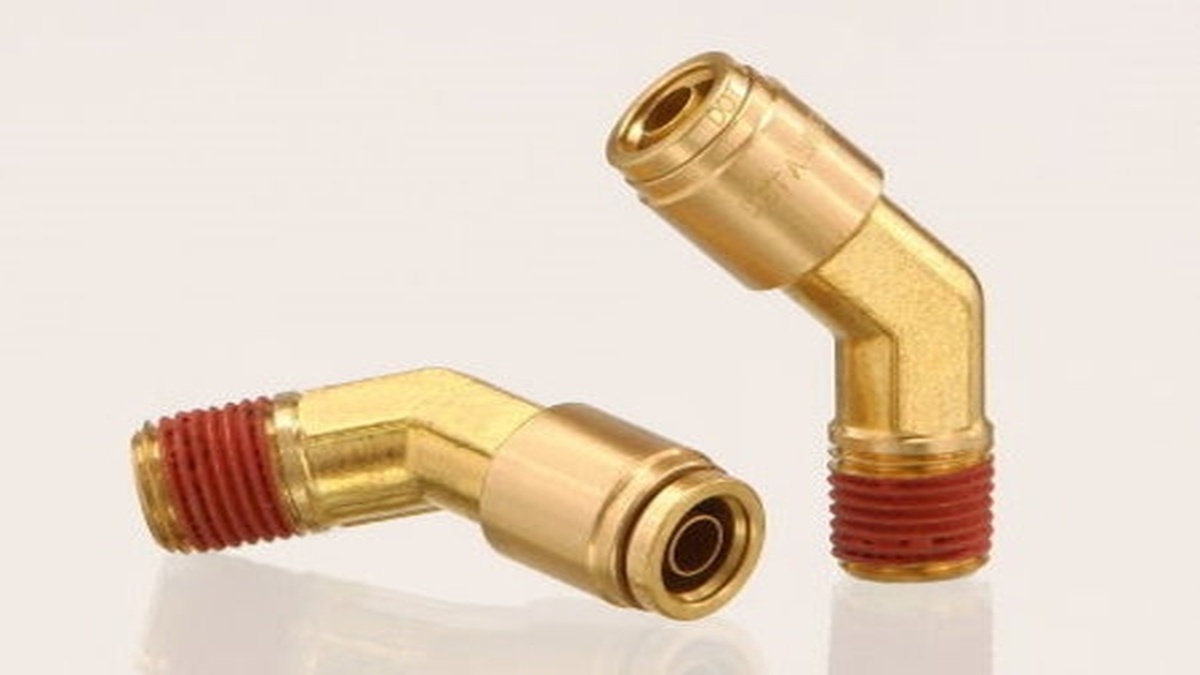
DOT fittings, including dot push to connect air fittings, are used in air brake systems for heavy vehicles such as trucks and buses. Their role is simple in appearance but critical in function: they support the secure connection of air lines that help braking systems operate reliably. The FMCSA notes that brake tubing, hoses, hose assemblies, and brake hose end fittings must meet applicable FMVSS No. 106 requirements, while installations must avoid damage from movement, chafing, kinking, mechanical stress, and high-temperature contact.
Market context: why air brake components are back in focus
In 2026, the commercial vehicle sector is not expanding uniformly across all regions. Demand depends on freight activity, infrastructure investment, bus replacement cycles, export competitiveness, emission-policy timing, financing conditions, and fleet utilization. This mixed environment creates a practical challenge for component buyers: they must prepare for growth without assuming unlimited demand visibility.
For DOT air fittings, the implication is clear. Buyers are likely to place greater emphasis on supplier reliability, specification control, and product range rather than simply looking for the lowest unit price. A fitting failure, leakage issue, compatibility mismatch, or documentation gap can create costs far beyond the price of the part itself. In air brake systems, the commercial consequence may include downtime, warranty claims, delayed production, regulatory inspection issues, or loss of distributor confidence.
The market is also becoming more segmented. OEM production, trailer manufacturing, fleet maintenance, export markets, and aftermarket distribution may each require different fitting configurations, packaging models, technical documentation, and ordering flexibility. As a result, suppliers that can support both standardized parts and application-specific requirements are likely to be more relevant during the 2026–2030 period.
What is driving demand for DOT air fittings?
The first driver is the underlying commercial vehicle cycle. Trucks, trailers, and buses require pneumatic brake systems in many heavy-duty applications, and air-line connection components are consumed both in new production and maintenance. Even modest growth in commercial vehicle production can create meaningful demand for fittings because each vehicle contains multiple air-line connection points.
The second driver is replacement and maintenance. Fleet operators are under pressure to keep vehicles on the road, reduce service time, and avoid recurring leakage problems. Push-to-connect fittings can support faster installation compared with traditional compression-style approaches in some applications. Industry guidance from fitting suppliers commonly highlights push-to-connect designs as useful in confined installation spaces and helpful for reducing installation complexity, though final selection must always be verified against the vehicle application and applicable standards.
The third driver is compliance awareness. Buyers increasingly understand that a fitting is not just a commodity connector when it is used in regulated vehicle brake systems. In North American contexts, SAE J844 is commonly associated with non-metallic air brake tubing design, while FMVSS 571.106 is the regulatory reference for applicable brake hose and assembly requirements. One technical source notes that SAE J844 defines dimensional tolerance, material construction, and performance consistency for non-metallic air brake tubing, while DOT FMVSS 571.106 compliance is relevant when assemblies are used in regulated road vehicles.
Why dot push to connect air fittings are gaining procurement attention
The growing interest in dot push to connect air fittings reflects a broader shift in commercial vehicle procurement: buyers want components that improve assembly efficiency while maintaining safety and documentation confidence. In production environments, a fitting that installs quickly and consistently can help reduce labor variation. In maintenance environments, easier connection and reconnection can support faster service.
However, procurement teams should avoid treating push-to-connect convenience as the only selection factor. For air brake applications, buyers should verify tube compatibility, thread type, pressure rating, sealing design, temperature exposure, vibration resistance, corrosion resistance, and applicable compliance documentation. Inner tube support requirements, material compatibility, and correct installation procedures can also be important depending on the vehicle system and jurisdiction.
This is where supplier capability becomes more important. A distributor may need broad shelf availability. An OEM may need engineering review, drawings, samples, and custom packaging. A brand owner may need private-label support. A fleet maintenance organization may prioritize availability, consistency, and technician-friendly product identification.
Procurement implications for OEMs, fleets, and distributors
DOT fittings are a relatively small cost item compared with major vehicle systems, but they sit inside a high-consequence application. That makes them a classic “low unit cost, high operational impact” procurement category. In 2026, buyers should treat them as engineered components rather than generic brass parts.
The following table summarizes how major market pressures translate into practical buyer responses.
| Market trend or pressure |
Procurement implication |
Buyer response |
| Gradual commercial vehicle recovery |
Higher demand for air brake components |
Qualify suppliers before peak order cycles |
| Regional production shifts |
More sourcing complexity |
Compare export experience and documentation support |
| Fleet uptime pressure |
Greater focus on leak prevention and service speed |
Review sealing design, installation method, and maintenance feedback |
| Compliance scrutiny |
More need for traceable specifications |
Request applicable standards references and test documentation |
| Labor efficiency pressure |
Interest in faster assembly |
Evaluate dot push to connect air fittings for suitable applications |
| Demand fragmentation |
More size and configuration variation |
Prioritize suppliers with broad range and customization capability |
The main lesson is that buyers should not wait until demand tightens to review supplier readiness. If commercial vehicle demand improves through the forecast period, procurement teams that already have validated suppliers, approved drawings, and documented specifications will be better positioned than buyers reacting to shortages or late-stage engineering changes.
Supplier evaluation criteria for 2026–2030
From 2026 to 2030, supplier comparison is likely to become more capability-based. Price will remain important, especially for distributors and high-volume OEM buyers, but it will not be enough. The more strategic question is whether a supplier can support stable quality, technical fit, and long-term availability.
Product range is the first criterion. Buyers should check whether the supplier offers the required fitting types, such as male connectors, female connectors, tube unions, elbows, tees, swivel elbows, and metric or inch options. A broader range can simplify supplier management and reduce the number of approved vendors.
Technical compatibility is the second criterion. Buyers should confirm tube outside diameter, thread standard, material, sealing method, operating pressure, and compatibility with SAE J844 Type A or Type B tubing where relevant. Application engineering should review the final specification before approval.
Documentation is the third criterion. For regulated or export-oriented markets, buyers may need drawings, material details, inspection records, compliance statements, or test-related information. The exact documentation package should be verified for each market and application.
Customization and OEM support are the fourth criterion. As vehicle platforms diversify, demand may increase for custom configurations, private-label packaging, special threads, alternative plating, or batch-specific documentation. A supplier with flexible production and engineering communication can reduce friction during development.
For readers moving from market analysis to specification review, examining a product example can help clarify what to compare. A manufacturer such as Guang Yang may be relevant for buyers reviewing DOT push-to-connect air fitting ranges, including brass fitting options, inch and metric sizes, and multiple connector configurations. Its product page lists 34 products in the DOT push-to-connect air fittings line and describes applications in air brake systems for large vehicles such as trucks and buses.
Forecast outlook: 2026–2030 scenarios
A balanced forecast for DOT air fitting demand should avoid exaggerated claims. The market is likely to grow with commercial vehicle activity, but the pace will vary by region, vehicle segment, and fleet investment cycle.
In a conservative scenario, commercial vehicle production grows slowly, replacement demand remains stable, and buyers focus mainly on cost control. Under this scenario, DOT fittings demand increases moderately, but procurement teams prioritize standardization, supplier consolidation, and inventory discipline.
In a base scenario, medium and heavy vehicle demand improves gradually through the late 2020s, supported by freight activity, infrastructure, and replacement needs. Buyers increasingly value suppliers that combine stable quality with flexible production, export documentation, and responsive technical support.
In an opportunity scenario, stronger regional vehicle production, trailer demand, bus replacement, and aftermarket activity raise demand for DOT fittings more quickly. In that environment, pre-qualified suppliers with broad product ranges and proven delivery performance could become more important. Buyers may also place more orders under framework agreements to manage lead time and availability risk.
Several uncertainties remain. Fuel costs, interest rates, regional emissions policies, trade restrictions, and freight demand could all affect commercial vehicle production. The speed of commercial vehicle electrification may also influence vehicle architecture, although many heavy-duty platforms will continue to require pneumatic systems in relevant applications. Specific demand growth by fitting type, region, or vehicle class is To be verified.
Practical next steps for buyers
Procurement and engineering teams should begin by mapping current and future fitting requirements across vehicle platforms or aftermarket programs. This includes size, thread, tube compatibility, pressure requirement, material, plating, packaging, annual volume, and documentation needs.
Next, buyers should classify fittings by risk. Parts used in safety-critical air brake systems should receive more rigorous supplier review than general-purpose pneumatic connectors. Engineering teams should verify specifications against the vehicle application, while purchasing teams should evaluate supplier capacity, lead time, export experience, and quality processes.
Finally, buyers should prepare for demand variability. A dual-source or approved-alternative strategy may be appropriate for high-volume distributors or OEM programs, but it should not compromise specification control. In the DOT fittings market, supplier flexibility is valuable only when paired with consistent manufacturing and clear technical communication.
The commercial vehicle market’s return to steadier growth does not automatically guarantee easy sourcing. It increases the need for disciplined supplier evaluation. For dot fittings, the buyers best prepared for 2026–2030 will be those who treat the category as a technical procurement decision, not a last-minute commodity purchase.
FAQ
1. What is a dot air fitting used for?
A dot air fitting is commonly used to connect air lines in commercial vehicle pneumatic systems, especially air brake systems. Buyers should verify the exact fitting design, tube compatibility, and applicable compliance requirements for each vehicle application.
2. Are dot push to connect air fittings suitable for all air brake systems?
Not automatically. They may be suitable for many commercial vehicle air brake applications, but buyers must confirm tube type, pressure rating, thread standard, installation method, and regulatory requirements before approval.
3. What should procurement teams check before selecting a DOT fitting supplier?
Key checks include product range, material consistency, thread accuracy, sealing performance, documentation support, production capacity, customization capability, export experience, and responsiveness to engineering questions.
4. Why is supplier documentation important for DOT fittings?
Documentation helps buyers verify specifications, support internal quality approval, and reduce compliance risk in regulated or safety-critical applications. Required documents vary by region, vehicle type, and buyer quality system.
5. How should buyers plan demand from 2026 to 2030?
Buyers should avoid relying on a single demand assumption. A practical approach is to prepare conservative, base, and opportunity scenarios, then align inventory, supplier qualification, and purchase agreements with expected vehicle or aftermarket demand.
6. When does customization matter for DOT air fittings?
Customization may matter when buyers need special threads, specific connector geometry, OEM packaging, private labeling, metric or inch variations, or application-specific documentation. It is especially relevant for OEMs, distributors, and brand owners managing multiple vehicle platforms.