How sugar reduction, plant based demand, and private label development are reshaping powdered beverage formulation in 2026
A new product development priority for beverage brands
Food and beverage companies are entering 2026 under stronger pressure to reduce sugar, simplify ingredient lists, and respond to broader demand for plant based options. This shift is no longer limited to consumer marketing. It now affects product design, labeling strategy, retail placement, and export planning.
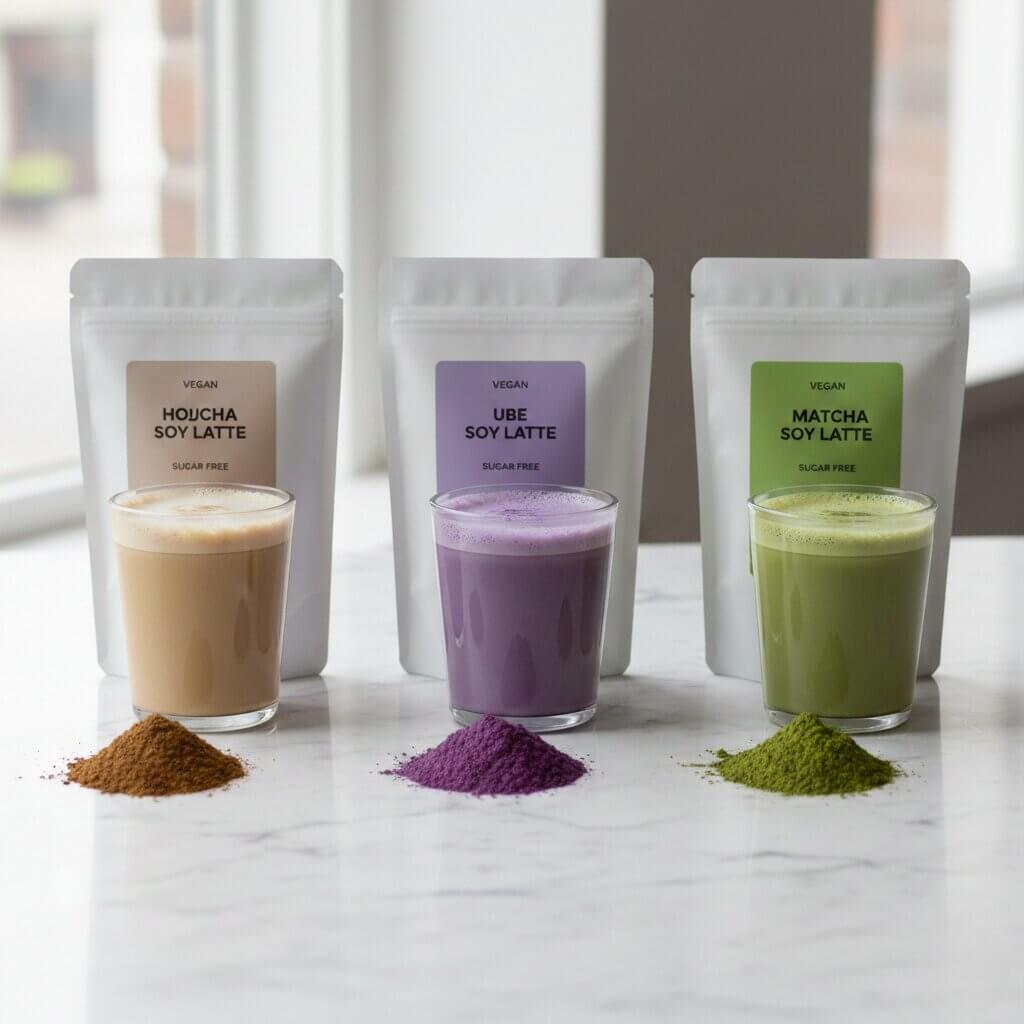
In this environment, soy milk powder has become a practical ingredient for brands reviewing instant beverages, premixes, and private label drink products. It offers formulation flexibility, room for cleaner positioning, and better alignment with lower sugar development goals. For manufacturers serving milk tea, latte, and flavored powdered beverage categories, the topic is moving from niche innovation to mainstream planning.
Why sugar reduction is influencing reformulation decisions
Public health guidance and labeling rules have made sugar content easier for buyers to identify and compare. The World Health Organization continues to emphasize lower intake of free sugars as part of a healthy diet, while the U.S. Food and Drug Administration requires Added Sugars to appear clearly on the Nutrition Facts label. These frameworks do not prescribe one ingredient solution, but they do create a stronger market incentive for reformulation.
For beverage brands, the result is straightforward. Products with high sugar content face more scrutiny from retailers, distributors, and consumers. Reformulation has therefore become a commercial issue as much as a nutrition issue. Brands that can lower sugar while maintaining texture and flavor are better placed to compete in premium and health oriented channels.
Why soy milk powder is relevant to this trend
Soy ingredients are already well established in global food systems, and soy remains one of the most widely used plant protein sources in food manufacturing. In powdered beverage applications, soy milk powder is receiving renewed attention because it can support creaminess, protein content, and plant based positioning in one formulation system.
This is especially relevant for instant beverage categories that have historically depended on added sugar and non dairy creamer to deliver mouthfeel. As brands review those legacy formulas, soy based powder systems present a way to rebuild texture with a different nutritional and label profile.
A recent BOBA EMPIRE analysis on non GMO soy milk powder for private label sugar reduction reflects this direction. The article points to growing interest in reduced sugar, plant based, and retail ready beverage formulations among private label operators preparing for 2026 market conditions.
Market drivers behind soy based beverage powders
1. Clearer sugar disclosure
Added sugar disclosure has become easier for end users to understand at the point of purchase. That visibility is pushing brands to revisit formulations that once relied on sweetness to carry the entire drinking experience.
2. Demand for plant based formats
Plant based beverages now occupy a broader role in mainstream retail. This is affecting not only ready to drink products, but also powdered mixes, café style sachets, and home use beverage bases.
3. Private label expansion
Retailers and distributors continue to develop private label portfolios that can respond quickly to category shifts. Powdered beverage systems are particularly attractive because they are easier to ship, store, and adapt into line extensions.
4. Margin and positioning considerations
Brands are looking for formulations that can support premium positioning without relying on long, highly processed ingredient lists. A product that aligns with reduced sugar and plant based demand may also improve shelf appeal in selected channels.
Product development considerations in 2026
Ingredient selection alone does not determine market success. Manufacturers still need to solve for taste, solubility, mouthfeel, flavor stability, and packaging claims. Soy milk powder can support reformulation, but the final product outcome depends on processing method, flavor pairing, and target market requirements.
This is why many brands are turning to OEM and ODM partners rather than developing every component internally. Companies that work across tea, latte, and instant beverage applications can often move faster when adapting an existing concept into a retail ready product. BOBA EMPIRE’s OEM and ODM beverage development services illustrate how this model is being used in the market.
Sustainability and sourcing remain part of the discussion
Soy is commercially important, but it is also linked to wider conversations around agricultural sourcing and land use. Research summarized by Our World in Data notes that soy is part of the broader agricultural system associated with deforestation pressures in some regions. For that reason, sourcing transparency and supplier selection remain important when companies build soy based product lines.
This does not reduce the relevance of soy milk powder in beverage reformulation. It does mean that procurement teams increasingly need to consider ingredient origin, traceability, and certification alongside cost and functionality.
What this trend means for Market Prospects readers
For industrial buyers, brand owners, and product managers, the rise of soy milk powder is best understood as part of a larger reformulation cycle. Sugar reduction, cleaner labels, plant based demand, and flexible private label manufacturing are converging at the same time. That combination is creating new interest in powdered soy based beverage systems, especially in categories where texture and convenience still matter.
The trend is not about a single ingredient replacing every traditional formula. It is about expanding the toolbox available to food and beverage developers. In 2026, soy milk powder stands out because it addresses several market needs at once, including plant based positioning, lower sugar development goals, and adaptability in OEM production.
Conclusion
Soy milk powder is gaining attention in 2026 because it sits at the intersection of nutrition policy, retail demand, and product reformulation. As brands respond to clearer sugar labeling and stronger plant based demand, powdered soy systems offer a practical path for beverage innovation. The opportunity is strongest where manufacturers can combine functional formulation, responsible sourcing, and market ready execution.