Asian manufacturing is becoming increasingly dependent on consistent water quality. From electronics fabrication to textile finishing and metal processing, water interacts with nearly every part of the production chain. Yet many facilities across Taiwan, Vietnam, Malaysia, and mainland China continue to face fluctuating water conditions that compromise operational stability. As water hardness, TDS, silica, and seasonal turbidity shifts become more pronounced, reverse osmosis (RO) technology is emerging as a foundational tool for controlling process-water reliability.
Why Water Quality Directly Affects Manufacturing Efficiency
Unstable Raw Water Conditions in Asia
Industrial clusters across Asia frequently rely on municipal or surface water sources. Seasonal monsoon rains cause turbidity spikes, while drought periods concentrate minerals and increase TDS. These fluctuations make consistent water preparation increasingly challenging for factories seeking predictable performance and low downtime.
Impact on Energy Consumption and Operating Cost
Mineral scaling on boilers, heat exchangers, and drying systems increases energy demand and reduces equipment lifespan. Particulate contamination forces more frequent cleaning cycles. Tightening product specifications—especially in electronics and precision components—make substandard water more costly than ever.
Electronics Manufacturing: The Need for Low-Conductivity Water
Contamination Sensitivity in Semiconductor and PCB Processes
Electronics production lines demand water that is not only clean but chemically stable. Even low concentrations of chlorides, alkalinity, and organic compounds pose a risk to wafer surfaces, SMT assemblies, and PCB circuits. Ion contamination leads to electrical leakage, adhesion failures, and reduced reliability.
RO as the Foundation of High-Purity Water Systems
Reverse osmosis removes more than 95% of dissolved ions, significantly lowering conductivity. This makes RO permeate ideal as a precursor to EDI or mixed-bed polishing systems. Double-pass RO configurations are increasingly adopted to reduce boron and silica in advanced production lines.
Reducing Scaling in Drying and Heat-Based Systems
Scaling as a Hidden Cost Driver
Drying equipment—such as spray dryers, tunnel dryers, and fluidized bed systems—is highly vulnerable to mineral deposition. Hardness ions and silica precipitate when water is heated, decreasing thermal efficiency and causing uneven drying.
RO as a Preventive Step for Equipment Protection
By reducing Ca, Mg, and TDS, RO significantly lowers the likelihood of scale formation. This translates to:
- Lower energy consumption
- Fewer shutdowns for cleaning
- Consistent drying performance
- Longer equipment lifespan
General Industrial Manufacturing and Water Reliability
Many manufacturers require water that is free of suspended solids, colloids, and corrosive ions. RO systems paired with multimedia filtration, activated carbon, and softening create a stable water supply suitable for plating, rinsing, cooling loops, and chemical processing.
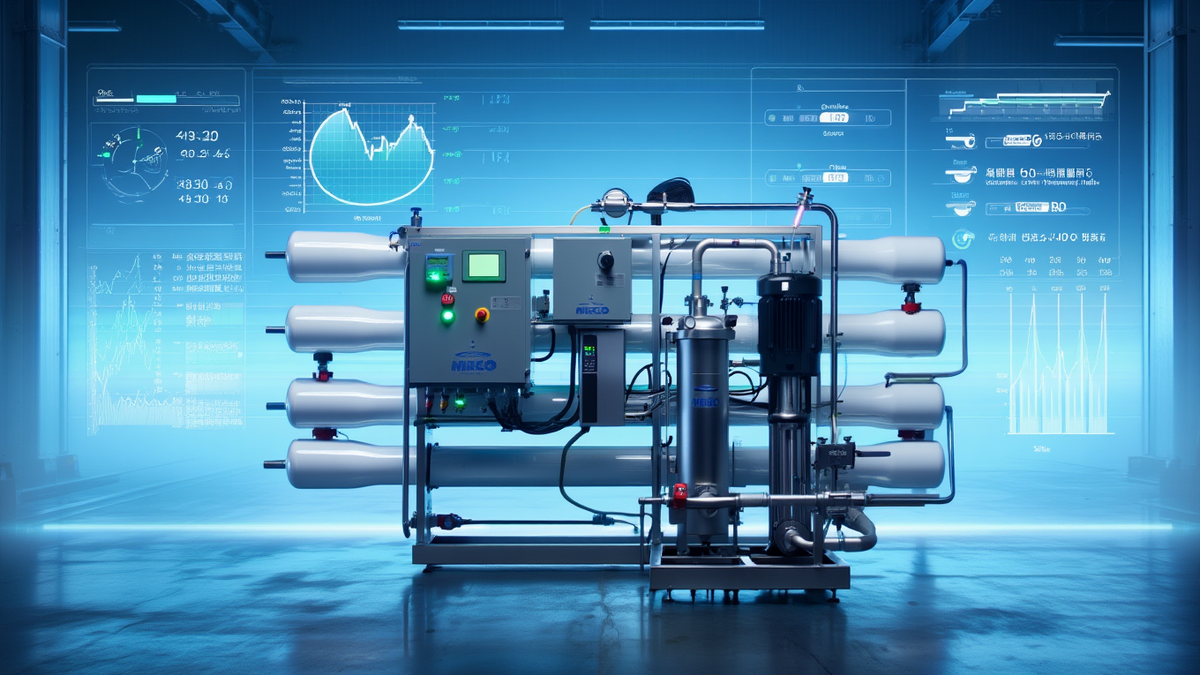
Designing an Effective Industrial RO System
Key engineering considerations include:
- Pretreatment: filtration, carbon, softening, or UF
- Single-pass vs. double-pass RO: based on required conductivity
- Automation: conductivity monitoring, flushing sequences, and pressure tracking
- CIP systems: to maintain membrane performance long-term
Conclusion: RO’s Increasing Role in Industrial Water Stability
Across Asia, RO technology is rapidly becoming a standard component of reliable industrial operations. It supports stable production, reduces energy consumption, and minimizes the effects of seasonal water variation.
Puricom Water Industrial Corporation, an experienced industrial RO plant manufacturer, supports distributors and engineering partners with customized RO solutions designed for electronics, drying systems, and general manufacturing facilities.