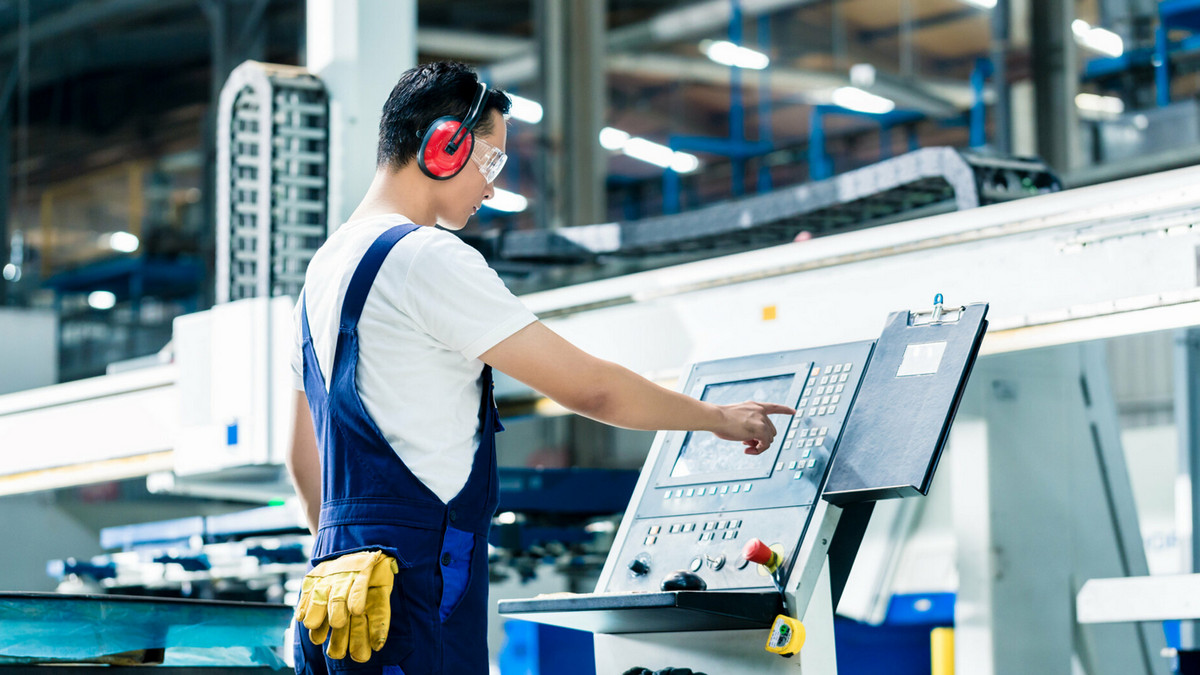
A new generation of HMIs (Human Machine Interfaces) is replacing the traditional buttons, indicators and selectors used to control machines with updated technology and components that reduce the dependence on a large number of display panels and cables. HMIs reduce operating costs and their advanced functions enhance monitoring of equipment.
In recent years, Human Machine Interface (HMI) has developed rapidly. Advanced functionality has become a differentiating factor in the market, and its importance has become more and more obvious. Products such as iPod or iPhone are good representative applications of intuitive human-machine interfaces that have completely changed the way users perceive a specific product type.
Optimizing HMI operational processes through centralization and digitization allows users to view important information such as graphics, chatbots, or digital assistance. More and more automation equipment manufacturers are introducing advanced human-machine interfaces in industrial applications to enhance the competitiveness of their products.
Due to the success of changes in the operating interface of Apple or other high-end consumer products, many industrial equipment manufacturers have begun to pay more attention to the improvement of the user control interface, making the HMI in the new generation of equipment embedded with higher-level functions and interactive technologies, such as multi-touch screens and high-performance displays.
In addition, the application of HMI has also expanded to various fields, including manufacturing plants, vending machines, food and beverage industries, pharmaceuticals, and other utilities. For example, in various application industries such as food and beverages, packaging, etc., the use of automation to improve operational efficiency is an important trend that promotes the substantial expansion of the human-machine interface market.
Internet and Industry 4.0 Drive Demands for Advanced HMIs
In the past, through the integration of HMI and PLC (Programmable Logic Controller,) operations have been greatly improved, making them user-friendly, convenient, and multi-functional. With the rise of the Internet and Industry 4.0, it is necessary to improve the monitoring and data collection capabilities of the entire system, so that technicians can easily select or adjust engineering parameters. In the manufacturing of metal products for example, the method and speed of cutting or folding metal can be controlled through advanced HMIs. In the field of logistics, HMI can provide intelligent inventory control and purchasing information, reducing the number of deliveries by suppliers.
According to the research report of Mordor Intelligence, a market research company, the global human-machine interface market size in 2020 was about 3.71 billion US dollars, and it is expected to reach 7.24 billion US dollars by 2026, with a compound annual growth rate of 10.3% during the forecast period (2021~2026).
It has become mainstream for industrial and consumer products to be connected through the Internet. According to the World Bank, the number of IoT-connected devices increased from 15.41 billion in 2015 to 20.35 billion in 2017, and is expected to grow substantially to 51.11 billion by 2023. The rise of Industry 4.0 and the Industrial Internet of Things (IIoT) has made it easier to connect industrial and consumer products, making it easier to turn smartphones and smart watches into mobile or wearable HMIs.
Today's human-machine interfaces have made great progress in terms of operation friendliness, including more concise and intuitive graphics, multi-functional connections, larger screen sizes and multi-touch functions. These functions provide more operation breadth, not only for the control of equipment, but also for the improved performance of the entire operating system.
5 key points that should be paid attention to when planning the introduction of advanced HMI on the production line include:
- They must be designed to increase productivity and increase output.
- They provide users with better intuitive operation and provide visual troubleshooting suggestions instead of a bunch of difficult text instructions.
- They provide enhanced comprehensive reporting and information tracking capabilities.
- They provide preventive maintenance planning and early warning.
- They have remote access, provide proactive maintenance, and indicate and notify when consumables need replacing so replacement ordering can be performed on time.
The Introduction of Embedded HMI is Growing Rapidly
Most HMIs today are embedded. Embedded simply means that the interface, touch screen (or PLC), graphics driver with video, and some data processing capabilities are all included in one unit and display screen. These functionalities are becoming mainstream and are easily interconnected with other devices via the Internet.
Today's embedded human-machine interfaces have greater capabilities to display complex data in real time. The overall equipment effectiveness (OEE) of the equipment will depend on the ability to immediately and actively display fault locations and provide a mechanism to repair the fault. The ability to securely and reliably connect remotely to other equipment may also be necessary. These capabilities have historically required the installation of very expensive additional IT infrastructure, or functional support for factory visualization.
Embedded HMIs may use commercial computer components, but their hardware is usually tailored to accommodate the temperatures and harsher environmental factors associated with industrial applications. Embedded operating systems do not require a lot of resources, as they use low processing power and little memory.
The embedded HMI can be used without additional setup, so the integrated touch screen is easy to use and has fewer failure points than industrial PC-based HMI components. Whether it's for a new machine or a replacement unit for an existing system, quick installation is possible.
Embedded human-machine interfaces have the ability to provide early warning. Real-time analysis and display of the overall information of the system is also possible. For example, instead of just a flashing warning light as in the past, an overall image of the equipment can be shown, indication the fault location. The operator can then be provided with the steps required to troubleshoot the fault and reset the machine. There is no need to go through the difficulty of referring to operation manuals, as problems can be solved on the spot. This greatly reduces downtime and improves operation efficiency.
Advanced Information Analysis and Anomaly Detection
Advanced HMIs can perform advanced information analysis. Because a system’s data is usually streamed and time sensitive, this data can provide important information indicative of emergencies, and can provide preventive and predictive maintenance procedures, fault detection and monitoring, and more.
When an HMI indicates an "abnormal" condition in a system, it can indicate what the anomaly is. For example, it can indicate if it is a spatial anomaly where the machine or operating part is not located properly, or a time anomaly there the timing of operations may be off.
Any advanced HMI must provide a means to remotely send and receive messages in real time, ensure that data is up-to-date and valid, and provide a means to apply the necessary support.
Covid-19 and the Need for Remote Control of Factories has Driven the Demand for Mobile HMI
With advanced HMIs’ remote display capabilities, it is possible to remotely connect to the device and obtain all the information needed for easy access and control. Strengthened remote connections and simplified the operations increase the overall productivity of the factory, and are not affected by the operating environment. Therefore, focus on HMI equipment with remote control capability is expected to continue.
HMI makes more powerful applications possible by improving the information mobility and capability of the device. For example, when controlling large-scale equipment, information from the equipment can be transmitted to a portable remote-control terminal. In reverse, when the equipment needs to be commanded, the mobile human-machine interface terminal can be used to send complete step-by-step instructions to the machine.
In the past, with an HMI on the device itself, operation needed to be done on site. With a mobile human-machine interface, instructions can be displayed on the portable control terminal and managed remotely, shorting operation times, thereby optimizing the entire operation, driving plant efficiency and OEE.
Advanced HMIs Will Enable More Efficient Control
HMIs have come a long way since their earliest days of automation. It's important to understand that older HMIs are no longer sufficient. HMI equipment technology and the need to visualize the manufacturing process will continue to evolve over time. As devices become smarter and AI continues to improve, industry will benefit from the high-performance capabilities of HMI interfaces. Well-trained employees can operate in accordance with standardized screens. They will then be able to confirm the accuracy of their operations by connecting to a master system, significantly improving production efficiency.