This article explores how global brands evaluate premium packaging suppliers beyond price alone. It explains why supplier selection increasingly depends on structural capability, material knowledge, finishing consistency, sampling performance, operational reliability, and sustainability readiness. Rather than treating packaging as a simple sourcing cost, many brands now view it as part of product value, customer experience, and execution quality. The article also outlines practical questions buyers can ask when comparing suppliers to reduce risk and improve long-term packaging outcomes.
In premium product categories, packaging is no longer viewed as a secondary operational detail. It plays a visible role in brand perception, product protection, customer experience, and launch execution. For companies operating across beauty, spirits, electronics, gifting, and other value-sensitive sectors, the choice of packaging supplier can influence not only cost, but also how consistently a brand delivers its intended market position.
This is why more global brands are evaluating premium packaging suppliers through a broader lens. While pricing remains important, buyers are increasingly looking beyond quotations to assess structural expertise, material knowledge, finishing quality, sampling capability, operational reliability, and sustainability readiness. In practice, supplier selection has become less about finding the lowest cost source and more about identifying a partner capable of supporting packaging performance at every stage.
Looking Beyond the Lowest Quote
In many sourcing decisions, price is the most visible comparison point. However, premium packaging is rarely a like-for-like purchase. Two suppliers may appear similar in specification sheets or quotations, yet differ significantly in engineering depth, production consistency, project communication, and ability to handle complex presentation requirements.
For premium brands, these differences matter. A lower quote may later be offset by repeated sampling, production delays, quality inconsistency, weak structural performance, or packaging that fails to convey the intended level of value. In categories where packaging contributes directly to perceived quality, any gap between concept and execution can weaken the final product experience.
As a result, brands increasingly view packaging cost in a broader context. The question is not only what a supplier charges, but what level of execution, reliability, and brand support that cost actually delivers.
Structural Capability as a Core Evaluation Factor
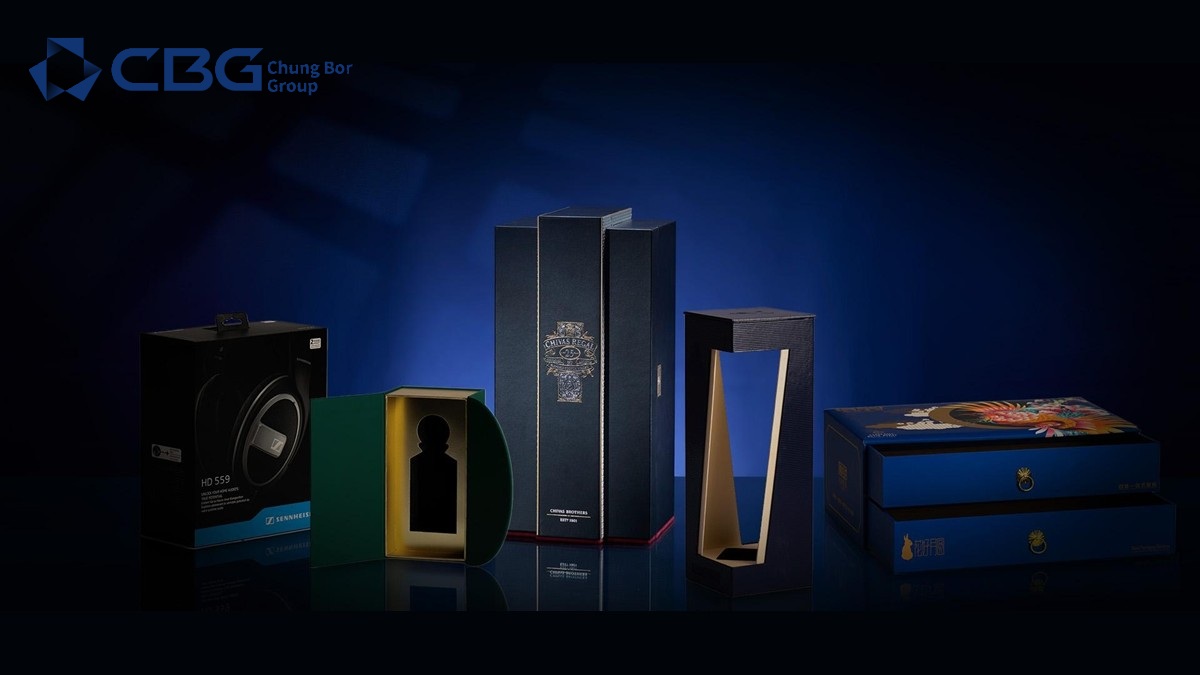
One of the clearest distinctions among luxury packaging suppliers is structural design capability. Packaging is expected to do more than contain a product. It must protect contents, support visual presentation, accommodate logistics requirements, and contribute to the user experience from first handling to final opening.
This makes structure an essential part of supplier evaluation. Different packaging formats—including rigid boxes, folding cartons, shoulder boxes, drawer boxes, and insert systems—serve different functional and branding purposes. A capable supplier should understand how packaging structure affects protection, assembly, display, shipping stability, and perceived quality.
For products such as glass bottles, beauty sets, electronics, or collector-style items, structural decisions can be particularly important. Packaging must often balance fragility, aesthetics, and transport demands at the same time. Suppliers with real structural experience are better positioned to recommend workable formats rather than simply produce what has already been specified.
Materials Influence Performance and Perception
In premium packaging, material selection affects both function and brand impression. The rigidity of the board, the texture of the surface, the quality of the paper, and the interaction between substrate and finishing all shape how packaging is perceived.
At the same time, material decisions must support practical requirements such as printability, durability, converting compatibility, insert performance, and transportation conditions. A visually attractive material that performs poorly in production or shipping may introduce unnecessary risk, especially when projects involve scale or international distribution.
This is where supplier knowledge becomes especially valuable. Strong suppliers do more than offer material options; they help brands assess which choices are most suitable for the product category, packaging format, finishing method, market expectations, and sustainability targets. In premium applications, material advice is not just a matter of aesthetics, but of achieving alignment between appearance, usability, and production feasibility.
Finishing Quality Should Reinforce Brand Positioning
Surface finishing is often one of the most visible elements in high-end packaging. Techniques such as foil stamping, embossing, debossing, matte lamination, soft-touch surfaces, and spot UV can strengthen visual impact and tactile appeal. Yet effective finishing is not simply about adding decorative value. It should support the broader branding strategy.
A luxury-oriented design may benefit from restraint, precision, and tactile balance, while other products may require stronger visual contrast or greater shelf presence. The role of the supplier is not only to execute finishing effects, but also to understand how those effects behave across different materials and production conditions.
For buyers, this means evaluating whether a supplier can deliver finishing consistently at scale, not just on a sample. In packaging for premium products, uneven foil registration, inconsistent emboss depth, or variable lamination quality can quickly undermine the intended effect. Finishing quality therefore remains an important indicator of whether a supplier can translate design ambition into repeatable manufacturing performance.
Sampling Often Reveals Real Capability
Among all evaluation stages, sampling is often the most revealing. Initial communication may be polished, but prototypes and samples show how well a supplier can convert ideas into tangible packaging outcomes.
A useful sample review goes beyond visual approval. Buyers can assess structural fit, opening mechanics, insert accuracy, print quality, material behavior, finishing consistency, and the overall user experience. The sampling stage also provides insight into how a supplier manages revisions, responds to technical questions, and addresses practical constraints.
For premium packaging, these details matter because the final result must meet both sensory and functional expectations. A supplier that samples effectively, communicates clearly, and improves efficiently during this phase often provides a stronger indication of production readiness than a competitive quote alone.
Operational Reliability Supports Commercial Success
For global brands, supplier capability must extend beyond design and sampling. Operational reliability is equally important, particularly when packaging is tied to launch schedules, export requirements, retailer timing, or multi-market distribution.
A supplier may produce an attractive sample, yet still struggle with lead-time control, production consistency, documentation, or communication during scale-up. In premium categories, these operational weaknesses can become expensive. Delays may affect product launches, and inconsistent quality can create downstream issues across fulfillment, retail presentation, or customer experience.
This is why buyers increasingly evaluate project management, response speed, quality assurance processes, and production discipline as part of supplier selection. A dependable premium packaging partner is expected not only to make well-designed packaging, but also to support execution with clarity and consistency.
Sustainability Has Become Part of Supplier Assessment
Sustainability is now part of mainstream packaging evaluation, including in premium segments. Many brands are exploring recyclable structures, paper-based alternatives to plastic components, more responsible sourcing approaches, and lower-impact insert solutions.
For suppliers, this means sustainability should be addressed as a practical capability, not just a marketing statement. Buyers may want to know whether a supplier can suggest paper-based alternatives, help reduce mixed-material complexity, or support premium designs that remain visually strong while improving recyclability.
This has become especially relevant as brands try to maintain premium presentation without relying on unnecessary plastic or overengineered formats. Suppliers that can balance environmental considerations with structural performance and brand aesthetics are increasingly aligned with what the market expects.
Practical Questions Buyers Should Ask
When evaluating a premium packaging supplier, buyers may benefit from asking several practical questions:
- Can the supplier support both structural development and manufacturing execution?
- Which luxury packaging formats represent their strongest expertise?
- How do they guide material selection for different product applications?
- What is their approach to prototyping, revisions, and sampling accuracy?
- How do they manage finishing quality in scaled production?
- Can they support packaging needs across display, gifting, shipping, and export scenarios?
- What are the expected lead times, MOQs, and project coordination processes?
- How do they approach sustainability goals or paper-based substitution requests?
- How do they communicate during multi-stage or international packaging projects?
These questions shift the sourcing conversation away from price alone and toward total project fit.
Why This Topic Matters for Packaging-Focused Manufacturers
This topic is especially relevant for packaging manufacturers such as ChungBor because it aligns closely with how buyers actually make decisions in high-value packaging projects. ChungBor's positioning is not limited to basic box production. Its value is better reflected in areas such as structural development, premium paper packaging execution, finishing coordination, and the ability to balance presentation with practical manufacturing requirements.
For that reason, this article was planned as part of ChungBor's third-party content strategy. The goal is not to promote a single product category directly, but to build authority around the selection criteria buyers use when choosing premium packaging partners. By addressing supplier evaluation through an industry-oriented, editorial lens, the article supports ChungBor's broader positioning as a capable manufacturing partner for brands that care about packaging quality, execution stability, and commercial readiness.
It also serves a strategic role in the content plan. Compared with topics focused purely on aesthetics or trends, supplier evaluation attracts readers who are often closer to an active sourcing or decision-making stage. That makes the article especially valuable for third-party publication, where the objective is not only visibility, but also stronger commercial relevance.
Conclusion
For global brands, the best premium packaging supplier is not necessarily the one with the lowest price. More often, it is the one that can combine structural understanding, suitable material recommendations, finishing control, responsive sampling, reliable operations, and sustainability awareness in a way that supports both brand presentation and business execution.
As premium packaging becomes more closely tied to market perception and product value, supplier evaluation is becoming more strategic. Brands that assess suppliers beyond price are generally better positioned to achieve stronger packaging outcomes, lower execution risk, and more consistent long-term results.
About ChungBor
ChungBor is a premium paper packaging manufacturer specializing in rigid boxes, folding cartons, and custom paper-based packaging solutions for global brands across beauty, gifting, electronics, and specialty consumer goods. Learn more at ChungBor Website.