The Rise of LED Lighting: A Bright Future
LED (Light Emitting Diode) technology has marked a significant turning point in the way we illuminate our world. It has not only revolutionized the energy efficiency of lighting systems but also brought about innovations in design and application.
Published: Sep 11, 2024

Origin of the LED Concept
The concept of the LED began with the exploration of semiconductor materials and their unique properties. Semiconductors are materials which have a conductivity between conductors (like most metals) and nonconductors or insulators (like ceramics).
In 1960s, the first practical LED was developed by Nick Holonyak Jr. He created the first visible-spectrum (red) LED using the compound semiconductor gallium arsenide phosphide. This development was pivotal as it demonstrated that LEDs could be made to produce visible light, which opened up a multitude of potential applications.
Transition from Semiconductors to LEDs
When semiconductor material was being developed for use in LED technology, changes were made to something called the material's bandgap. A bandgap is a sort of energy gap between two levels in the material where electrons reside. Electrons can move from one level to another by either gaining or giving off energy, often as light. By changing what the semiconductor is made of and adding tiny amounts of other substances, scientists were able to control the color and the efficiency of the light produced by the LEDs.
Production Methods
LEDs are typically produced through processes that involve depositing very thin layers of materials onto a substrate, allowing for precise control over the properties of the resulting semiconductor layers. This is accomplished through several steps:
Wafer Production
The first step in LED manufacturing is the creation of the semiconductor wafer. This wafer serves as the base for the LEDs and is typically made from materials such as silicon, sapphire, or silicon carbide. The choice of material affects the efficiency and color of the LED.
Epitaxy
During this critical phase, layers of semiconductor material are grown on the wafer. This process is carried out in an epitaxial reactor where gases containing the semiconductor elements are introduced. The gases react and deposit a thin layer of crystalline material on the wafer that has a controlled composition and thickness. This layer will form the active region where light is generated.
Wafer Processing
After the epitaxial growth, the wafer undergoes several processing steps:
Lithography: A photolithographic process uses light to transfer a geometric pattern to the light-sensitive chemical photoresist on the wafer.
Etching: The wafer is then etched where needed to create the LED structures, such as wells and ridges. The fineness or coarseness of the etched patterns can influence how light is distributed and emitted from the LED. The etching pattern will determine the angle at which the light beam is given off from the wafer, affecting the perceived brightness and efficiency of the light. In spaces where you want to illuminate a large area without creating shadows or dark spots, a wider beam angle is beneficial. For instance, in living rooms, kitchens, or offices, wider beam angles (often ranging from 60 degrees to 120 degrees) help create even ambient lighting.
Doping: This involves introducing impurities into the semiconductor to change its electrical properties, which forms the p-n junctions where light is emitted. The junction between these layers is where the magic of the LED happens—when voltage is applied, electrons move across the junction, recombine with holes, and release energy in the form of light.
Metallization
Metallization is the process of depositing metal contacts onto the wafer. These contacts allow the LED to be connected to an electrical circuit. The metal layers need to be precisely patterned and connected to the LED structures formed during wafer processing. The number of chips connected together in a 60-watt equivalent LED bulb typically ranges from 5 to 20 chips, depending on the efficiency and design of each chip.
Dicing
After metallization, the wafer that contains multiple LED chips is then diced into individual units. This step is necessary to separate the chips so they can be packaged and used in individual LED bulbs or other devices.
Packaging
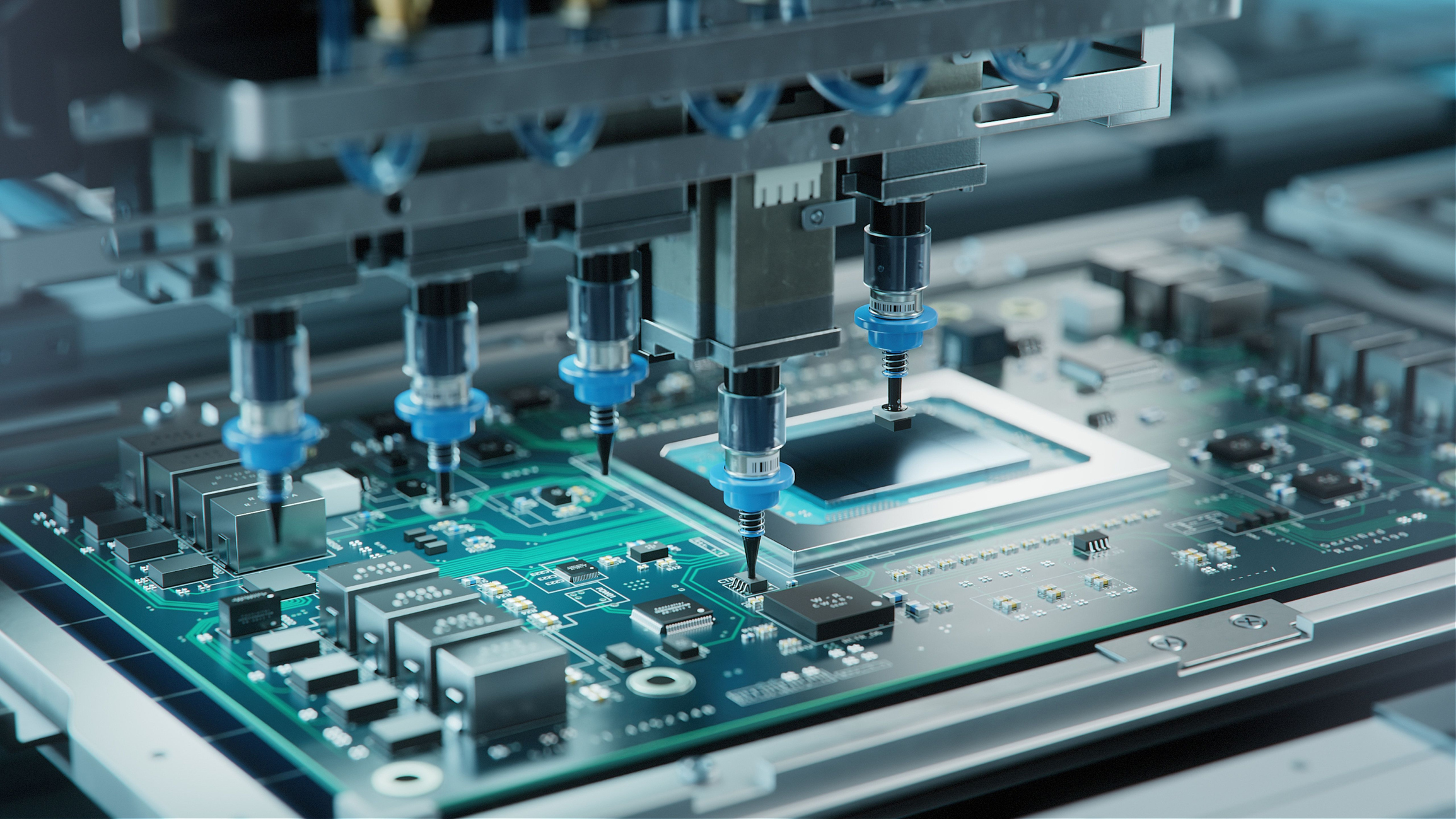
The individual chips are packaged to protect the semiconductor and to provide the means for integrating the LED into lighting systems. This involves mounting the chip on a heat-conductive base, connecting the electrical contacts, and often adding an optic to direct the light. Some LEDs are encapsulated in a resin or silicone to provide additional protection and to enhance the light output.
Applications and Benefits
The application of LED lights spans across residential, commercial, industrial, and even artistic installations. LEDs offer superior control over light quality, intensity, and distribution, which has made them ideal for precision-required environments like galleries and museums, as well as high-stakes areas such as medical facilities and manufacturing plants.
LED light bulbs offer significant environmental benefits. Their long lifespan and low energy consumption reduce waste and energy expenses, making them the ideal choice for work lights, garage lights, grow lights, ceiling lights, shop lights, landscape, security lights, clamp lights, string lights and more.
Published by Sep 11, 2024
Source: ALLMAX, city Light, TSTL