What are a Reamer and its Function?
Knowledge

What are a Reamer and its Function?

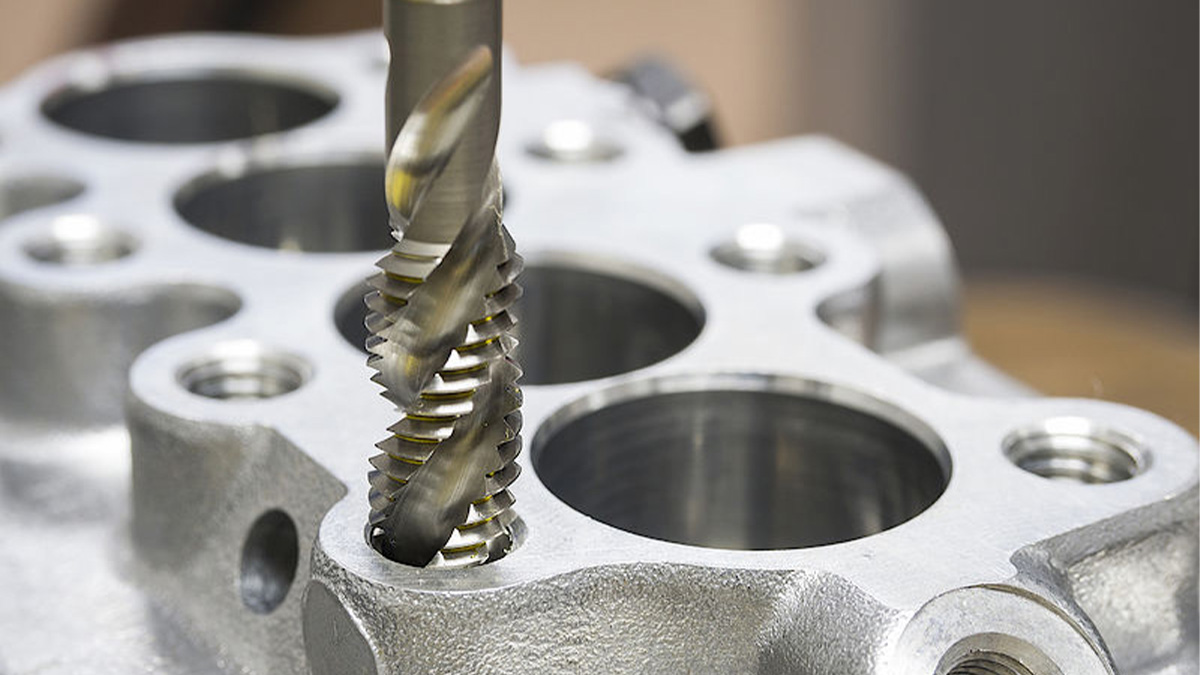
Reamers are rotary tools with one or more teeth, used to remove a thin layer of metal from the surface of a machined hole. These rotary finishing tools are used for adding a desired finish to the inside of predrilled holes.
Published: Apr 19, 2022
What are a Reamer and its Function?

What is a Reamer?

A reamer is a cutting tool used for machining, designed to slightly enlarge the size of a drilled hole, but with high precision, ensuring a smooth surface finish on the inside of the hole. Reamers are the most accurate hole-making tools currently available, and are usually used to meet the high H6/H7 tolerances required by ISO standards. Both ISO and ANSI metric standards refer to standards that apply to fasteners that can be freely assembled and disassembled. When properly used, a reaming tool can ream thousands of holes to high-precision without compromising performance.

There are many types of reamers, including machining tool reamers and hand reamers. High-precision mechanical reamers are often used in lathes or machining centers. A reamer is a precision tool, and its precision depends on the machine, the operator's ability to operate the machine, and the functional characteristics of the tool itself. Reamers can be produced from carbide, high-speed steel, or metal-ceramic composites.

The Purpose of the Reamer:

A reamer has one or more teeth which remove a thin layer of metal from the machined surface of a hole. The reamer is used, mainly to improve the machining accuracy of the hole and reduce the roughness of its surface. Hand reaming is often used to finish dowel holes or pinholes to allow an interference fit between the hole and the dowel. Reamers can only remove a very small amount of material, usually only about .005 to 0.008 inches, so are ideal for producing a high-quality finishes on hole surfaces.

Although reamers are more commonly used for machining cylindrical holes, a tapered reamer can be used to machine a tapered hole; but this is quite rare. Hand reamers and machine reamers are both common and can both be used for straight shank reaming and taper shank reaming.

Operation of the Reamer:

As a reamer only removes a thin layer of material from the surface of a machined hole, it cannot be used to remove large amounts of material. The amount of material removed depends on several factors, including the material to be machined and the size and quality of the pre-drilled holes. For mechanics, this is a process that requires careful balancing. For the reamer to work efficiently, it is critical to have the correct allowance in the hole. Too much allowance and the reamer may struggle to run and the hole may be deformed. Too little allowance and the reamer will rub and wear, resulting in poor hole quality. The cutting edge of the reamer needs to have a certain hardness to prolong the service life; it also needs to have good toughness so that the tool will not fail during normal use. Proper use requires the careful selection of the proper tool for the material being machined, and close control of the allowance to ensure long reamer life and a high-quality hole finish.

Also, if the workpiece is not held securely when reaming, chattering can result, the finish of the part will be poor and the cutting edge will become dull. Friction and extreme heat can also cause problems during reaming, which means that effective lubrication is essential not only to cool the tool but also to extend the life of the reamer. Lubrication also increases cutting speeds, reduces cycle times, and removes chips, helping to improve the finish of the workpiece.

Types of Reamers:

  • Reamers are divided into hand reamers and machine reamers according to the way they are used.
  • Reamers can be either cylindrical reamers or conical reamers, depending on the shape of the hole being reamed.
  • According to the direction of the chip groove, reamers can be either straight groove and spiral groove.
  • Reamers can have either straight shanks or tapered shanks.
  • Reamers can be made of high-speed steel or have cemented carbide inserts.
Reamers can have various numbers of teeth and tooth slots:

The number of teeth of the reamer affects the reaming accuracy, surface roughness, chip space, and tooth strength. Its value is generally determined according to the diameter of the reamer and the material of the workpiece. When the diameter of the reamer is larger, a larger number of teeth can be selected. When machining ductile materials, the number of teeth should be smaller. When processing brittle materials, a larger number of teeth is preferable. To facilitate the measurement of the diameter of the reamer, the number of teeth should be an even number. For holes ranging in diameter from 8~40mm, the number of teeth is generally 4~8.

Design Points - Reamer Diameters and Tolerances

The diameter tolerance of the reamer directly affects the dimensional accuracy of the machined hole, the manufacturing cost, and the service life of the reamer. When reaming, due to the radial runout of the cutter teeth, the amount of reaming, and the cutting fluid, the aperture will be larger than the diameter of the reamer. This phenomenon is called reaming expansion. At the same time, because the blunt radius of the blade squeezes the hole wall, the hole will recover and shrink. This effect is called reaming shrinkage. Reaming with a high-speed steel reamer generally results in explanation, while reaming with a carbide reamer generally results in shrinkage. This shrinkage that results is usually is greater when reaming thin-walled holes. The nominal diameter of the reamer is equal to the nominal diameter of the hole. By understanding the effects of expansion and contraction, and allowing for the necessary wear tolerance, the upper and lower deviation of the reamer can be determined.


Published by Apr 19, 2022 Source :kknews, Source :kknews

Further reading

You might also be interested in ...

Headline
Knowledge
Biodegradable Straw Making Machines: Key Technologies Driving Sustainable Packaging Production
This article examines how biodegradable straw making machines are supporting the shift toward sustainable packaging production. It covers PLA and paper straw manufacturing technologies, automation trends, production challenges, and key factors manufacturers should consider when selecting biodegradable straw production equipment.
Headline
Knowledge
Choosing Between C-Frame and H-Frame Hydraulic Presses for Metal Stamping
This article provides a comprehensive guide for manufacturers on choosing between C-frame and H-frame hydraulic presses for metal stamping operations. It begins by analyzing the structural differences: C-frame presses are highlighted for their three-sided accessibility and space-saving design, making them ideal for light to medium-duty tasks. In contrast, H-frame presses are recognized for their superior stability and rigidity, making them the preferred choice for high-tonnage, high-precision, and heavy-duty applications. The article features a detailed comparative table evaluating both types based on tonnage capacity, footprint, and cost. It also outlines critical selection factors such as precision requirements and budget constraints. Finally, the guide naturally introduces leading global manufacturers, including Yeh Chiun, Schuler, AIDA, Komatsu, and Beckwood, helping readers make informed investment decisions tailored to their specific production needs.
Headline
Knowledge
What Do Fruit Juice Suppliers Provide? A Practical Guide for Beverage and Food Brands
A practical overview of ingredient formats, supplier services, and sourcing considerations for beverage and food product development.
Headline
Knowledge
Understanding HVLP Technology: How Low Pressure High Volume Saves Paint and Costs
A practical guide to how HVLP spray systems improve coating efficiency, reduce waste, and support better cost control.
Headline
Knowledge
Why Skin and Immune Formulation Matters More Than Coat Appearance in Companion Animal Health
Skin and coat concerns in companion animals often signal a broader formulation challenge rather than a surface-level issue alone. Recurrent dryness, itching, dull coat condition, and visible sensitivity are frequently linked to barrier weakness, immune imbalance, nutrient utilization, and digestive stability. Products positioned only around coat shine or a single trending ingredient may therefore fall short in daily use. More effective formulation usually begins with a broader biological view: skin health is closely shaped by the interaction between barrier function, immune response, microbiota balance, and life-stage needs.
Headline
Knowledge
Why Food Safety Certifications Matter More Than Ever in Bubble Tea Supply Chains
Bubble tea supply chains are under greater scrutiny than before. Flavor innovation still drives demand, but in cross-border trade, growth increasingly depends on whether ingredients can move through approval processes smoothly, meet market-specific expectations, and remain consistent across repeated shipments. Certifications such as ISO 22000, HACCP, FSSC 22000, HALAL, and KOSHER are no longer just supporting documents. They now influence market access, supplier credibility, risk control, and the ability to maintain stable commercial relationships over time.
Headline
Knowledge
How to Choose a Health Supplement Manufacturer: A B2B Buyer’s Guide to MOQ, Sampling, and Hidden Costs
Choosing a health supplement manufacturer is not just a purchasing decision. For B2B buyers, it is a commercial, technical, and operational decision that directly affects product quality, launch timing, working capital, and long-term supply stability. A manufacturer that looks competitive on paper may still create problems later if its MOQ structure is inflexible, its samples do not reflect production reality, or its quotation leaves out key cost items. That is why buyers evaluating contract manufacturing health supplements partners should look beyond unit price. The better question is not simply “Who can make this product?” but “Which manufacturer can support this project with the right balance of cost transparency, technical fit, and execution reliability?” This guide breaks that decision into five practical steps, with special attention to MOQ, sampling, and hidden costs, three of the most common sources of confusion in supplement sourcing.
Headline
Knowledge
Automatic Loading and Unloading CNC Cylindrical Grinding Machines: How Automation Improves Precision, Throughput, and Process Stability
A neutral overview of how automated work handling is changing cylindrical grinding, from part consistency and labor efficiency to safety and smart manufacturing integration.
Headline
Knowledge
Oil Seal Cross Reference: How to Match Part Numbers, Dimensions, and Seal Types Correctly
A practical guide to using oil seal interchange tables correctly and understanding what still needs to be verified
Headline
Knowledge
Agricultural Aluminum Tripod Ladder: Why It Matters in Orchard Work and Modern Field Safety
A practical introduction to how agricultural aluminum tripod ladders are used, why their design suits orchard work, and what buyers now look for in the category
Headline
Knowledge
Tire Curing Press Machine: How It Shapes Tire Quality, Efficiency, and Modern Production
A practical look at how tire curing press machines work, why they matter in tire manufacturing, and what manufacturers now expect from modern curing systems
Headline
Knowledge
How Fresh Tea Bag Suppliers Maintain Quality from Tea Sourcing to Final Packaging
A closer look at sourcing discipline, production controls, and packaging strategies behind reliable fresh tea bag quality.
Agree