A practical guide to what exhaust tips can actually change, what they cannot, and how to choose the right tailpipe design.
Exhaust tips are among the most visible parts of a vehicle’s exhaust system, so it is easy to assume they have a major effect on sound. A larger outlet looks louder. A rolled edge looks deeper. A long polished tip may seem more “performance oriented” than a short factory-style outlet. In reality, the answer is more nuanced: exhaust tips can influence the final tone, projection, and perceived sharpness of exhaust sound, but they rarely transform the sound by themselves.
The main character of an exhaust note is shaped upstream by the engine, exhaust manifold, catalytic converter, resonator, muffler, pipe routing, and overall system diameter. Resonators are specifically used to cancel or reduce certain frequency ranges, while mufflers reduce overall sound volume through chambers, tubes, baffles, and sound-absorbing materials. By the time gases reach the tip, much of the acoustic profile has already been determined.
Still, the exhaust tip is not purely decorative. Its shape, diameter, wall design, and length can subtly affect how sound exits the system. Understanding what it can and cannot do helps drivers, tuners, and parts buyers make more realistic decisions.
The Exhaust Tip’s Real Role in Sound
An exhaust tip sits at the terminal end of the system. It does not usually contain the internal chambers, perforated cores, or acoustic packing found in mufflers and resonators. That means it has limited ability to reduce volume or cancel specific frequencies. Instead, it affects the last stage of sound radiation: how pulses expand into open air, how the outlet edge shapes turbulence, and how the final section of pipe interacts with the sound waves passing through it.
This is why changing only the tip may make a vehicle sound slightly deeper, crisper, or more directional, but it usually will not make a quiet exhaust dramatically loud. For a major change in volume or frequency balance, changes to the muffler, resonator, mid-pipe, or full cat-back system normally matter more.
Shape: Round, Oval, Dual, and Angled Tips
Shape affects both appearance and how the sound leaves the tailpipe. A round exhaust tip is the most common because it provides a symmetrical outlet and predictable sound projection. Oval tips can fit wider bumper openings and may spread the exhaust exit across a broader horizontal area. Dual-wall or twin tips can make the outlet appear larger and may slightly change perceived resonance near the exit, although the internal flow path matters more than the outer shell.
Angled or slash-cut tips can also change how sound is directed. A downward-facing or side-exit tip may reflect sound differently from the ground or surrounding body panels compared with a straight rear-facing outlet. This can change what the driver or bystanders perceive, even if the measured sound output has not changed dramatically.
| Tip Shape |
Likely Sound Influence |
Practical Notes |
| Round |
Balanced, direct projection |
Common and predictable |
| Oval |
Slightly broader outlet impression |
Often chosen for bumper fitment |
| Dual or twin |
Fuller visual presence, possible slight tonal change |
Internal inlet size still matters most |
| Slash-cut or angled |
Alters sound direction and reflection |
Can affect perceived sharpness |
| Rolled edge |
May soften the outlet appearance and edge tone |
Usually subtle, not transformative |
The important point is that shape changes tend to be small compared with upstream acoustic components. ASME notes that resonators are used to address high-frequency sounds and harmonics in long exhaust systems, showing that engineered acoustic control typically happens before the final outlet.
Diameter: Bigger Is Not Always Better
Tip diameter is one of the most misunderstood factors. A larger tip can make the exhaust look more aggressive and may slightly lower the perceived tone because the final outlet allows gases and sound waves to expand differently. However, the tip diameter alone does not determine the true exhaust flow capacity. The narrowest upstream section, muffler design, pipe diameter, and bends often have a greater effect.
For example, installing a 4-inch tip on a system with a much smaller internal pipe will not make the exhaust behave like a full 4-inch system. The visual outlet is larger, but the sound and flow have already been constrained upstream. In some cases, an oversized tip can create a hollow or boomy impression near the outlet, but the change is often modest.
A properly matched tip diameter should consider the vehicle, bumper opening, exhaust pipe size, and desired tone. Too small a tip may look restrictive and could sharpen the exit tone. Too large a tip may look disproportionate and may not add meaningful acoustic benefit.
Length: Why a Longer Tip Can Affect Tone
Length can matter because any pipe-like section can interact with sound waves. Basic acoustic principles show that air columns have natural resonant frequencies related to length, open or closed ends, and sound speed. OpenStax explains that resonant frequencies in tubes depend on the length of the tube and that different tube conditions produce different overtone structures.
In an exhaust system, the situation is more complex than a classroom tube because hot gases, pulsing flow, bends, mufflers, and changing engine speed are involved. Still, the principle helps explain why a longer exhaust tip can sometimes make the sound feel slightly deeper or more mellow. A short tip may preserve a sharper edge, while a longer tip may add a small amount of terminal resonance.
However, this effect should not be overstated. A few extra centimeters at the outlet cannot replace the acoustic influence of a resonator or muffler. Walker Exhaust describes resonators as components designed to change and cancel certain engine sounds before they enter the muffler, while mufflers reduce volume more broadly.
Wall Design and Material
Single-wall tips are lighter and usually simpler. Double-wall tips have an outer sleeve that creates a thicker visual edge and may slightly change the way sound leaves the outlet. Intercooled tips, perforated inner designs, and layered construction can influence the final tone more than a plain decorative sleeve, but the effect depends on the internal geometry.
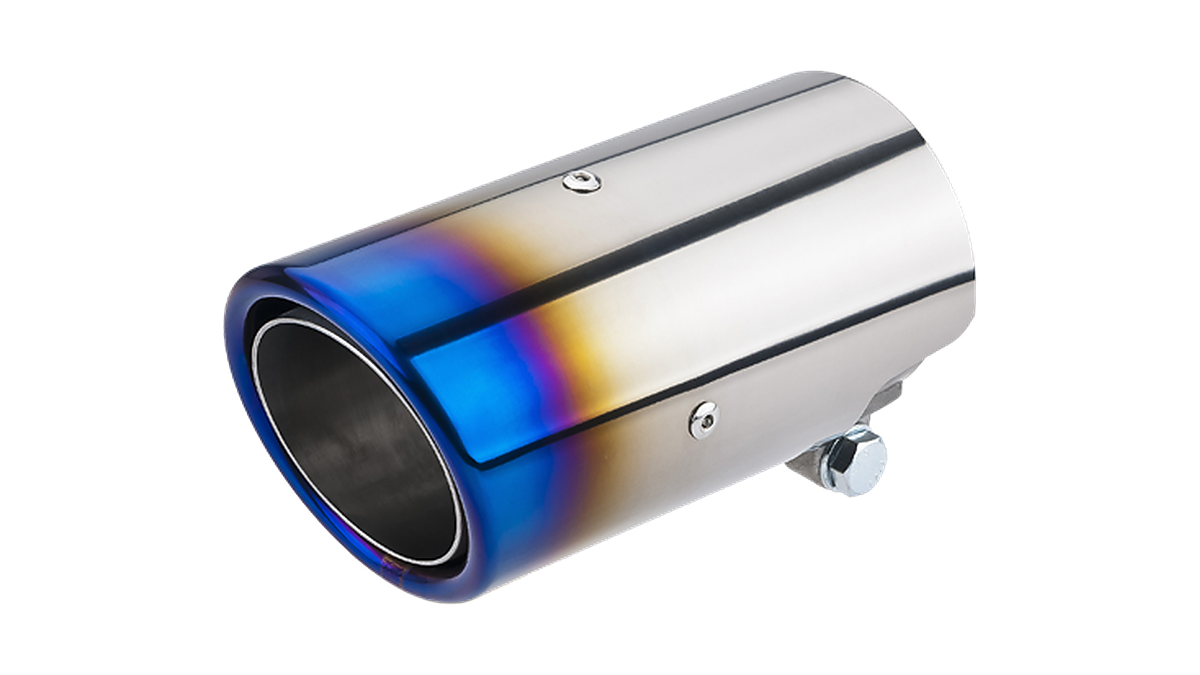
Material can influence durability and appearance more than sound. Stainless steel is commonly used for corrosion resistance. Titanium may be selected for weight and visual heat coloration. Carbon fiber sleeves are generally aesthetic outer treatments rather than major acoustic devices. Surface finish, edge design, and internal construction are usually more relevant to sound than the material alone.
What Actually Changes Exhaust Sound the Most?
For meaningful sound changes, the following parts usually matter more than the tip:
| Component |
Sound Impact |
Why It Matters |
| Muffler |
High |
Reduces overall volume and shapes tone |
| Resonator |
Medium to high |
Targets harsh frequencies, rasp, or drone |
| Pipe diameter |
Medium |
Affects flow velocity and resonance behavior |
| Catalytic converter |
Medium |
Can dampen pulses and affect tone |
| Exhaust tip |
Low to medium |
Alters final projection, edge tone, and appearance |
This does not mean exhaust tips are irrelevant. They are simply a finishing component rather than the main acoustic control device. They can refine sound, but they rarely redefine it.
Legal and Practical Considerations
Exhaust sound is also regulated in many markets. For example, SEMA summarizes California’s passenger vehicle exhaust noise limit as 95 decibels when tested under the SAE J1492 procedure for applicable vehicles under 6,000 lbs gross vehicle weight rating. This is a reminder that sound modification should be approached carefully, especially for road-use vehicles.
Buyers should also consider fitment. Tip inlet diameter must match the outlet pipe or be adapted correctly. Outlet size should fit the bumper opening with enough clearance for heat and movement. Poor alignment can cause vibration, bumper contact, or uneven appearance.
FAQ
1. Do exhaust tips make a car louder?
Sometimes, but usually only slightly. A tip can change projection and edge tone, but the muffler, resonator, and pipe layout have a much larger effect on loudness.
2. Will a bigger exhaust tip make the sound deeper?
A larger tip may create a slightly deeper or fuller perceived tone, especially compared with a very small outlet. However, if the rest of the exhaust system remains unchanged, the difference is usually limited.
3. Do dual exhaust tips improve performance?
Dual tips alone do not necessarily improve performance. If they are only attached to a single outlet pipe, they mainly change appearance and sound projection. Performance depends more on the full exhaust system design.
4. Does tip length affect drone?
Tip length can influence terminal resonance, but cabin drone is usually caused by frequency interactions throughout the exhaust system and vehicle body. Resonators are generally more effective for addressing drone.
5. Are rolled tips quieter than straight-cut tips?
A rolled edge may slightly soften the outlet tone, but it is not a true silencing device. The difference is generally subtle.
6. Does material change exhaust sound?
Material alone has limited effect. Stainless steel, titanium, and carbon fiber-style tips differ more in durability, weight, heat behavior, and appearance. Internal structure and dimensions matter more for sound.
7. Should I choose a tip for sound or appearance?
Choose it for both, but keep expectations realistic. A tip can fine-tune the final impression, while major sound changes require changes to upstream components.
Conclusion
Exhaust tips do affect sound, but not in the dramatic way many people expect. Shape can influence direction and perceived sharpness. Diameter can change the outlet impression and slightly affect tone. Length can introduce minor resonance effects. Wall design and internal construction can also refine the final sound. Yet the core exhaust note is still shaped by the engine, muffler, resonator, pipe layout, and catalytic converter.
For buyers, the best approach is to treat the exhaust tip as a finishing component. It should match the vehicle’s design, fit the bumper correctly, suit the existing pipe diameter, and support the desired visual and acoustic character. When selected thoughtfully, an exhaust tip can complete the look of a system and add subtle polish to the sound without creating unrealistic expectations.
For those comparing different tailpipe styles, finishes, and configurations, Liang Fei provides tail pipe options such as carbon fiber tips, titanium tips, titanium-stainless designs, blue treatment finishes, stainless twin tips, round tips, and oval tips. It is a useful starting point for matching exhaust tip design with vehicle styling, fitment needs, and the sound character you want to fine-tune.







.jpg)
.jpg)