What Are The Component Layers That Will Form Future Healthcare Ecosystems?
Firm News

What Are The Component Layers That Will Form Future Healthcare Ecosystems?

Ecosystems are built on three layers: infrastructure, intelligence, and engagement.
Published: Jul 16, 2020
What Are The Component Layers That Will Form Future Healthcare Ecosystems?

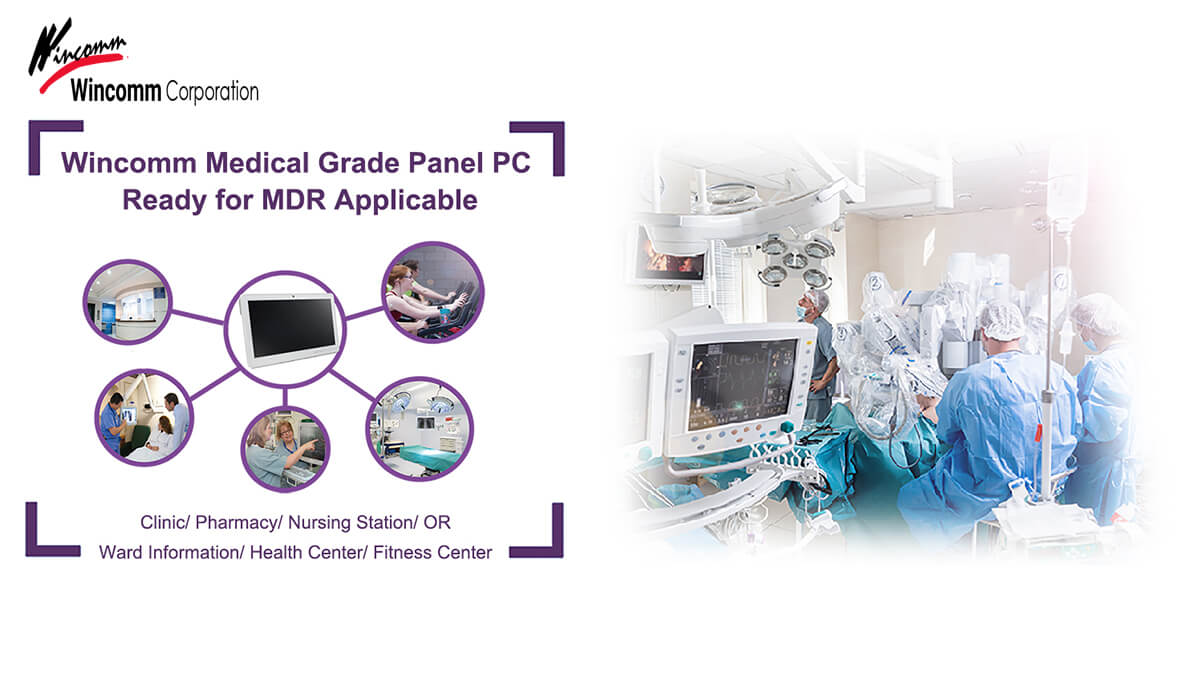
The infrastructure layer is foundational, composed of effective data capture, curation, management, storage, and interoperability to create a common data set upon which the ecosystem can operate. For example, Wincomm is one of the leading manufacturers of medical and industrial computers with relative embedded computing products. Wincomm design and develop all in one panel PC selected monitor, rugged box PC, and embedded software products for a broad range of medications to industries applications. Built on top of the infrastructure layer is the intelligence layer, which converts data elements into consumable and actionable insights. Finally, bringing an ecosystem to life also requires a robust engagement layer, enabled by the infrastructure and intelligence layers, to effectively curate an end-to-end experience for suppliers who provide services and offerings to patients. Components of these layers can be built, bought, partnered, or vended by ecosystem curators and participants.

The infrastructure layer requires data liquidity

Data liquidity—the ability to access, ingest, and manipulate standardized data sets—is required for the infrastructure layer to serve as the foundation for all insights and decisions made in the ecosystem. This data liquidity enables the ecosystem to create value and removes silos by allowing stakeholders to operate off the same data sets with increased coordination.

Increased data liquidity enables stakeholders to access a complete longitudinal patient record, consisting of patient-generated data, provider-generated data, health and wellness data, financial data, and social data. As standards are established and cloud services continue to proliferate, this data will be easier to access, consume, and integrate. Patients will still be owners of this data and will be required to grant stakeholders permission. While balancing privacy, stakeholders will have to ensure that they are building in the appropriate safeguards and that the ecosystem will provide clear value-added benefits before patients are willing to make the trade-off.

In healthcare, data liquidity will likely enable more coordinated care and accelerate innovation. Open application programming interfaces (APIs) built for liquid data can provide access to patient records, support electronic data exchange for care transitions, and enable the integration of new data sets, including and beyond claims, clinical, pharmacy, financial, and social data. As ecosystems evolve, tangible concerns and risks about the manipulation and ownership of patient, consumer, and provider data will arise for participants. Preserving individual privacy and trust is critical to the functioning of ecosystems. Reforms and regulations are beginning to address this challenge, with likely more to come.

The intelligence layer requires advanced analytics

Successfully converting data from the infrastructure layer into insights in the intelligence layer requires advanced analytics. Advanced analytics—including machine learning, natural language processing, artificial intelligence, and big data analytics—is critical to gain actionable insights to guide stakeholders across ecosystems. Toward the IoT trend, Wincomm aims to build integrated application-ready Platforms to enable variant environments solutions, such as smart healthcare / smart factory / smart city / smart transportation and relative computing solutions.

Data liquidity will enable advanced analytics in the intelligence layer and lead to more robust patient risk identification, clinical pathway development, and personalized and precision medicine. In healthcare, advanced analytics allows stakeholders to use personalized and predictive insights to more effectively manage population health.


Published by Jul 16, 2020 Source :wincomm, Source :mckinsey.com

Further reading

You might also be interested in ...

Headline
Firm News
Business Weekly Features SUCOOT: Construction Safety and Engineering Integration Gain Market Attention
For project owners, procurement teams, contractors, and engineering managers, scaffolding and temporary support systems are no longer evaluated as material purchases alone. In public infrastructure, high-tech facilities, industrial projects, and specialized restoration works, supplier selection is often influenced by structural stability, load-bearing reliability, installation consistency, site safety, construction efficiency, and the ability to support project schedules under varying site conditions. When system precision and support capability are insufficient, the result may include rework, higher execution risk, increased coordination burden, and pressure on both schedule and quality control. _Business Weekly_ recently featured Taiwan-based scaffolding and formwork systems company SUCOOT CO., LTD., focusing on its development in high-precision Ring Lock scaffolding, engineering design, and integrated service capability, as well as its application experience across public infrastructure, high-tech industries, and heritage restoration projects. Based on the report, market attention toward SUCOOT is not limited to its products alone, but also to how the company supports project teams through system precision and engineering services that help reduce on-site uncertainty and improve execution stability.
Headline
Firm News
Proxene and Taiwan’s AI Manufacturing Upgrade: Why Smart Production Investment Matters in the Hand Tools Industry
What does AI-enabled production really mean for hand tool manufacturers, buyers and industrial partners?
Headline
Firm News
Earth-Chain Featured in Taiwanese TV Interview: How Magnetic Systems Help Industrial Buyers Reduce Workholding Risk and Improve Machining Efficiency
What problems do magnetic systems solve for procurement teams, plant owners, and manufacturing managers?
Headline
Firm News
How Edge AI Baggage Monitoring Helps Airports Improve Handling Efficiency: ARBOR, DeepX, and MemryX Launch a New Solution
The new system combines industrial edge computing, AI vision, and accelerated inference to improve baggage flow monitoring in airport environments.
Headline
Firm News
EVERISING I Tech Saw System 2.0 Brings Smart Connectivity to Industrial Sawing
With PC based control, OPC UA integration, and intelligent monitoring, the system helps manufacturers improve cutting efficiency, maintenance planning, and energy performance.
Headline
Firm News
How Machine Tools Support Semiconductor Manufacturing: Revealing Victor Taichung’s Value Through Critical Component Machining
Published for industrial and semiconductor supply chain audiences
Headline
Firm News
5 Key Factors to Consider When Purchasing a Hydraulic Vane Pump: The New Procurement Framework
As industrial automation, precision machining, and sustainability reshape global manufacturing, procurement managers face mounting pressure to balance cost, reliability, and innovation. Hydraulic systems remain essential to industries ranging from machine tools and plastics to metal forming and robotics — and the hydraulic pump sits at the core of every efficient system.
Headline
Firm News
Reducing Non-Cutting Time in Automotive Parts Machining: High Pressure Coolant and Quick Change Systems
Reducing Non-Cutting Time to Boost Throughput, OEE, and Cost Efficiency in Automotive Machining
Headline
Firm News
How Automated Can Making Machines Improve Efficiency and Reduce Waste
SHIN I MACHINERY analyzes the impact of smart integration in metal packaging production.
Headline
Firm News
YuhChang Power Capacitor Manufacturing Strength: Evolving from Component Maker to Smart Power Partner
With over 50 years of experience, Yuh Chang Capacitor, a leading Taiwanese manufacturer, provides high-quality capacitors and smart power solutions for industrial, energy, and power electronic systems worldwide. Trusted for reliability, performance, and safety, their products support applications from reactive power compensation and induction heating to energy storage and UV curing systems.
Headline
Firm News
How BI-FIT Composite Board Reduces Environmental Footprint
BI-FIT Composite Board offers a sustainable, high-performance alternative to traditional shoe and board materials by combining recycled plastics, adhesive-free construction, and durability to reduce environmental impact.
Headline
Firm News
Taiwan’s Industrial Valve Manufacturing Advantage: From Quality Assurance to Engineering Excellence
As global industries demand higher performance and reliability, Taiwan’s industrial valve manufacturers combine engineering excellence, rigorous quality control, and international certifications to deliver solutions trusted worldwide.
Agree