In the rapidly developing digital era, healthcare is being profoundly transformed by Artificial Intelligence (AI), the Internet of Things (IoT), and wearable devices. This is not just a technological upgrade; it is akin to the "iPhone moment" that disrupted traditional healthcare services and doctor-patient interactions, opening a new chapter in health management. Historically, medicine has been a "passive" journey fraught with uncertainty and high barriers. The powerful rise of AI is now painting a new blueprint for the global healthcare industry, steering health management toward a smarter and more personalized future.
Beyond Human Limits: How AI Gives Doctors a "Third Eye"
In medical image analysis, disease prediction, and drug development, AI has become an indispensable and powerful assistant to doctors. According to data from Grand View Research, the global healthcare AI market is projected to reach $208.2 billion by 2030, with a compound annual growth rate (CAGR) of approximately 38.4% to 38.6%, highlighting its immense market potential.
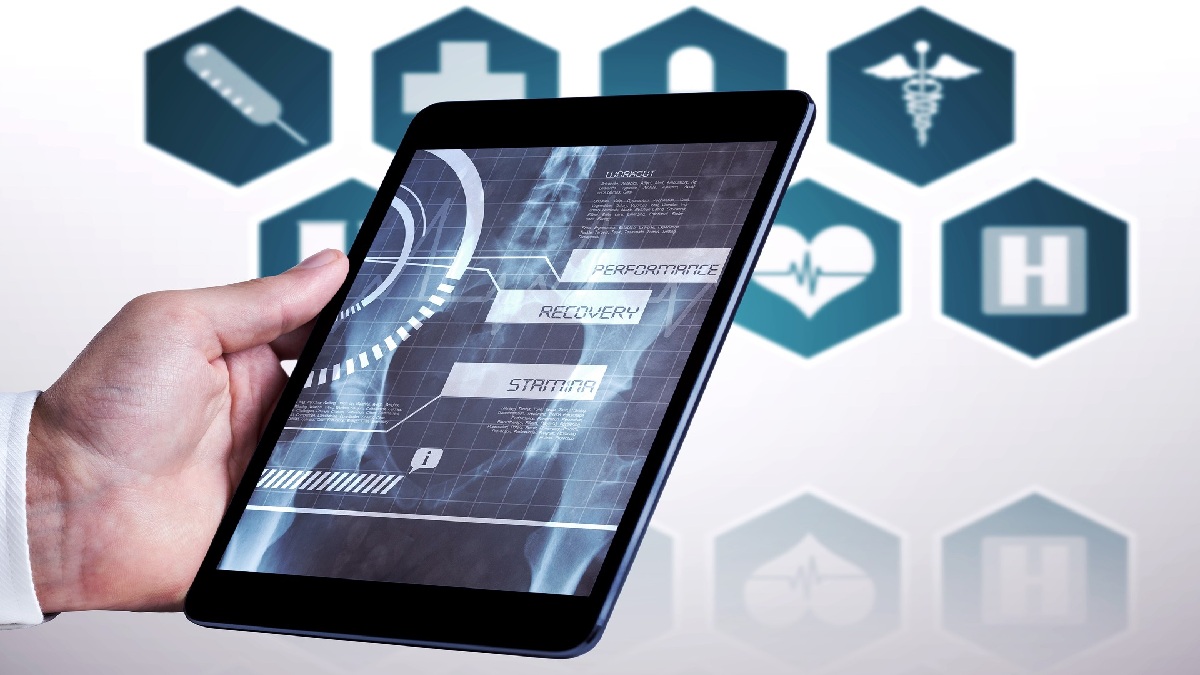
AI's application in medical image interpretation is particularly noteworthy. For instance, an AI model developed by Google Health has surpassed most professional radiologists in the accuracy of breast cancer X-ray interpretation, which helps reduce the probability of misdiagnosis and missed cases, demonstrating AI's immense potential as a "super assistant" to doctors. Beyond cancer screening, AI has also been successfully applied to diagnose ophthalmic diseases. The U.S. Food and Drug Administration (FDA) has even approved an AI system that can diagnose diabetic retinopathy by analyzing retinal images, providing a crucial tool for early treatment and prevention of blindness. These cases prove that AI empowers doctors' diagnostic capabilities to surpass human limits, providing a more objective and accurate basis for judgment.
Your Personal "Health Bodyguard": Wearables and IoT for Constant Monitoring
Wearable devices such as the Apple Watch have received regulatory approval in multiple countries for their ECG feature, which is widely used for atrial fibrillation screening. Combined with IoT technology, glucometers and blood pressure monitors can synchronize real-time data to the cloud, enabling 24/7 health monitoring.
This real-time data allows doctors to proactively understand patients' health conditions and receive immediate alerts for anomalies, shifting healthcare from "passive treatment" to "active prevention." Taking this a step further, the rise of Digital Therapeutics (DTx) has made software itself a form of treatment. For example, the FDA has approved an application that uses cognitive behavioral therapy to help patients manage substance abuse or insomnia, demonstrating that healthcare services are no longer confined to hospitals but are extending into individuals' daily lives.
The Double-Edged Sword of Technology: The Challenge of Privacy and Ethics
While smart healthcare offers immense convenience, it also presents data privacy and ethical challenges. Personal health data uploaded to the cloud requires robust security measures to prevent cyberattacks and misuse. Furthermore, issues such as the legal responsibility for AI diagnostic results and regulatory frameworks for cross-border telemedicine still challenge global regulators. The U.S. FDA has been actively developing guidelines for the review of AI medical products, aiming to establish a more definitive framework.
Additionally, if an AI model’s training data contains bias, it may lead to systematic diagnostic errors for specific populations, exacerbating healthcare inequality. To address this, it's crucial to ensure diverse and inclusive training datasets. Moreover, tackling the digital divide that affects remote and economically disadvantaged communities is a key issue that requires collaboration between governments and the industry to ensure that the benefits of technology are not lost to specific groups.
From "Passive Treatment" to "Proactive Wellness": A Paradigm Shift in Care
The ultimate goal of smart healthcare is to achieve a paradigm shift from "passive treatment" to "proactive wellness." By using AI to analyze an individual’s genetic makeup, lifestyle habits, and physiological data, the concept of Precision Health can be realized. This approach ensures that healthcare is no longer about "going to the doctor when you get sick," but rather about personalized prediction and prevention, making health a sustainable asset and thereby raising overall societal health standards. This is not merely a technological victory but a return to human-centered care, empowering individuals to take control of their daily health management.
A New Era of Medicine: The Full Evolution of Smart Healthcare
The convergence of AI, IoT, and wearable devices is collectively painting a new blueprint for medicine. This is not a distant future but a present reality. This revolution will fundamentally change our perception of health, empowering us with greater control over our bodies and our future. We stand at a historic turning point, witnessing a complete evolution of healthcare from a traditional model to a smart, personalized service.




(4005)(20260924)(原).jpg)