In recent years, global smart door lock technology has developed rapidly. As an important part of smart home access control, the smart lock market will grow substantially in the next few years.
What Is A Smart Lock?
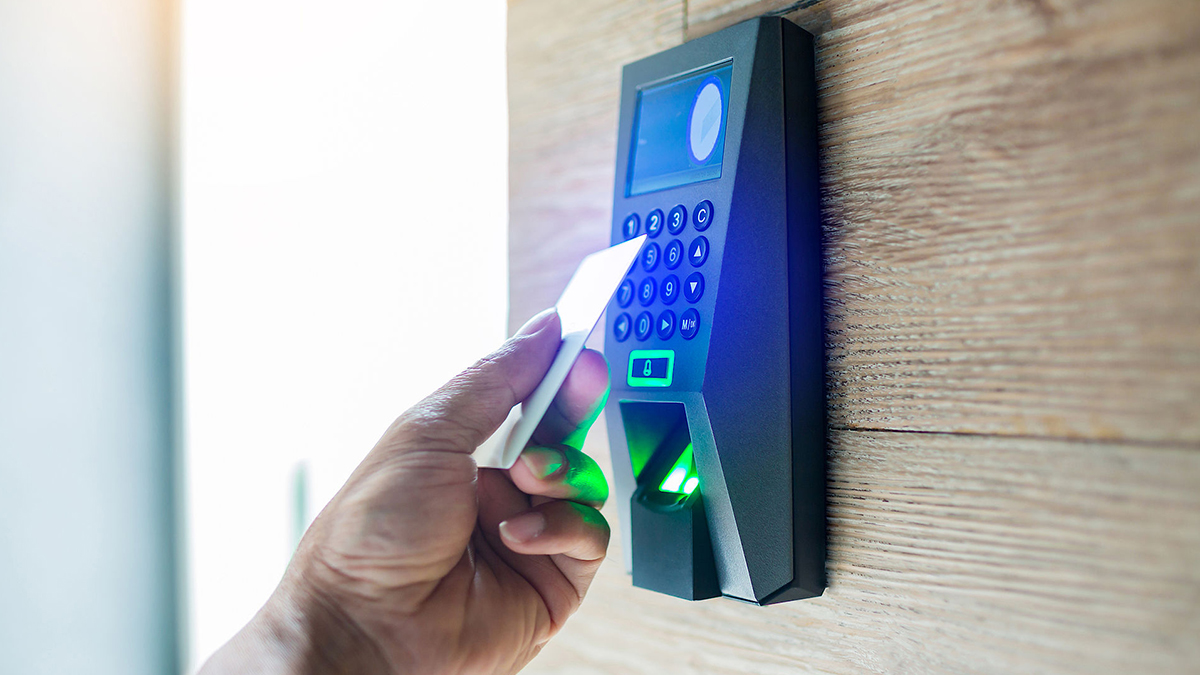
A smart lock, also called digital door lock or smart door lock, is designed to replace the bolt lock on your front door and is a Wi-Fi or Bluetooth-enabled smart home device that lets users leave their house keys behind, locking and unlocking doors.
The increasing maturity and development of smart lock-related technologies has led to the birth of facial recognition, mobile phone unlocking, iris unlocking, and other Internet of Things technologies. The functions and applications of smart lock products will become more diverse and diversified, which will further promote the synchronous development and integration of smart locks in home furnishings in the future.
Smart Lock Has Entered A Mature Stage of Development
In 1971, microcontrollers and microprocessors used in the field of smart homes were born. The initial stage of the development of the global smart lock industry ended and entered the growth period of the industry. After years of development, global smart lock industry technology has gradually matured, and the smart lock industry has entered a mature stage of development driven by 5G.
The Global Smart Door Lock Market Exceeds $1.6 Billion
As consumers increase their use of smart home technology, smart locks have become an important device. The global smart lock market reached approximately 420 million U.S. dollars in 2016, and was 1.28 billion U.S. dollars in 2017. By 2019, the smart lock market reached 1.62 billion U.S. dollars, a year-on-year increase of 24.62%.
The penetration rate of the China market is lower than that of Japan, South Korea, Europe, and the United States
In 2019, China's smart door lock penetration rate was 7%, while South Korea's penetration rate was as high as 70%, and the penetration rate in European and American countries also reached 50%. China's smart door lock market penetration rate is low, and there is still a lot of room for market growth. At present, the main sales areas of global smart locks are concentrated in South Korea, Japan, Europe, America, and China. From the perspective of the market penetration rate growth, China's smart door lock penetration rate is growing fastest. In the apartment and commercial residential market segments, China's smart door lock penetration rate is expected to surpass Japan and South Korea.
The United States is the world's largest market for smart door locks
A higher percentage of single-family homes, and consumers' greater interest in smart home automation or security services, have made the United States the largest market for smart locks by far. Consumers in other regions have different priorities. In Western Europe, temperature control is more important, and smart locks are usually not integrated into smart home services. Smart home solutions installed in multi-dwelling units in South Korea usually have shared entrances equipped with commercial-grade electronic lock systems. In recent years, with the maturity of smart lock technology and the improvement of market awareness, China has become a global leader in the field of smart locks. Regardless of product form, function, or number of brands and companies, China is already ahead of most countries in the world.
It will show a growth trend by 2023, especially in Japan, South Korea, and European and American markets. Generally, the household penetration rate in South Korea is more than 50%, and about 5%~10% in China, where smart locks are in their infancy. Smart locks are expected to enter the market through builders, door lock manufacturers, and door manufacturers.
Smart Door Lock Market Trends
It is not new to unlock the lock through fingerprint recognition. Now you can remotely control the door lock to open the door through the mobile phone. Smart door locks have been around for several years. From 2009 to the present, LCD screens, SIM cards, and connected apps have been added to NB-IoT. And now, 5G will land today, which will also make the market more accepted and more popular.
One of the keys to smart door locks is fingerprint recognition technology. Judging from the current biometric technology market, fingerprint recognition exceeds 48%, and biometrics for security monitoring accounts for 9%. For MCU manufacturers, being able to process the data more effectively from the fingerprint recognition chip is an important key. After all, the smart door lock is a must-have product for the family. It is easier to upgrade smartly. It can also directly save the trouble of carrying a key. It can be integrated and connected with the overall anti-theft system. It is the first level of basic anti-theft and has great market growth potential.
Smart security has become more and more important in smart homes. Smart security devices such as access control, smart locks, cameras, etc. can relate to Internet big data, cloud services, etc., to realize the upgrade of functional products to smart products. Compared with smart home appliances, smart security has great potential in the smart home camp. Its advantages are:
- Huge household user pool: Safety is the most primitive basic need of every family. Whether in urban or rural areas, people are more willing to invest in security. In recent years, smart security systems for high-end residences have also become the choice of more people.
- Strong demand and real pain points: Everyone pays attention to safety, and the demand for smart security of urban families will increase.
- High-frequency use dedication: People often do not easily replace security equipment such as door locks, and the service life can be 5 to 8 years. Out of concerns about the personal and property safety of family members, users are sensitive to the security level of smart security equipment and networked information.
Key points for selecting electronic door locks and smart door locks
- Confirm the installation method:
There are various types of electronic locks and smart locks, and the installation methods are also different, so be sure to confirm whether the door in your home can be installed before buying.
- Confirm the type of door lock
- Confirm the type of door
- Confirm various sizes of doors
- Confirm whether you want to connect to the Internet:
The benefits of networking can achieve active smart security protection, easy management of access control, and connection to other smart home appliances in series.
- Confirm the entry and exit method:
Choose the appropriate way to open the door: voice-activated door opening, Bluetooth door opening, mobile phone remote door opening, biometric door opening, password door opening, spare key opening, etc.
- Confirm the anti-theft and information security mechanism of the smart lock:
Smart locks should incorporate a comprehensive consideration of anti-theft and personal data security, including anti-theft mechanisms and information security.