Processing Points You Need to Know in the Plastic Blowing Process
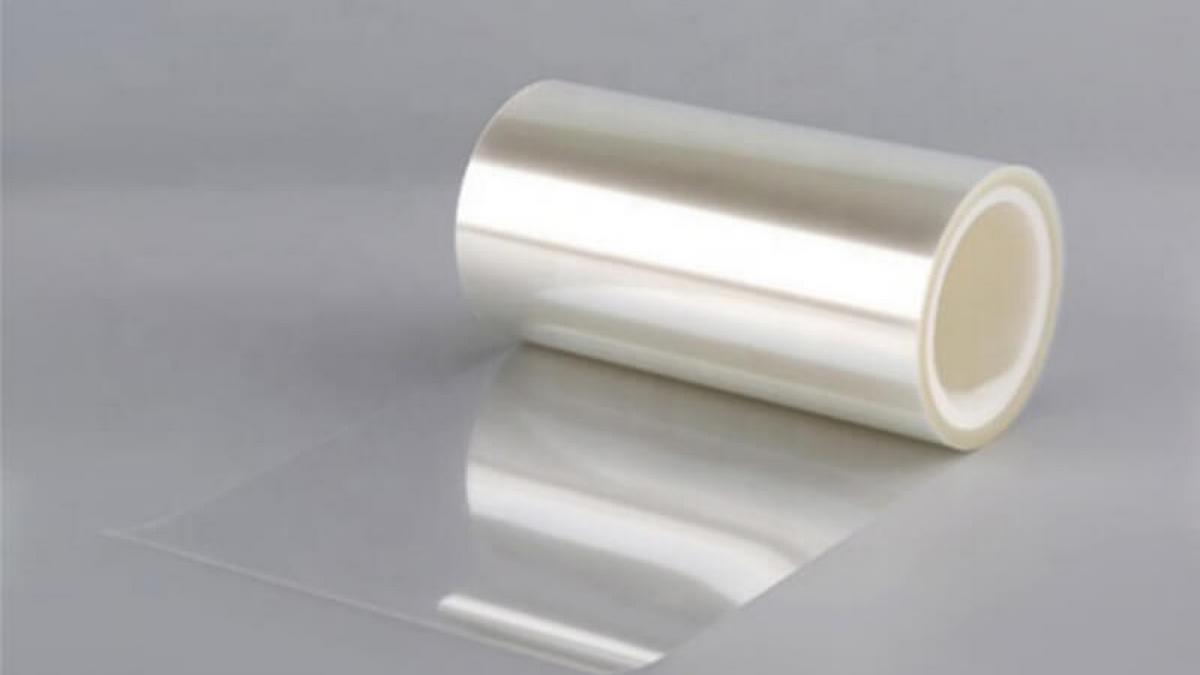
Most thermoplastics can be produced by blow molding. Blown film is a cylindrical film product obtained by extruding plastic into a thin tube, inflating the plastic with compressed air while hot, and then cooling and shaping.
Published: May 30, 2022
What Is the Plastic Blowing Process?
Blown film extrusion and cast film processing are both processing technologies for producing films. However, in the blown film extrusion process, the die used is a ring die, while the cast film processing uses a flat die (T-die).
In the blown film extrusion process, the direction of the film tube being blown may be upward, downward, or horizontal. Generally, upward blowing of film is mainly used, such as for LDPE and HDPE film. PP film is used for good transparency. Where the film needs to be rapidly cooled with chilled water, downward blowing of film is adopted. PS foaming film or rigid PVC film adopts the horizontal blowing of film.
Blown film is generally stronger than cast film and its heat shrink seal ability is better than cast film. There are many kinds of films produced by blow moldings, such as LDPE, PP, HDPE, PA, EVA, and other plastics.
Plastic Blown Film Processing and its Application:
The plastic film blowing machine heats and melts the plastic particles and blows them into a film. There are many kinds of plastic film blowing machines, such as for PE, POF, and so on. The new material is blown out with new particles, the color is uniform, and clean, and the bag is stretched well. Some people also use recycled plastic bags to make particles. This kind of particle is generally called old material. When made into particles, it is usually gray. When making bags, pigments are usually added. The bags are unevenly colored, brittle, and easy to break. The price is also lower. Although it is a recycled plastic bag, there is still a big difference between waste bags and garbage plastics in the bag-making process.
The plastic film blowing machine produces plastic films suitable for various high-grade film packaging. The film can be widely used in light and heavy packaging due to its good barrier properties, moisture resistance, frost resistance, and oil resistance. It can be used for various fresh fruits, meat products, pickles, fresh milk, liquid beverages, medical supplies, etc.
Common Plastic Film Materials - Polyethylene Blown Film Materials
The polyethylene resin raw material used for plastic blowing should be blown-film grade, and contain an appropriate amount of slip agent to ensure the openness of the film. If the melt index (MI) of the resin is too large, the viscosity of the molten resin will be too small, resulting in a narrow processing range. The processing conditions will be difficult to control, the resin film-forming properties will be poor, and it will not be easy to process into a film. In addition, if the melt index (MI) is too large, the relative molecular weight distribution of the polymer will be too narrow, and the film strength will be poor. Therefore, raw materials with a low melt index (MI) and a wide relative molecular weight distribution should be selected. This will not only meet the performance requirements of the film but also ensure the processing characteristics of the resin. Blown polyethylene films generally use polyethylene raw materials with melt indexes (MI) in the range of 2-6g/10min.
What Are the Control Points of the Blow Molding Process?
The performance of the blown film has a close relationship with the production process parameters. Therefore, to obtain high-quality film products, during the process of film blowing it is necessary to closely control the process parameters, standardize the process operation, and ensure the smooth progress of production.
Blown film process:Hopper feeding→Material plasticization and extrusion→Inflation traction→Air ring cooling→Herringbone splint→Traction roller traction→Film winding
-
Extruder temperature:
When blowing low-density polyethylene (LDPE) film, the extrusion temperature should be controlled between 160℃-170℃ and the temperature of the machine head must be uniform. If the extrusion temperature is too high, the resin will easily decompose, and the film will be brittle, and the longitudinal tensile strength will be significantly reduced. If the temperature is too low, plasticization of the resin will be poor so that the expansion and stretching cannot be performed smoothly. This will result in low tensile strength of the film and the gloss of the surface will be poor in transparency. -
Blowup ratio:
The blowup ratio is a critical parameter that needs to be controlled when producing blown film. It refers to the ratio between the diameter of the film bubble after inflation and the diameter of the die where the tube is extruded from. An increase in the blowup ratio indicates an increase in the transverse expansion of the film; how far the film is stretched in a transverse direction. The stretching will produce a certain degree of orientation of the plastic molecules, and as the blowup ratio increases, the transverse strength of the film will increase. However, the blow-up ratio should not be too large, otherwise, it will cause the film bubble to become unstable and the film to wrinkle easily. Therefore, the blowup ratio should also be properly matched with the traction ratio. The blowup ratio of low-density polyethylene (LDPE) films should be controlled at 2.5-3.0. -
Traction ratio:
The ratio between the draw speed of the film and the extrusion speed of the tube ring is referred to as the draw ratio. The draw ratio is the stretching factor in the longitudinal direction, i.e. the direction of extraction. When the traction ratio increases, the longitudinal strength will also increase, and the thickness of the film will become thinner. But if the traction ratio is too large, the thickness of the film will be difficult to control, and the film may even be pulled off. The traction ratio of low-density polyethylene (LDPE) film is generally controlled between 4-6. -
Frost line:
The frost line, also known as the dew point, refers to the dividing line where the plastic oil-viscous fluid state enters the high-elastic state. During the film blowing process, the low-density polyethylene (LDPE) film is in a molten state as it is extruded from the die with good transparency. After leaving the die, the blowing area of the film bubble is cooled by the cooling air ring. When the cooling air blows into the plastic film bubble just extruded from the die head, the high-temperature film bubble will be cooled. As the film’s temperature drops below the viscous flow temperature of low-density polyethylene, (LDPE) it solidifies and becomes blurred. There is a dividing line between the transparent film being extruded, and the area of the film which becomes blurred as it cools, which is called the frost line.
In the film blowing process, the location of the frost line will have an influence on the film’s performance. If the frost line is located high on the blown film bubble, the film is being blown while it is still in a liquid state. In this case, the blowing only thins the film, and the molecules are not stretched and oriented properly. The performance of the blown film under these conditions will be similar to that of cast film. On the contrary, if the dew point is relatively low, the inflation is being carried out in the solid, high elastic state, and the inflation will create transverse stretching, weakening the performance of the blown film.
Common Processing Problems and Solutions for the Blown Film:
-
The film is wrinkled:
The root cause of wrinkles in the film is that the transverse thickness of the film is uneven. Even if the difference is very small, it can cause obvious wrinkles after accumulation, which affects the results of the drop test, the film tear test, and the film friction coefficient.
Note:- Reducing the melt temperature can effectively reduce the melt fluidity. The film will be relatively strong after extruding from the die head, which will reduce uneven cooling of the film due to the distortion of the film bubble while cooling.
- Reduce the cooling air volume or adjust the uneven cooling air.
- If the included angle of the herringbone board is too large so that the film is flattened in a short time, wrinkles will result. The included angle of the herringbone board should be appropriately reduced.
- The extrusion of the film mouth is uneven, and the die should be adjusted to make it in a vertical state.
- The tension of the winding roller is too high, causing the film to be pleated. The tension of the winding roller should be appropriately reduced.
-
Poor film transparency:
Polyolefin is a high crystalline polymer. The key to improving transparency is to reduce the crystallinity and make the spherulites fine. Although the resin raw material will be an influencing factor, setting the blown film process parameters properly can improve the transparency of the film to a certain extent.
Note:- If the extrusion temperature is too low the melt plasticization will be poor, so the melt temperature should be appropriately increased.
- If the cooling air volume is not sufficient to properly cool the film, it will affect the transparency. The cooling air volume should be appropriately increased.
- If the resin particles contain moisture the particles should be fully dried before extrusion.
-
Fish eyes in the film:
Fish eyes mainly result from additives, low molecular weight resins, and dust in the raw materials. These condense on the die during processing, and after accumulating, will rub off into the resin, forming fish eyes on the film. Since it is caused by the precipitates in the resin, it cannot be fundamentally eliminated during the extrusion process.
Note:- Periodically increase the screw speed and melt extrusion pressure to remove the precipitates from the die.
- Regularly clean the die.
- Ensure that the melt temperature is sufficient to fully plasticize the resin.
- Uneven discharge of resin from the die can cause the transverse thickness of the film to be uneven.
- Improper adjustment of die lip gap requires partial or full readjustment.
- Accumulation of resin impurities in the mold cavity can cause uneven discharge. The mold should be cleaned regularly.
- If the melt pressure or temperature is too high or the fluctuation is too large, it will cause unstable extrusion flow which will cause uneven thickness. The temperature can be adjusted and the extrusion speed can be improved.
-
Film Winding, Running when winding:
Film running off the rolls during winding will cause a lot of waste and loss, which should be avoided as much as possible.
Note, possible causes:- The tension of the winding roller is too small, and the film roll is too loose.
- The winding tension is unstable.
- The axes of the guide rollers are not parallel.
- The lateral thickness of the film is uneven.
Published by May 30, 2022
Source :read01
(4059)(20260924)(原).jpg)
(2367)(20260924)(原).jpg)