What Is A Boring Machine, and What Are Its Different Types?
Knowledge

What Is A Boring Machine, and What Are Its Different Types?

Boring Machine is different from other machine tools and mainly suitable for boring machine processing.
Published: May 23, 2023
What Is A Boring Machine, and What Are Its Different Types?

What Is A Boring Machine?

Machine tools are divided into many types according to their functions, and one of which is a boring machine.

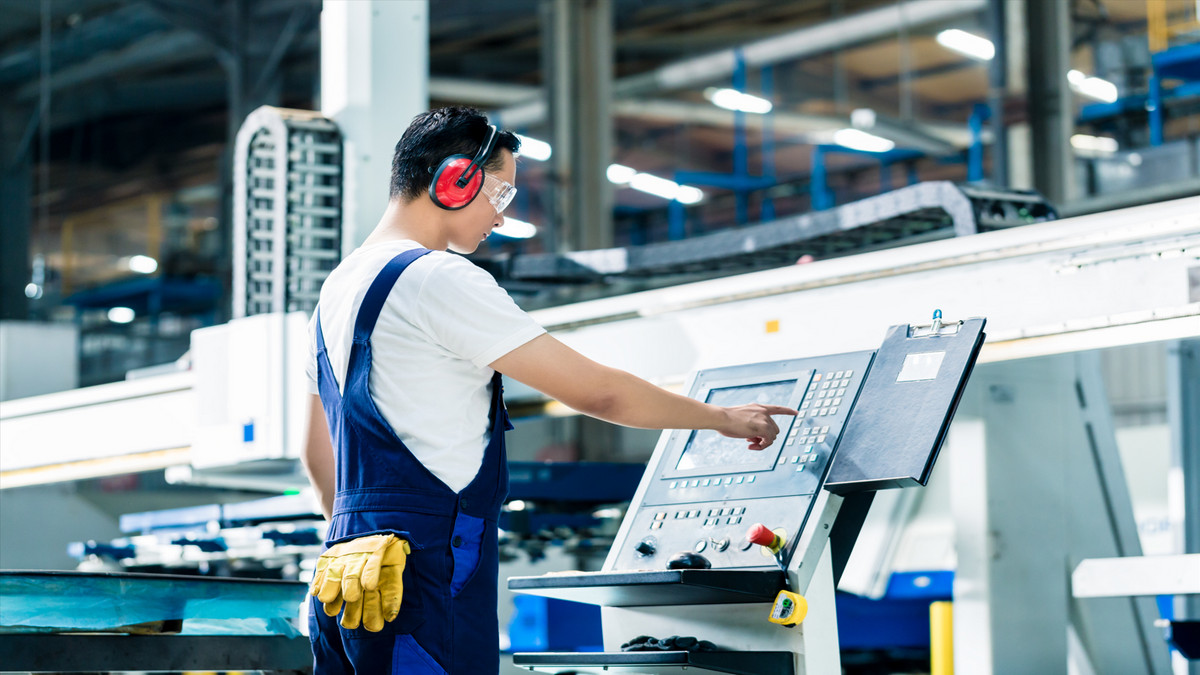
The boring machine can also be called boring. A boring machine mainly uses a boring tool to boring the object. After the object is fixed and stationary, the boring tool moves and rotates for processing.

Types of Boring Machines

There are many types of boring machines. Common types include horizontal boring machines, floor boring machines, diamond boring machines, and coordinate boring machines.

  1. Horizontal boring machine:
    Suitable for small batch production and repair workshops; it is the boring machine with the highest performance and the most widely used.

  2. Floor boring machine:
    Fix the objects on the floor platform, suitable for processing large or heavy objects, suitable for heavy machinery manufacturers.

  3. Diamond boring machine:
    Use diamond or hard alloy cutting tools to accurately boring with small feed and high cutting speed. It can complete the boring process with small surface roughness. It is mainly suitable for large batches.

  4. Coordinate boring machine:
    With precise coordinate positioning, it can perform line drawing, coordinate measurement, scale, and other work. It is more suitable for high-precision shapes, sizes, and holes distances, for small and medium batch production or for tool shops.

In addition, there are vertical turret boring and milling machines and deep hole boring machines.


Published by May 23, 2023 Source :pixpo

Further reading

You might also be interested in ...

Headline
Knowledge
How Forging Allowance Shapes the Cost and Accuracy of Final CNC Machining
Why the extra stock left on a forging can determine machining time, dimensional stability, and total part cost.
Headline
Knowledge
Why Die-Sinking EDM Electrodes Wear Unevenly and How Geometry Changes the Result
How electrode geometry, discharge behavior, flushing, and process settings influence wear patterns and dimensional accuracy in die-sinking EDM.
Headline
Knowledge
Why Automatic Spray Guns Produce Uneven Coating at Line Starts and Stops
How spray timing, pressure transients, material viscosity and motion synchronization affect coating consistency
Headline
Knowledge
Designing Cable Assemblies for Wearable Medical Devices: Flexibility, Durability, and Patient Comfort
Remote Patient Monitoring (RPM) and wearable medical devices represent one of the fastest-growing segments in healthcare technology.
Headline
Knowledge
Sourcing Drawer Slides for Data Centers: Meeting the High-Density and Low-Tolerance Demands of Server Racks
As high-tech infrastructure expands, data centers are under growing pressure to support more computing power within tighter physical footprints.
Headline
Knowledge
How to Qualify Custom Worm Gears for Medical and Aerospace Systems: Testing, Traceability, and OEM Quality Controls
Help procurement teams and equipment manufacturers evaluate OEM worm gear suppliers using practical quality criteria, including inspection methods, test evidence, material controls, and traceability records.
Headline
Knowledge
Why High-Precision Manual Lathes Still Earn Their Place in CNC Machine Shops
The right machine is not always the most automated one, but the one that delivers the required part with the greatest speed, flexibility, and confidence.
Headline
Knowledge
How to Choose a Large 5 Axis Universal Machining Center: Match Automation Architecture to Your Real Production Bottleneck
Find the Real Production Bottleneck Before Choosing Automation
Headline
Knowledge
Full Automatic Dipping Machine vs. Automatic Loading and Unloading Machine: How to Choose the Right Automation Architecture
Choose automation based on where your line actually loses time, labor, and consistency, not simply on which machine has the most automated features.
Headline
Knowledge
Why Push-In Air Fittings Leak After Installation: Tube Preparation, Insertion Depth, and Side Load
How Tube Preparation, Incomplete Insertion, and Side Loading Affect Pneumatic Sealing Reliability
Headline
Knowledge
Lots of Production Data, but Decisions Are Still Too Slow? How Smart Manufacturing Can Break Down Information Silos
Learn how smart manufacturing helps manufacturers connect equipment, production, quality, and enterprise data to reduce information silos, improve visibility, and support faster operational decisions.
Headline
Knowledge
Equipment Keeps Failing Unexpectedly? How Smart Manufacturing Can Reduce Unplanned Downtime
Learn how smart manufacturing helps manufacturers use equipment data, condition monitoring, and predictive maintenance to detect abnormalities earlier, reduce unplanned downtime, and improve equipment reliability.
Agree