The Output Value of Medical Materials Will Approach 500 billion US Dollars In 2023!  3D Printing Has Become a New Wave in The Medical Field
Trend

The Output Value of Medical Materials Will Approach 500 billion US Dollars In 2023! 3D Printing Has Become a New Wave in The Medical Field

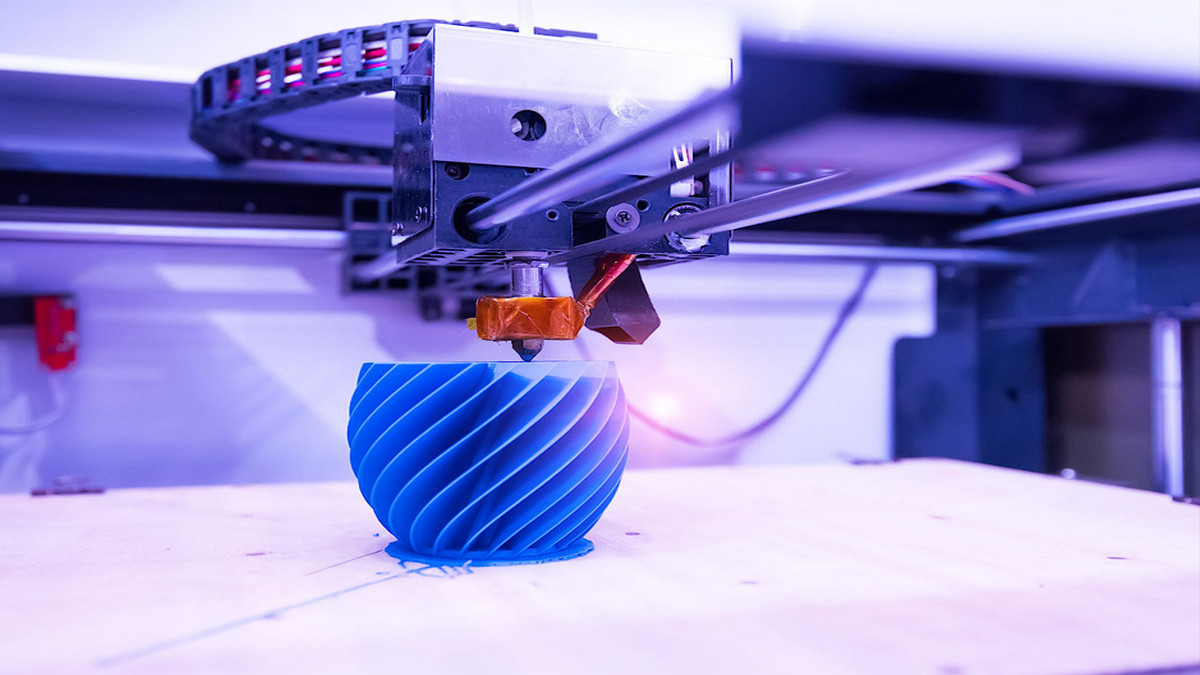
The technology for 3D printing of medical materials has soared. The new technique "Layered Manufacturing Technology", also known as 3D printing, which uses a layer-by-layer additive method to build products, has become popular in recent years. With the rapid advancement of 3D printing technology, the market for 3D printed medical materials has grown significantly.
Published: Jun 16, 2022
The Output Value of Medical Materials Will Approach 500 billion US Dollars In 2023!  3D Printing Has Become a New Wave in The Medical Field


The new wave of 3D printing has become popular in the medical field, and is being used in dentistry, orthopedics, and surgery

In 2021, as a result of the COVID-19 pandemic and the US-China trade war, as well as the international net-zero carbon emissions issue, and China's power rationing crisis, all industries have been affected. The global medical device market size in 2020 was US$427.3 billion. In 2021 it grew to US$437.7 billion and is expected to reach US$491.4 billion in 2023.

Looking back at the international medical equipment industry in 2020, the COVID-19 pandemic rapidly impacted all parts of the world, and the demand for medical equipment was greatly affected. Rapid development of precision medicine was promoted. How well enterprises transformed their business models to adapt to change was a major factor in their success.

At the same time, the aging of the global population has continued to drive up the demand for medical care. Countries are actively seeking more efficient medical solutions, promoting the development of technologies such as precision health and digital medicine to improve medical care. The goal is to improve health, reduce disease, and prolong life expectancy.

During the pandemic humans gradually established ways of coexisting with the virus. The management of the pandemic and the treatment of infection drove developments in medicine and medical technology. The aging population is still an important issue in medical technology and telemedicine has brought great changes in medical services.

The global market for 3D printing of medical equipment reached US$2.11 billion in 2020, and grew to US$2.39 billion in 2021. It is expected to reach US$5.08 billion by 2026 at a compound annual growth rate of 16.3%.

However, in 2020, the COVID-19 as the pandemic swept the world, non-emergency and elective surgeries at outpatient clinics were often postponed or cancelled. Many dental clinics were also closed, which greatly affected the sales and revenue of products and services based on 3D dental printing.

With the rebounding demand for medical services, there has been a shortage of medical supplies. With the severe shortage of medical equipment, the 3D printing industry has been able to take advantage of its rapid prototyping, online shared design and decentralized production to produce medical-grade printed materials. 3D printing can alleviate the urgent need for medical supplies, and also demonstrate the production flexibility and diversified manufacturing possibilities of 3D printed medical materials.

It is expected that after the epidemic has eased and people's medical treatment returns to normal, the global 3D printing medical equipment market will grow rapidly, doubling from US$2.39 billion in 2021 to US$5.08 billion in 2026. It is recommended to invest in product development to provide integrated products and services. In addition to accelerating the expansion of the existing field of bone and dental printing, we are optimistic about the future of smart care and cancer treatment. Emerging printing technologies such as biosensing devices and tissue engineering will also be developed. Layout of future potential markets.


Published by Jun 16, 2022 Source :Business Next

Further reading

You might also be interested in ...

Headline
Trend
Ensuring Safety and Efficiency in Can-Making Equipment for High-Corrosion, High-Pressure Applications
As the event and stage engineering industry faces increasing demands for speed, safety, and sustainability, temporary structures must evolve beyond traditional construction methods. Modular scaffolding has become a core infrastructure solution, redefining how large-scale events are built, managed, and optimized.
Headline
Trend
The Future of Construction Screws in 2026 - Balancing Innovation, Durability, and Environmental Responsibility
As construction projects become more complex, builders and engineers are seeking screws that combine efficiency, strength, and eco-friendly materials. Patented construction screws are at the forefront of this trend in 2026. This article examines key technological developments, global applications, and leading manufacturers driving innovation in the construction screw market.
Headline
Trend
Automation and Sustainability: The Future of Metalworking
The global metalworking industry is undergoing a major transformation. Two forces—automation and sustainability—are redefining how manufacturers approach efficiency, quality, and competitiveness. Companies that once relied on incremental machinery upgrades are now turning to connected ecosystems, data-driven production, and environmentally responsible practices.
Headline
Trend
Powering the Future of Packaging: Highlights of Next-Gen Automation
With over three decades of development and more than 30 machine models, Taiwan’s automated packaging industry has built a reputation for delivering flexible, efficient, and customizable solutions. These systems are widely used in both food and non-food sectors, providing stable performance and high adaptability to meet diverse packaging demands.
Headline
Trend
Why U.S. and European Cafes Are Embracing Bubble Tea: Market Trends & Business Insights
Over the past decade, bubble tea—once a niche Taiwanese beverage—has become a global sensation. What was once considered a novelty is now a mainstream beverage option in cafés, restaurants, and even hotels across the United States and Europe. The question many in the foodservice industry are asking is: Why are Western businesses adding bubble tea to their menus?
Headline
Trend
Why Smart Factories Are Prioritizing High-Efficiency Oil Mist Filtration
An analysis of how cleaner air leads to longer machine life and lower costs in the CNC industry.
Headline
Trend
Navigating the Future: Taiwan's Lathe Industry in 2025 and Beyond
Taiwan's lathe industry, a cornerstone of the global machine tool sector, is currently at a critical juncture. Known for its expertise in mid-to-high-end CNC lathes and multi-axis machining centers, the industry has a storied history of evolution and resilience. However, the late 2025 landscape is complex, demanding strategic agility to overcome intense international competition and technological shifts.
Headline
Trend
2026 Precision Machining Trends- Essential Tools for Smart Manufacturing
As we approach 2026, the precision machining industry is poised for significant transformation. The increasing demand for complex and high-precision parts has driven the adoption of smart manufacturing and automation technologies. In this article, we'll explore the top 5 trends in precision machining for 2026 and how SYIC is supporting the industry's evolution.
Headline
Trend
The Application of Materials Science in Medical Device Manufacturing
In the field of medical device manufacturing, materials science plays a central role, directly impacting the safety, durability, and clinical performance of equipment. With the rapid development of smart healthcare and precision medicine, the demands for material performance have become increasingly stringent, particularly in the areas of biocompatibility, antimicrobial properties, and lightweight design.
Headline
Trend
Globalization and Steel-and-Glass Structures: Has the Architectural Divide Between East and West Disappeared?
In the West, concrete is a symbol of strength and efficiency, yet in the hands of a Japanese master, it can become a vehicle for Zen philosophy. In Asia, bamboo is revered as a sustainable material, but in the West, it is being redeveloped into a high-tech, eco-friendly solution. This article will delve into why architects from the East and West, even when faced with the same materials, can create two completely different architectural identities. The root of this lies in a fundamental difference in philosophy: the Eastern focus on living in harmony with nature and the Western drive to challenge physical limits.
Headline
Trend
Sewing Challenges in the Era of Sustainability: Balancing Durability and Eco-Friendliness
In discussions on sustainable textiles, sewing threads may seem insignificant, yet they play a crucial role. The material and production process of threads not only affect the durability of garments but also have long-term environmental impacts. In particular, under the influence of “fast fashion,” low-quality threads often break or fade easily, leading to garments being quickly discarded. In contrast, durable threads made from sustainable sources help extend the life cycle of clothing, reduce waste, and embody the concept of “slow fashion.”
Headline
Trend
Smart Breathing Masks: From Pandemic Essential to Intelligent Healthcare
The evolution of healthcare is a continuous response to the needs of the times. Breathing masks, a medical consumable we once paid little attention to, are a concrete example of this transformative wave. They are shifting from being a cold, professional tool to a gentle companion infused with intelligence and human-centered care.
Agree