Labor shortages don't mean every process should be automated. Discover how manufacturers can prioritize automation investments, strengthen human-machine collaboration, and improve workforce productivity by automating the right manufacturing processes.
Labor shortages are evolving from a temporary manufacturing problem into a long-term operational challenge. Population aging, the retirement of skilled workers, changing career preferences among younger employees, and persistent recruitment difficulties in certain occupations mean that many factories cannot consistently increase production capacity even when customer demand remains strong.
When facing labor shortages, many companies first consider purchasing robotic arms, introducing collaborative robots, or building fully automated production lines to reduce their dependence on shop floor labor. However, not every process should be automated immediately. If tasks change frequently, processes have not yet been standardized, or labor is not the real bottleneck, automation equipment may fail to deliver the expected benefits because of repeated adjustments, material delays, or insufficient maintenance capabilities.
NIST notes that workforce shortages are increasing the importance of robotics and related automation technologies to manufacturing competitiveness. Manufacturing automation can also take many forms, ranging from machine tending and material handling to vision inspection and human-robot collaboration, allowing companies to adopt technologies gradually according to their operational needs.
In an era of persistent labor shortages, the objective of automation should not be to transfer every task to machines. Companies should identify processes that are the most difficult to staff, consume the most labor, are easiest to standardize, and have the greatest effect on total output.
When manufacturers direct limited resources toward the right processes, automation can genuinely improve workforce productivity instead of simply increasing the amount of equipment on the factory floor.
Which Manufacturing Processes Are Most Affected by Labor Shortages?
The impact of labor shortages is not limited to having fewer operators available each day. More serious problems often arise when critical operations have no qualified backup, certain shifts cannot open production lines, or physically demanding and unfavorable working conditions make some positions difficult to fill over the long term.
Processes that depend on a small number of skilled employees are among the most vulnerable. For example, mold changes, machine setup, welding, equipment configuration, and quality decisions may be handled by only a few experienced employees. If one of these employees is absent, resigns, or retires, the schedule and quality performance of the entire production line may be affected.
This is not simply a shortage of workers. It is an operational risk created by concentrated skills and insufficient backup.
Highly repetitive and labor-intensive tasks also tend to experience higher employee turnover. Loading and unloading, packaging, transportation, fastening, sorting, and visual inspection may involve monotonous work and significant physical demands, making it difficult to retain newly recruited employees.
Repeated recruitment and training increase management costs and can also create fluctuations in quality and productivity.
High-risk environments involving heat, dust, noise, chemical exposure, or heavy lifting create both workforce and occupational safety challenges. Even when employers offer higher wages, these positions may remain difficult to fill consistently.
Labor shortages also expose existing process weaknesses. When staffing is sufficient, companies may rely on overtime, additional inspection, or extra material handlers to keep production moving. When fewer employees are available, waste caused by waiting, rework, poor information flow, and unbalanced workstations becomes much more visible.
NIST manufacturing resources indicate that automation can release employees from repetitive tasks and make work easier to perform. Its robotics programs also emphasize that labor shortages and the retirement of an aging workforce are increasing the need for manufacturers to adopt robotic technologies.
When evaluating automation, companies should therefore look beyond which department has the fewest employees. They should identify the processes most likely to stop production, delay delivery, or create a skills gap when qualified personnel are unavailable.
Which Tasks Should Be Automated First?
The tasks most suitable for early automation generally share several characteristics: they are highly repetitive, relatively stable, physically demanding, hazardous, or already limiting total production output.
Machine Tending and Fixed-Cycle Operations
Machine tending is a common starting point for automation. Operators may repeatedly load materials, position parts, start equipment, wait for processing, and remove finished products, while only a small portion of the work requires significant judgment.
When workpiece dimensions, locations, fixtures, and processing cycles are relatively stable, robotic arms or collaborative robots can perform loading and unloading tasks. This allows employees to supervise multiple machines and redirect their time toward inspection, setup, and abnormality handling.
Collaborative robots are especially suitable for small and medium-sized factories with limited space, varied product portfolios, or insufficient conditions for a fully automated line.
NIST notes that advances in sensors, software, and vision systems are making robotic technologies increasingly accessible to smaller manufacturers. In high-mix, low-volume production, the compact size, integration flexibility, and redeployment capability of collaborative robots can also improve practical adoption.
However, if workpiece shapes vary significantly between batches, positioning is unstable, or machines frequently stop because of quality and material problems, companies should improve the process before introducing automation.
Material Handling, Palletizing, and Heavy-Load Operations
Material handling rarely adds direct value to the product, yet it can consume substantial labor. Long distances between workstations, high transportation frequency, and heavy materials can cause waiting, collisions, occupational injuries, and production interruptions.
Conveyors, automated guided vehicles, autonomous mobile robots, and automated palletizing systems can take over repetitive transportation tasks along predictable routes, allowing employees to focus on work that requires judgment and coordination.
However, if storage locations, traffic routes, and material identification remain disorganized, automated handling equipment may still experience frequent delays and route conflicts. Shop floor layout and internal logistics should therefore be improved before automation is introduced.
High-Speed and Repetitive Quality Inspection
In factories facing labor shortages, quality inspection often becomes a production bottleneck. Manual visual inspection is affected by fatigue, differences in operator experience, and production line speed. When product volumes are high, defects are small, or 100 percent inspection is required, hiring more inspectors may not provide a sustainable solution.
Machine vision can inspect dimensions, appearance, missing components, label placement, barcodes, printed information, and packaging integrity while retaining image and batch records.
Companies can allow automated systems to handle frequent and clearly defined inspection decisions, while quality professionals review complicated or high-risk cases.
This approach does not eliminate the need for quality personnel. Instead, it redirects limited human resources from repetitive screening toward abnormality analysis, root cause investigation, and process improvement.
Dangerous, Dirty, and Physically Demanding Work
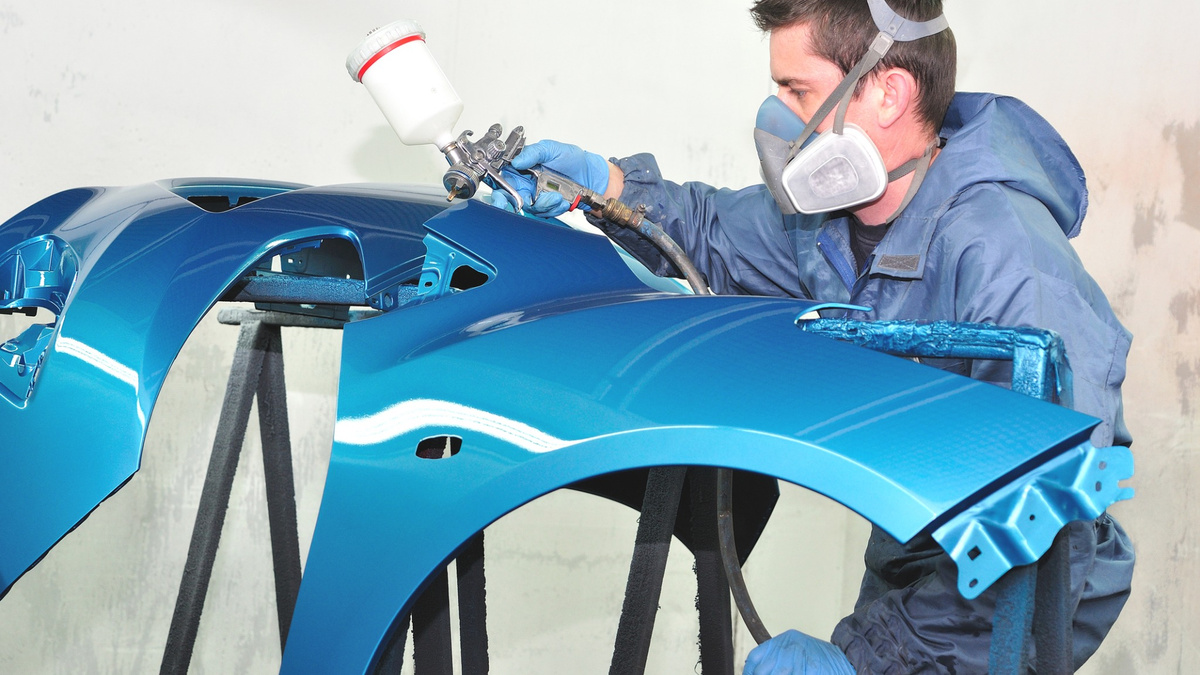
Welding, painting, grinding, high-temperature handling, chemical environments, and heavy lifting are all processes that deserve early automation consideration. These jobs often combine recruitment difficulties, high turnover, and occupational injury risks.
The International Federation of Robotics notes that robots are frequently used for dangerous, monotonous, dirty, or highly precise tasks and can help reduce the impact of labor shortages in manufacturing. Related studies have also identified an association between robot adoption and lower workplace injury rates.
Assigning high-risk work to machines can therefore improve production capacity while reducing safety-related costs and recruitment difficulties.
Bottlenecks That Clearly Limit Total Output
The most valuable process to automate is not necessarily the easiest one to modify. It is the process that places the greatest constraint on total delivery capacity.
Companies should examine output rates, work-in-process accumulation, overtime frequency, waiting time, and employee workload at each workstation. If large quantities of semi-finished products repeatedly accumulate before a station, or labor shortages at that station frequently disrupt downstream operations, it may deserve a higher automation priority.
However, companies must still confirm whether the bottleneck is actually caused by manual processing speed. If the real problem is a material shortage, delayed quality approval, frequent changeovers, or equipment failure, adding a robot will not resolve the underlying cause.
How Should Companies Evaluate Automation Investment and Implementation Priorities?
When labor shortages become urgent, companies may rush to purchase equipment. However, automation investments should not be evaluated only by asking how many employees can be removed from a process.
The actual value should include improvements in capacity, quality, delivery, safety, flexibility, and skills risk.
The first step is to establish current-state data. Companies should measure operating cycle time, labor hours, employee turnover, overtime, yield, downtime, and work-in-process waiting time.
Without a reliable baseline, it is difficult to determine whether automation has genuinely addressed the labor shortage after implementation.
The second step is to evaluate how suitable the process is for automation. Processes with greater standardization, more stable input conditions, and less product variation generally provide better opportunities for successful automation.
If a process depends heavily on real-time judgment, products change every day, or material conditions remain unstable, the company may require more flexible equipment, vision systems, and human intervention, resulting in higher integration costs.
The third step is to quantify the actual losses caused by labor shortages. For example, how many hours does a workstation stop each week because no qualified operator is available? How much overtime is required to complete production? How are quality and delivery performance affected?
Once these losses are quantified, companies can compare the cost of automation with the cost of maintaining current operations.
Lifecycle costs must also be included, such as fixtures, software, sensors, system integration, maintenance, spare parts, and employee training.
Purchasing equipment is only the first step. If internal teams lack operating, programming, and maintenance capabilities, the company may remain highly dependent on external vendors.
NIST’s automation implementation guidance recommends beginning with operational needs and process assessments, building a business case aligned with corporate strategy, and continuously measuring results after deployment.
In practice, automation priorities can be evaluated according to the severity of labor shortages, process stability, safety risk, capacity impact, and implementation difficulty.
The best starting point is often not the most advanced technology, but a clearly defined application with a specific problem and measurable results.
For example, a company may begin with machine tending for one machining center, automation of one fixed transportation route, or one high-frequency visual inspection task. After completing the pilot, the solution can gradually be replicated across other machines and production lines.
This approach reduces the risk of large one-time investments while helping the organization develop internal automation management capabilities.
How Can Manufacturers Build a New Human-Machine Collaboration Model?
The objective of automation should not be to remove people entirely from the factory. It should be to redesign how employees and equipment divide responsibilities.
Machines are well suited to high-speed, repetitive, physically demanding, and hazardous tasks. People are better at handling abnormalities, making quality judgments, adjusting schedules, improving processes, and responding to high-mix, low-volume requirements.
When companies assign human and machine roles according to the characteristics of each task, limited labor can create greater value.
The development of collaborative robots allows employees and machines to work in closer proximity when supported by appropriate risk assessments, safety design, and operating procedures.
Data from the International Federation of Robotics shows that collaborative robots account for a growing share of global industrial robot installations, reflecting the increasing importance of human-robot collaboration in manufacturing automation.
However, human-machine collaboration involves more than purchasing collaborative robots. Companies must also redesign workstations, responsibilities, abnormality response procedures, and safety requirements.
For example, a robot may perform repetitive fastening or transportation while employees replenish materials, inspect products, and handle variation. A vision system may perform initial screening while quality personnel analyze abnormal trends and improve the process.
Employee skills must also develop at the same time. Operators may need to learn equipment setup, basic programming, troubleshooting, and data interpretation. Team leaders must understand how to reorganize work according to equipment capacity and employee skills.
If companies introduce equipment without redesigning jobs and providing training, automation may create a new skills shortage.
The International Labour Organization notes that automation and digitalization are changing skill requirements in manufacturing, while specialists in machine learning, robot programming, and systems integration are themselves in short supply.
Workforce strategy should therefore go beyond simply using machines to fill vacancies. It should also include training, skills backup, and job redesign.
Helping employees understand that automation will transfer repetitive and high-risk work to equipment—while creating opportunities to develop new skills—can also reduce internal resistance.
In an Era of Labor Shortages, Automation Should Move People Toward Higher-Value Work
Labor shortages have become a long-term operating condition for manufacturers, but this does not mean every process should be fully automated.
An effective approach begins by identifying the processes most likely to stop because of insufficient staffing, consume the most manual labor, create the greatest safety risks, or place the clearest limit on total output.
Companies can then select appropriate technologies based on process standardization and investment value.
Automation should not be evaluated only by headcount reduction. Equipment that reduces overtime, stabilizes quality, lowers workplace injuries, shortens training time, or allows existing employees to manage more machines can also create substantial business value.
In the new production model, machines take responsibility for repetitive, high-speed, and hazardous work, while employees focus on equipment management, quality decisions, abnormality response, and continuous improvement.
This is not simply labor replacement. It is the strategic reallocation of a company’s most limited talent resources.
Future manufacturing competitiveness will depend not only on how many people or machines a factory has, but also on whether the company can build an effective human-machine collaboration model.
When automation investment directly addresses labor shortage challenges and progresses together with process improvement and workforce development, companies can maintain capacity, delivery performance, and long-term competitiveness with a limited workforce.