The unlimited business opportunities brought by the space industry are highly valued by governments and enterprises of various countries. As the technology research and development of the global industry becomes more and more mature, the future will enter the new space era.
The Development Trend of International Satellite Communication:
According to statistics, the total output value of the global satellite industry will reach 295 billion US dollars in 2022. Coupled with the increase in the number of global satellites launches year after year, it is expected that more than 1,700 satellites will be launched every year from 2021 to 2030. Whether at the transmitting end, receiving end or there are huge business opportunities on the service side, among which low-orbit satellites (LEO) are growing the fastest. In recent years, due to the breakthrough of high throughput satellite (HTS) technology, the reduction of rocket launch costs, and the miniaturization and simplification of satellite structure, the conditions that restricted the development of low-orbit satellites in the past have been eased. Satellites play an important role in external communication, which has attracted global attention, and the development of low-orbit satellites has gradually taken off.
Low-orbit satellites are closer to the ground than high-orbit satellites (HEO), so they have the characteristics of low information transmission delay and low transmission energy. In the past, they were used for earth observation tasks. In SpaceX, One Web, etc. The industry plans to expand the low-orbit satellite system to be more widely used in communication applications (satellite telephone and narrow-band data transmission services, satellite Internet of Things services, and satellite broadband networking services). Low-orbit satellites do not need to set up the advantages of base stations, plus their wide signal coverage is conducive to integration with the current 5G terrestrial network, which is used to supplement the communication services that are insufficient on the ground, and improve bandwidth and global network coverage.
The unlimited business opportunities brought by the space industry are highly valued by governments and enterprises of various countries. With the increasing maturity of global industry technology research and development and the continuous investment of resources and hot money, the development of the space industry has entered the new space era. Changing the previous satellites locked in scientific research observation, military defense, and other application fields, and creating new commercial application value. Since the lifespan of low-orbit satellites is only 3 to 5 years at most, it is necessary to continuously launch new satellites to replace them. Coupled with satellite telemetry and other fields, the growth rate of the output value of the space industry is quite high, which means that the return on investment is great.
Electric vehicles to low-orbit satellites are closely related. For example, SpaceX, which is the fastest to connect hardware equipment with electric vehicles, has already taken a fancy to business opportunities and made plans in advance. Driven by the sharp reduction in satellite launch costs and satellite payload costs, promoting the commercial satellite communications market to move from a niche market to a consumer market under the scale effect is an opportunity. And the challenge for Taiwan's internet communication industry in this wave of a development boom.
Human beings have been developing satellite communication technology for more than half a century. The cost of satellite manufacturing and launch has been greatly reduced. With the advancement of the Ukrainian-Russian War, it was discovered that satellite communication provides the advantage of communication backup when ground communication is destroyed by war. With the global boom in low-orbit satellites, governments and manufacturers from the United States, the United Kingdom, and Canada to Japan, South Korea, and Taiwan in Asia are all striving to occupy a place in the space communication market.
With the upsurge of capital and talent entering the market to grab the space economy, the space industry has gradually shifted from the limitations of the national security and defense markets in the past to the universality driven by the commercial market. One of the most important reasons is cost decline. The rocket can be recycled and reused, and the satellite equipment components are not used in space/military specifications, but in commercial components. Driven by the significant reduction in satellite launch costs and satellite payload costs, the commercial market for satellite communications has moved from a niche market to a consumer market under the scale effect.
According to the Satellite Industry Status Report (SSIR) released by the Satellite Industry Association (SIA), the data for 2020 and 2021 both show that the output value of the global satellite industry is concentrated in ground equipment and satellite services. The proportion is as high as more than 90%, while the proportion of satellite manufacturing and satellite launch is less than 10%. It shows that ground equipment and satellite services are still the main targets of investment by manufacturers from various countries. At present, the frequency of low-orbit satellite communication is mostly Ku frequency band (12 ~ 18GHz) and Ka frequency band (26.5 ~ 40 GHz), of which Ka frequency band and 5G millimeter wave mobile communication frequency band (24.25 ~ 71 GHz) partially overlap. The required components, software and hardware, network units, and expertise have the opportunity to be shared with 5G technology or product supply chains.
Integration of Software and Hardware Systems in the Space Industry:
The space and satellite industry brings together various types of forward-looking R&D and hardware and software technologies, including four major development areas: satellite body manufacturing, launch, ground equipment, and application services. In the field of low-orbit satellite technology, Taiwan has had a complete and mature industrial chain in the field of information and communication, such as chips, PCBs, passive components, assembly, packaging, testing, etc. These foundations and talents are beneficial to Taiwanese manufacturers to replicate past successful research and development The experience in production and manufacturing has a considerable degree of advantageous niche for investing in the development of the satellite industry chain.
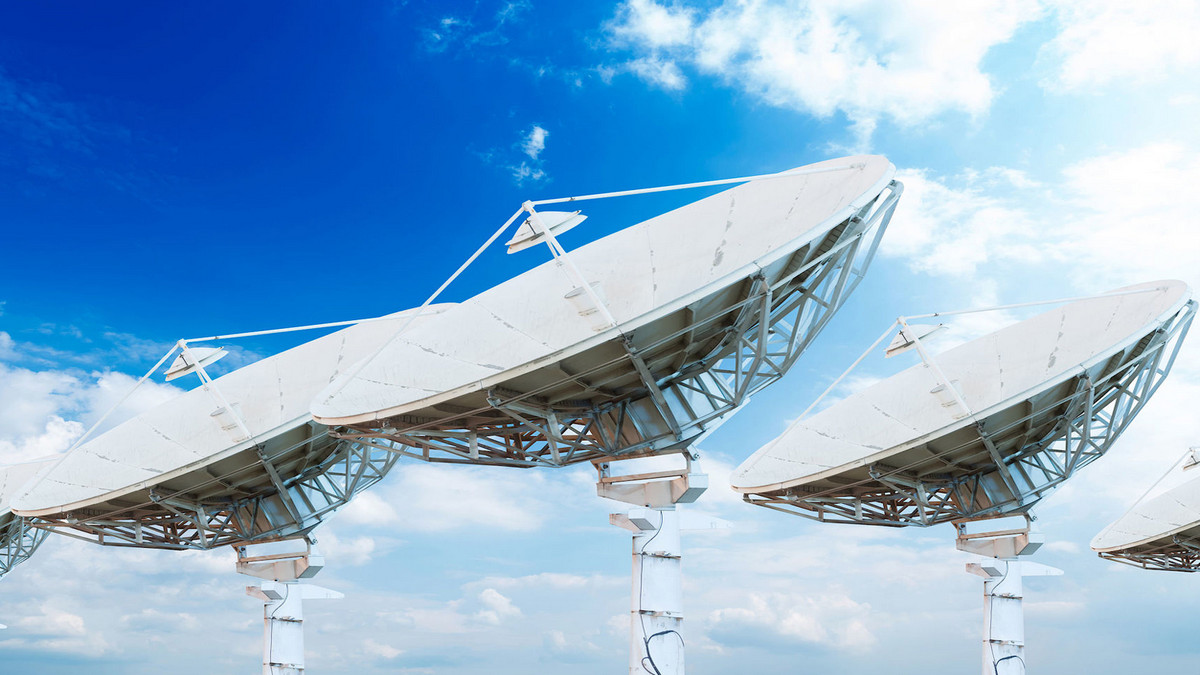
If the 5G supply chain and R&D layout are spread to the low-orbit satellite ground equipment industry and mastering technologies, it will become a niche point for expanding satellite business opportunities. In addition, terminal equipment is required for low-orbit satellite communication. In addition to fixed ground terminals, can be installed on various vehicles such as aircraft, large freight vehicles, and shipping vessels. Combined with traditional mobile communication networks, it can provide complementarity, more diversified, and ubiquitous communication services. To enable the satellite to support stable communication between the satellite payload and ground equipment under the requirements of the satellite altitude of 600 kilometers to 2000 kilometers, the moving speed of 7.4 kilometers per second, and the communication between the ground equipment, the large-phased array antenna technology plays a key role.
Beamforming algorithms, up-and-down circuits, phase-locked loop circuits, digital control circuits, power supply circuits, and even phase array chip architecture and other core technologies and manufacturing are all independent. The purpose is to assist and enhance Taiwanese manufacturers to independently develop satellite communications components and systems.
Taiwan's Satellite Communication Industry Development:
In the past, Taiwan had a complete and mature industrial chain in the field of information and communication, such as chips, PCB boards, passive components, assembly, testing, etc. These foundations and talents are beneficial to Taiwanese manufacturers to copy the successful R&D and manufacturing experience and compete globally. LEO satellite business opportunity. On the other hand, there are still many challenges in developing satellite communications in Taiwan. The communication system is like the human nerve conduction system, which is responsible for receiving and transmitting signals, and the data restoration in it depends on the communication protocol. Currently, the communication protocols of the low-orbit satellites developed by major companies such as Space X, One Web, and Amazon are self-defined, there is no global standard, and they cannot communicate with each other.
Observing Taiwan’s success in participating in global markets such as mobile phones and computers, is all because the global market is moving towards standardization and an open structure. Therefore, the current communication protocol in the low-orbit satellite market has not yet been standardized. One of the challenges of occupying a high-value-added niche. For the long-term development of the low-orbit satellite system and to attract more participants through an open framework. Taiwan's industry should also actively participate in 3GPP and advocate that the communication protocol integrating mobile communication and low-orbit satellite communication can become a global standard, the more open, the more people participating will help the integrity and efficiency of the LEO satellite ecological chain. Taiwan's industry can focus on the core of high-added value in standardized products.