According to estimates, the compound annual growth rate (CAGR) of the global warehousing automation market is expected to reach 12.6% in 2023. Private equity firms are actively involved in acquisitions to improve products and services and increase revenue.
Global Warehouse Automation Market Distribution and Status:
In the global warehouse automation market, Europe, the Middle East, and Africa (EMEA), along with the Americas, are highly concentrated markets for large customers and large-scale projects. The Asia-Pacific region (APAC) is a highly fragmented market with mixed large-scale and small-scale projects. China's market is composed of business owners, foreign system integrators, and local system integrators.
The global economy is slowing down. In the first half of 2019, many warehousing automation manufacturers had poor performance, but they benefited from the vigorous development of e-commerce (especially in the APAC region.) Consumers are requiring faster and faster arrival times, creating continuous labor shortages. Warehousing automation is expected to become the key to driving revenue growth. Vertical integration at the supplier level will become important, and the acquisition of warehouse automation solutions by suppliers has already become a trend.
People have changed their usual shopping methods and started to buy food and household necessities through e-commerce platforms. Therefore, the logistics industry is also facing severe challenges. To improve transportation efficiency, operators must introduce robots and networked equipment to reduce labor costs and realize automatic picking and intelligent warehouse management. Because of the dramatic changes in consumer shopping patterns, the new consumer experience brought by the retail industry is also driving the transformation of the warehousing industry.
What is an Automated Warehousing and Logistics System?
The automated storage system, also known as the automatic access system, is an automated system composed of high-rise three-dimensional shelves, stackers, various types of forklifts, in-out storage systems, unmanned trucks, control systems, and peripheral equipment. They use automated warehousing systems to continuously check expired or stocked products, prevent bad stock, and improve management. The automated warehousing system can make full use of the storage space, realize online control of equipment through computers, process items quickly and accurately according to the principle of first-in, first-out, and carry out reasonable inventory management and data processing.
Warehousing and logistics systems are generally divided into five key areas: Receiving incoming goods, warehousing and stocking, storage, product picking, and shipping. Accurately managing goods in these five areas is only possible through accurately determining the identity of goods. Therefore, many companies use barcode scanners, wireless local area networks, and radio frequency identification systems. Such automatic identification and data capture technologies can effectively upload the status of the goods to the central storage system or the database of the logistics center for unified management.
To design a good warehousing and logistics system, it is necessary to consider all aspects of the enterprise. According to the different features of each industry, automation equipment, such as roller conveyor systems, overhead storage machines, stackers, etc. must all be integrated. A good ERP system is necessary to automate warehousing and logistics systems for timely and accurate provision of required items.
Learn about the Evolution of Warehousing Systems:
Warehousing is an important area of commodity supply regulation and is an important pillar of logistics activities. Efficient management of factory materials, as well as regulating production, supply, and sales, plays an important role in promoting the improvement of production efficiency. There are generally five stages of development that warehousing has gone through.
-
Manual storage:
Manual warehousing is the most primitive form of warehousing. The storage, transportation, and control of warehouse materials are mainly done by manual labor, which is inefficient and prone to errors. However, manual warehousing requires less investment and can give quicker returns, so is still often used.
-
Mechanical storage:
Mechanical warehousing moves and handles materials through conveyor belts, industrial transport vehicles, manipulators, and cranes, and uses shelves, pallets, and movable shelves to store materials. Manually operated equipment, and monitors are used to control the operation of equipment.
-
Automated warehousing:
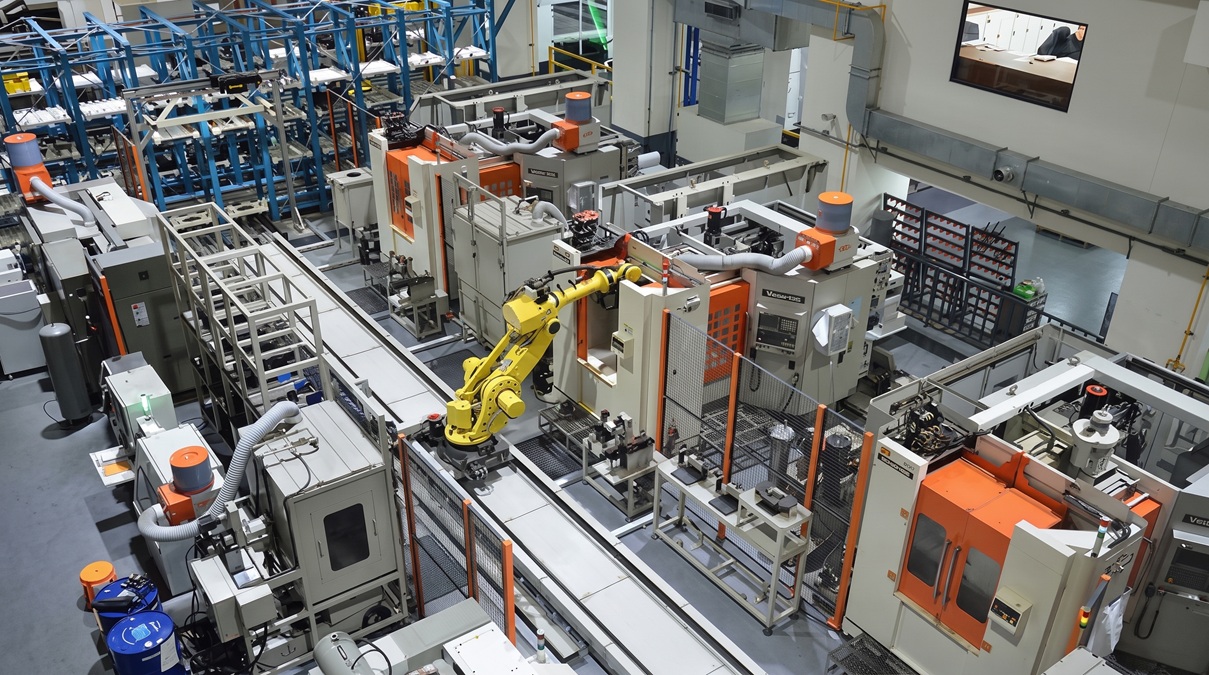
The development and application of automation technology has played an important role in promoting the development of warehousing technology. AGVs, automatic racks, automatic access robots, automatic identification systems, automatic sorting systems, rotating three-dimensional rockets, etc., have all joined the ranks of automatic control equipment in the warehouse system, improving work efficiency.
-
Integrated automated warehousing:
Automation technology in production and distribution is improving, but it cannot fully meet the growing requirements of enterprises for overall performance systems. This is seriously affecting the efficiency of enterprises. The focus of automated warehousing research has gradually shifted to the real-time, coordination and integration of material control and management, resulting in integrated automated warehousing. Computers, data acquisition, controllers of mechanical equipment, etc. can summarize information in a timely and efficient manner so that all parts of the system can cooperate efficiently, and the adaptability of production and overall benefits can be improved.
-
Intelligent automated warehousing:
With the development of artificial intelligence technology, warehousing technology has also been promoted to a higher level. An intelligent warehousing system integrates material handling, warehousing science, and intelligent technology. It is labor-saving, fast, accurate, highly efficient, and low cost. Intelligent automatic warehousing is an indispensable and important part of supply chain logistics, and manufacturing. It not only improves enterprise efficiency and competitiveness but also increases customer satisfaction.
- Fast delivery: Manpower is required only for packaging and delivery. Product delivery time is reduced by 60%, and the production capacity can increase by 10 times during peak order periods.
- High density: Warehousing systems deploy three-dimensional storage, and shelves can reach up to 14 layers. Shuttle-type automatic storage can manage tens of thousands of logistics boxes, the storage locations can reach 30,000 to 40,000. Storage scale and density are very high.
- Accurate decision-making: Through AI data calculation, combined with factors such as seasons, weather, festivals, and regions, popular commodities can be scheduled for storage in advance, and business opportunities can be grasped in advance.
With the increased digital transformation of manufacturing enterprises, the new generation of logistics enterprises must also transform to digital intelligence. Using 5G, combined with artificial intelligence, the Internet of Things, and other technologies, logistics enterprises can more efficiently solve the difficulties in warehouse management, and realize real-time management and control of all links in business processes and operation scenarios to achieve refined warehouse management.
Make Good Use of Smart Warehousing and Logistics Systems to Enhance the Competitiveness of Enterprises:
Enterprises are facing an ever-changing market and increasingly fierce competition in various industries. How to improve production efficiency and reduce operating costs is a problem that every operator must face. Among them, warehousing and logistics systems plays an important role in enterprise management. In part, when it comes to intelligent warehousing and logistics system equipment, the current technology can not only save labor and improve transportation efficiency, but also can quickly and accurately shorten the time of delivery and reduce the cost of production. The improvement and integration of electromechanical technology can effectively enhance the competitiveness of enterprises.
What are the Advantages of an Automated Warehousing and Logistics System?
-
Improve the efficiency and accuracy of production and distribution:
The automated warehousing and logistics system adopts advanced information management systems, automated material storage, sorting, and handling equipment, etc., so that goods can be automatically accessed and sorted in the warehouse as needed. In the logistics and transportation sector, the automated logistics system automatically arranges delivery and distribution according to the received order information. By using automatic picking technology, electronic label technology, automatic sorting technology, etc., efficiency and accuracy of sorting and distribution can be greatly improved.
-
Enterprise information integration:
Logistics informatization is an important part of enterprise informatization. The logistics information management system realizes the automatic transmission and reception of information between various systems of the enterprise by connecting with other management systems of the enterprise. The automated warehousing system can automatically obtain and process order information from other management systems, ensuring rapid information acquisition, timely processing, an accurate and efficient summary of distribution needs, and stocking and distribution.
-
Improve space utilization and reduce land cost:
An automated warehousing and logistics system uses high-level shelves to store goods, reducing the area of inventory, and improving the utilization rate of storage space and inproving storage capacity. The storage capacity per unit area of the shelf area of the three-dimensional warehouse is 5 to 10 times that of traditional ordinary warehouses. Compared with traditional ordinary warehouses, it can save floor space and reduce land cost.
-
Reduce labor requirements and management costs:
Automated warehousing and logistics systems can reduce the need for labor and improve labor efficiency. For example, compared with manual warehousing, an automatic warehousing and logistics system can save more than 2/3 of the labor cost, creating great benefit and less reliance on labor.
-
Improve the efficiency of inventory management
Automated warehousing and logistics systems can comprehensively control and manage warehousing and moving of inventory, providing a basis for enterprise managers to make correct decisions, and reduce inventory to a minimum. They will optimize storage capacity and improve capital flow and utilization. Enterprises need to be able to quickly respond to market changes and meet market demands. Increasingly advanced information technology coupled with cloud-based operation management technology will help enhance the competitiveness and value of the warehousing industry.