Industry 4.0 Propels the Global Industrial Market Towards Automation
Trend

Industry 4.0 Propels the Global Industrial Market Towards Automation

In the present day, conventional industries are blending Internet of Things technology to drive the evolution of Industry 4.0 and the advancement of smart manufacturing.
Published: Oct 27, 2023
Industry 4.0 Propels the Global Industrial Market Towards Automation

The global industrial automation market is projected to reach $32.93 billion by 2024, with significant contributions expected from the automation of the automotive industry.

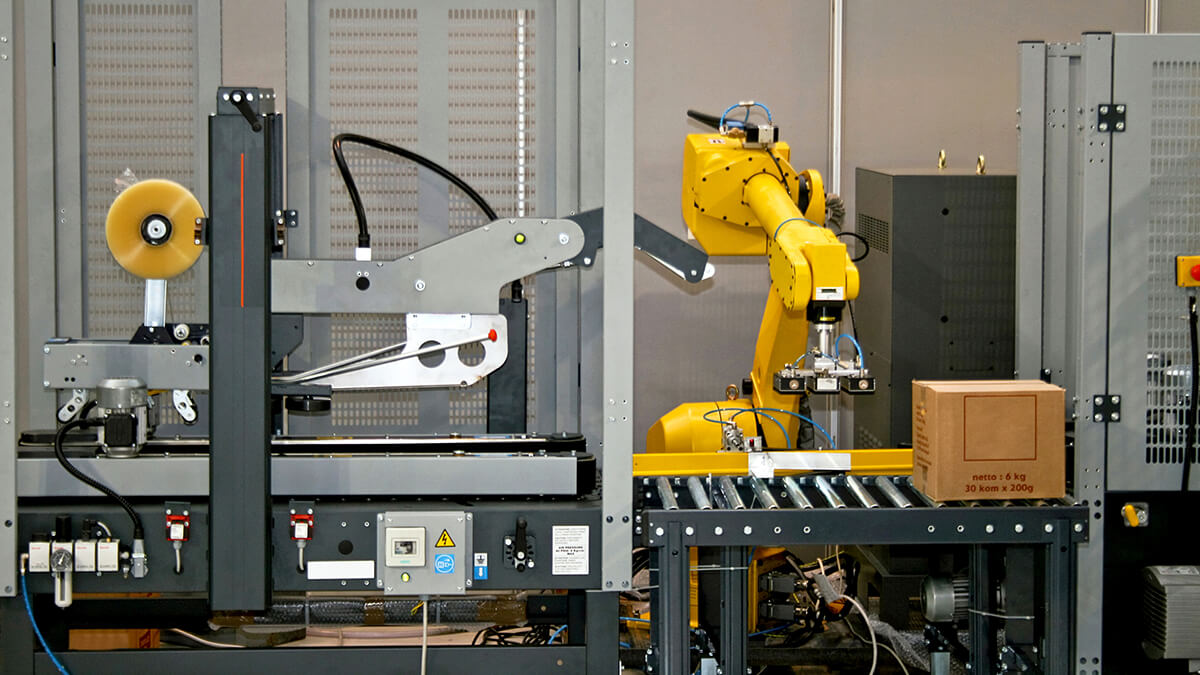
Industry 4.0 introduces a transformative model for manufacturing, ushering in unprecedented changes across various sectors. Automated manufacturing is a key component of this concept. According to a report by Zion Market Research, the global industrial automation market is forecasted to hit $321.93 billion by 2024, generating an estimated revenue of $32.93 billion by the end of that year, with a compound annual growth rate of approximately 6.5% between 2018 and 2024. This growth is not surprising, given that nearly all industries are increasingly adopting automation to enhance productivity, maintain high quality, ensure flexibility, ensure data accuracy, reduce costs, and enhance security – all of which are benefits of automation.

Automation of the Automotive Industry

The automotive industry has long been a stronghold for automation, employing smart solutions and Industrial Internet of Things (IIoT) technologies. Prominent automakers like Tesla, Volkswagen, BMW, and Toyota have integrated various automation technologies into their processes. Notable automation solutions in the automotive sector include the application of cognitive computing in collaborative robots (cobots) and IoT-connected vehicles.

What is Cobots Robots?

Cobots are lightweight, portable robots that operate autonomously, reducing the need for human intervention. They contribute to the production of high-quality products with exceptional precision, making them a noteworthy trend in the future of industrial automation.

Cognitive Computing in IoT-Connected Cars

Cognitive computing harnesses artificial intelligence and incorporates machine learning, human-computer interaction, and natural language processing. German automaker BMW is exploring the integration of cognitive computing and the Internet of Things to develop autonomous vehicles that can communicate with one another and interpret the emotional states of human drivers based on their driving patterns. If successful, these self-driving cars will represent an advanced evolution in autonomous vehicle technology.

Published by Oct 27, 2023 Source: maschinenmarkt, maschinenmarkt

Further reading

You might also be interested in ...

Headline
Trend
Why RF Filters Matter More in Satellite Systems After 2026
As the global satellite communications industry continues to expand beyond 2026, competition is no longer defined only by the number of satellites in orbit. Buyers, project owners, system integrators, and engineering teams are now paying closer attention to link quality, interference control, spectrum efficiency, and long-term system reliability. In this context, RF filters are evolving from basic supporting components into critical decision points in satellite system design and procurement. Recent industry signals show that several forces are reshaping demand at the same time: the continued growth of LEO constellations, the development of 5G NTN, stronger expectations for resilient communications, and a more crowded spectrum environment. Together, these trends are increasing the strategic importance of RF front-end design, especially RF filters.
Headline
Trend
REACH, RoHS, And ESG: What Buyers Must Verify In Rubber Parts Suppliers
Global sourcing standards for rubber components have changed. Price, lead time, and dimensional accuracy are still important, but they are no longer enough on their own. Buyers now need clear proof that materials meet environmental requirements, production records can be traced, and supporting documents are available when needed. If a supplier cannot provide that visibility, the risk does not disappear—it simply moves downstream into qualification delays, shipment issues, customer complaints, or compliance failures.
Headline
Trend
Self Adhesive Magnetic Sheet: Market Trends, Material Knowledge, and B2B Buying Priorities
How Self Adhesive Magnetic Sheet Is Shaping Flexible Display and Labeling Applications
Headline
Trend
Why Natural Stretch Fabrics Are Emerging as a New Textile Trend
As brands look for lower synthetic content, simpler material composition, and more responsible sourcing options, natural stretch fabrics are gaining attention across apparel development and textile supply chains.
Headline
Trend
Aluminum Forging in 2026: Market Growth, Key Applications and Buyer Considerations
Market Outlook, Key Applications, and Strategic Sourcing Considerations for Global Buyers
Headline
Trend
Sugar Reduction and Plant Based Beverage Reformulation: Why Soy Milk Powder Is Gaining Attention in 2026
How sugar reduction, plant based demand, and private label development are reshaping powdered beverage formulation in 2026
Headline
Trend
Commercial Vehicle Growth Is Lifting DOT Air Fitting Demand
Market Outlook, Procurement Priorities, and Supplier Evaluation for DOT Air Fittings in Commercial Vehicles
Headline
Trend
Robotic Coffee Arms in F&B Retail Why Automated Beverage Service Is Expanding
How robotic coffee arms are entering F&B retail as a practical format for consistency, uptime, and space efficiency
Headline
Trend
Pineapple Leaf Fiber Yarn Specifications: A Practical Guide for Textile Buyers
PALF yarn is a natural textile material made from agricultural by-products. This article explains its key properties, including fiber length, strength, moisture behavior, and blending performance. It also outlines practical considerations for textile manufacturing and sourcing, helping buyers evaluate its suitability for different production needs.
Headline
Trend
Drinking Water Treatment Trends in 2026: Why PFAS, Microplastics, and Smarter Purification Standards Are Reshaping the Market
As PFAS regulation tightens and microplastics concerns grow, the global drinking water treatment market is shifting toward higher purification standards and more performance-focused systems.
Headline
Trend
Why Beverage Powder Brands Are Looking Beyond Price When Choosing Manufacturing Partners
In a more volatile market, beverage powder brands are rethinking how they evaluate suppliers. Price still matters, but more companies are prioritizing stability, development support, and long-term manufacturing alignment.
Headline
Trend
How Rising Material Costs Are Changing Tracheostomy Tube Sourcing Trends
Rising costs are changing more than pricing expectations. They are also reshaping how the market evaluates supply continuity, product breadth, and long-term sourcing stability.
Agree