An Overview of Electrical Discharge Machining (EDM)
Electrical Discharge Machining (EDM) is a non-traditional manufacturing process that utilizes electrical sparks to remove material from a workpiece. Unlike conventional machining methods such as milling or turning, which rely on physical contact between a tool and the material, EDM operates without direct contact, making it ideal for processing hard or brittle materials that are difficult to machine otherwise. The process involves generating a series of rapid electrical discharges between an electrode and the workpiece, submerged in a dielectric fluid, which erodes the material through thermal energy. This technique has revolutionized precision manufacturing by enabling the creation of complex geometries with high accuracy.
Published: Aug 27, 2025
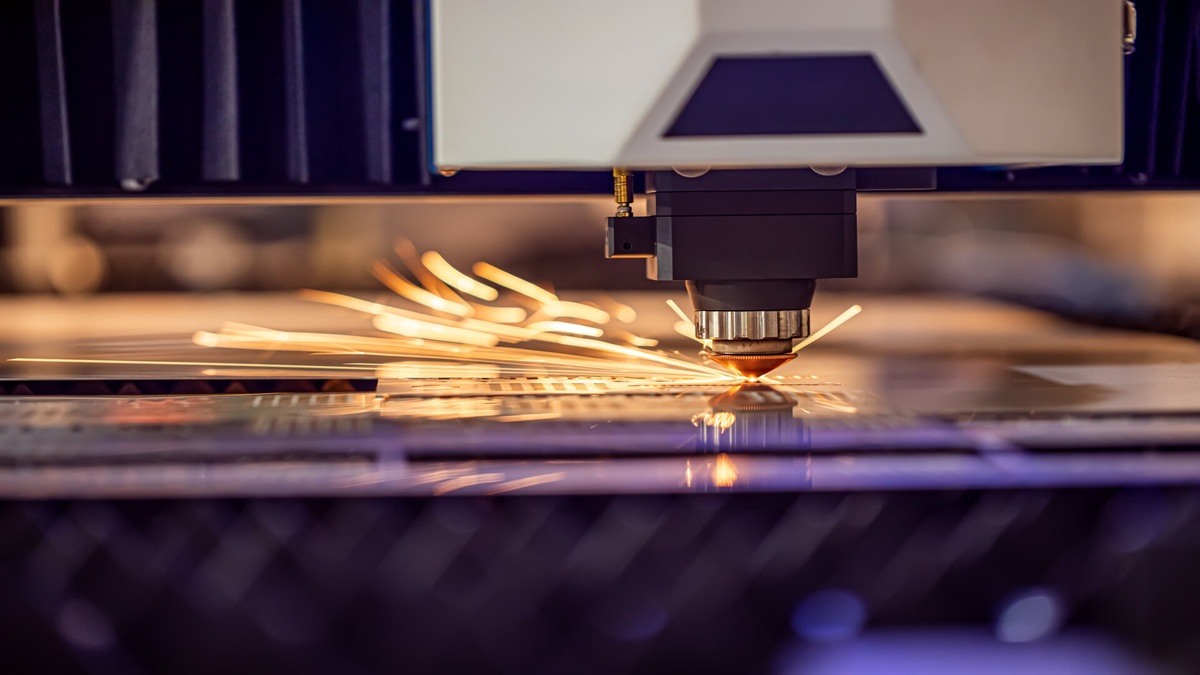
EDM traces its origins to the 1940s, when it was developed to address challenges in machining tough alloys used in aerospace and tooling industries. Today, it is widely employed in sectors requiring intricate parts, such as mold making, medical devices, and automotive components. The key advantage lies in its ability to work with electrically conductive materials regardless of their hardness, as the process does not impart mechanical stress. However, it is limited to conductive materials and can be slower compared to other methods. This article provides a neutral overview of EDM's principles, types, advantages, disadvantages, applications, and future trends, aiming to share foundational knowledge for those interested in advanced manufacturing techniques.
Principles of EDM
At its core, EDM works on the principle of spark erosion, where electrical energy is converted into thermal energy to melt or vaporize small portions of the workpiece. The setup consists of an electrode (tool) and the workpiece, both connected to a power supply that creates a high voltage difference. When the electrode approaches the workpiece—typically within a gap of 0.01 to 0.5 mm—a spark jumps across the gap, reaching temperatures of 8,000 to 12,000°C. This intense heat causes localized melting and evaporation of the material, forming a small crater. The entire process occurs in a dielectric fluid, such as deionized water or hydrocarbon oil, which serves multiple purposes: it insulates the gap to prevent premature discharges, cools the electrode and workpiece to avoid overheating, and flushes away the eroded particles (debris) to maintain a clean machining environment. The power supply controls the spark frequency, duration, and intensity, often using pulse generators to optimize material removal rates. As the material is removed, a servo system adjusts the electrode's position to maintain the optimal gap, ensuring consistent machining. Key parameters influencing EDM performance include voltage, current, pulse on-time, pulse off-time, and the dielectric's properties. For instance, shorter pulses result in finer surface finishes but slower removal rates, while longer pulses increase efficiency at the cost of roughness. The electrode material, often copper, graphite, or tungsten, must withstand erosion itself, leading to some tool wear. This thermal-based process creates a heat-affected zone (HAZ) on the workpiece surface, which may alter material properties slightly, but modern controls minimize this effect.
Types of EDM
EDM includes several specialized variants tailored to specific machining requirements. The primary types are Wire EDM, Die-Sinking EDM, Micro-Hole EDM, and Milling EDM, each offering unique capabilities for precision manufacturing.
- Wire EDM uses a thin, continuously fed wire (typically 0.05 to 0.35 mm in diameter, made of brass or copper) as the electrode. The wire cuts through the workpiece with high precision, guided by CNC controls, producing intricate 2D profiles or tapered cuts. It achieves tolerances as tight as ±0.005 mm and is ideal for complex shapes like gears, thin slots, or intricate contours. Cuts can start from a pre-drilled hole, enabling internal feature machining without affecting surrounding material.
- Die-Sinking EDM employs a pre-shaped electrode to create a cavity that mirrors the electrode’s geometry. The electrode "sinks" into the workpiece, making it suitable for producing molds, dies, and parts with deep recesses or sharp internal corners. This variant excels in 3D contouring for complex components that challenge conventional machining methods, such as injection molds or stamping tools.
- Micro-Hole EDM specializes in creating small, precise holes, often with diameters as small as 0.1 mm or less, and high aspect ratios. Using fine tubular electrodes with dielectric fluid flow, it is critical for applications like microelectronics, medical devices, and aerospace components, where sub-millimeter features or deep, burr-free holes are required, such as cooling channels or fuel injector nozzles.
- Milling EDM combines EDM principles with milling-like movements, where the electrode rotates and moves along multiple axes to create complex 3D surfaces. This variant is used for intricate features on hard materials, offering flexibility for customized machining tasks like sculptured surfaces or precision cavities in tough alloys.
Advantages and Disadvantages
EDM offers several advantages that make it indispensable in precision engineering. Primarily, it enables machining of extremely hard materials, such as tungsten carbide or hardened steel, without regard to their mechanical properties, as hardness does not affect the process. The non-contact nature eliminates mechanical deformation, burrs, and vibrations, resulting in high dimensional accuracy (often ±0.001 mm) and excellent surface finishes (Ra as low as 0.1 μm). It excels in producing complex, intricate shapes with sharp corners and thin walls that are challenging for conventional tools. Additionally, EDM produces minimal waste and can be automated for repeatability. However, EDM has notable disadvantages. The process is relatively slow, with material removal rates typically ranging from 0.1 to 400 mm³/min, making it unsuitable for high-volume production. Electrode wear requires frequent replacements or redressing, increasing costs, especially for custom electrodes. It is limited to electrically conductive materials, excluding plastics or ceramics. High energy consumption and the formation of a heat-affected zone can lead to surface recast layers or microcracks, potentially requiring post-processing. Setup times are longer due to electrode preparation, and the initial equipment investment is substantial. Balancing these pros and cons, EDM is best suited for low-volume, high-precision applications where quality outweighs speed.
Applications
EDM finds extensive use across various industries due to its precision and versatility. In mold and die manufacturing, it is essential for creating injection molds, extrusion dies, and stamping tools with intricate cavities and fine details. The aerospace sector employs EDM for machining turbine blades, fuel injectors, and landing gear components from superalloys like Inconel, where high temperature resistance is critical. In the medical field, EDM produces surgical instruments, implants, and dental prosthetics, such as cochlear implants and orthopedic devices, benefiting from its ability to handle biocompatible materials like titanium without contamination. Automotive applications include gear production, engine components, and prototypes, where tight tolerances ensure performance reliability. Electronics manufacturing uses EDM for micro-components like connectors and sensors, achieving sub-millimeter features. It is also applied in jewelry making for detailed engravings and in the energy sector for drilling holes in nuclear components. Overall, EDM's role is prominent in prototyping and small-batch production where complex geometries and hard materials are involved.
Future Trends
As manufacturing evolves, EDM is advancing with integrations like hybrid machining, combining it with processes such as laser or ultrasonic assistance to enhance speed and reduce electrode wear. Automation and AI-driven controls are improving efficiency, with predictive maintenance minimizing downtime. Nanoscale EDM is emerging for microelectronics, enabling features below 1 micron. Sustainability efforts focus on eco-friendly dielectrics and energy-efficient power supplies to lower environmental impact. Additive manufacturing hybrids, like EDM post-processing of 3D-printed parts, are gaining traction. These trends promise to expand EDM's capabilities, making it more versatile and cost-effective.
Conclusion
In summary, EDM stands as a vital tool in modern manufacturing, offering unique solutions for precision machining of challenging materials. While it has limitations in speed and material compatibility, its strengths in accuracy and complexity handling ensure continued relevance. As technology progresses, EDM will likely integrate further with emerging methods, broadening its applications.
Published by Aug 27, 2025
(4059)(20260924)(原).jpg)
(2367)(20260924)(原).jpg)