Artificial Intelligence, Machine Learning, Deep Learning, and Big Data are topics that have been frequently discussed recently. These technologies are used in many fields, including the financial industry, logistics industry, business analysis, unmanned vehicles, computer vision, natural language processing, etc., and have spread in every corner of life.
In the application of technology-related industries, the concept of the Internet of Things (IoT) has gradually taken shape, and it has been connected with hot trends such as big data and artificial intelligence (AI) to form the emerging development of AIoT (AI+IoT), which is detected by sensors. After environmental information is collected, the data is transmitted to the cloud server, and various "smart" applications, formed through the big data database and AI deep learning, provide users with more efficient and fast services. With the introduction of face recognition and AI technology solutions in mobile phones, various industries have renewed attention to facial recognition technology. In addition, facial recognition technology is gradually being widely used in access control, surveillance, finance, and retail industries.
What Is the Facial Recognition?
A facial recognition system uses biometrics to map facial features from a photograph or video and matching with database. Facial recognition technology is a way of recognizing a human
The Era of Digital Imaging with Face Recognition
When introducing smart identification technology, in addition to the cost of the equipment initially built, it is also necessary to consider the practicality and public acceptance of the technology, as well as the benefits that can be brought by the conversion of the new technologies. As far as identity recognition technology is concerned, the accuracy of recognition is a prerequisite for interlocking various applications, especially in the fields of access control, finance, or information technology that pursue high security, and any factors that may cause danger must be eliminated. The advantage of biometric identification is that its unique personal physiological characteristics will not be lost or forgotten, and it does not require additional carrying. Compared with other identification methods (such as passwords or identification cards), it is more convenient to obtain, and it also has a higher strength of security protection.
Among the many biometrics reading methods, face recognition is unique in that it is a non-contact technology because it uses a camera as the medium. Compared with recognition methods such as fingerprints or iris reading, it does not require close and direct contact and can recognize the target on the move. Applications can be extended for multi-person reading, regional monitoring, and identification.
With the continuous improvement of cameras and back-end processing computer equipment, high-resolution cameras have gradually become popular. High-quality images and hardware processing performance are no longer difficult to obtain and no longer require high-end equipment. Therefore, for users, threshold of necessary equipment to implement a face recognition system is also lowered.
As a result of the long-term efforts of the research and development industry, the accuracy and speed of facial recognition technology have been greatly improved, and the early recognition errors that were easy to occur it the past no longer exist.
In the financial industry, for example, a camera is used to confirm the user's identity and further provide in-depth professional services in response to user needs. In the retail industry, facial recognition can be used to analyze customer groups, stay time, and products of interest to form a more accurate commercial marketing model. Among them, the unmanned store also completes the checkout and payment processes through product image recognition and face recognition.
Combining AI image recognition and analysis, data transmission, and big data, facial recognition technology has gradually been widely used. Fundamentals of Facial recognition technology:
Regarding the core and functions of facial recognition technology, the simplest and most important concept of face recognition is a way of verifying identity. Based on "identity recognition" and images as the analysis material, through AI deep learning training, the special algorithm of the software recognition engine is sorted out, and the correlation (similarity) between the images is found, and the recognition result is finally obtained.
The facial recognition technology is limited by the analysis material it obtains, that is, the clarity of the facial image. In terms of access control, when setting the passable list, an image feature database must be built first and then compared with each other based on the image features captured by the on-site camera. Therefore, the image quality of the photo, the shooting angle of the face, and the light, and factors such as the range of the face being captured will affect the final recognition result. Only when the materials and suitable environmental conditions are met, will the face recognition system exert its maximum effect.
A new generation of R&D technology: Face map
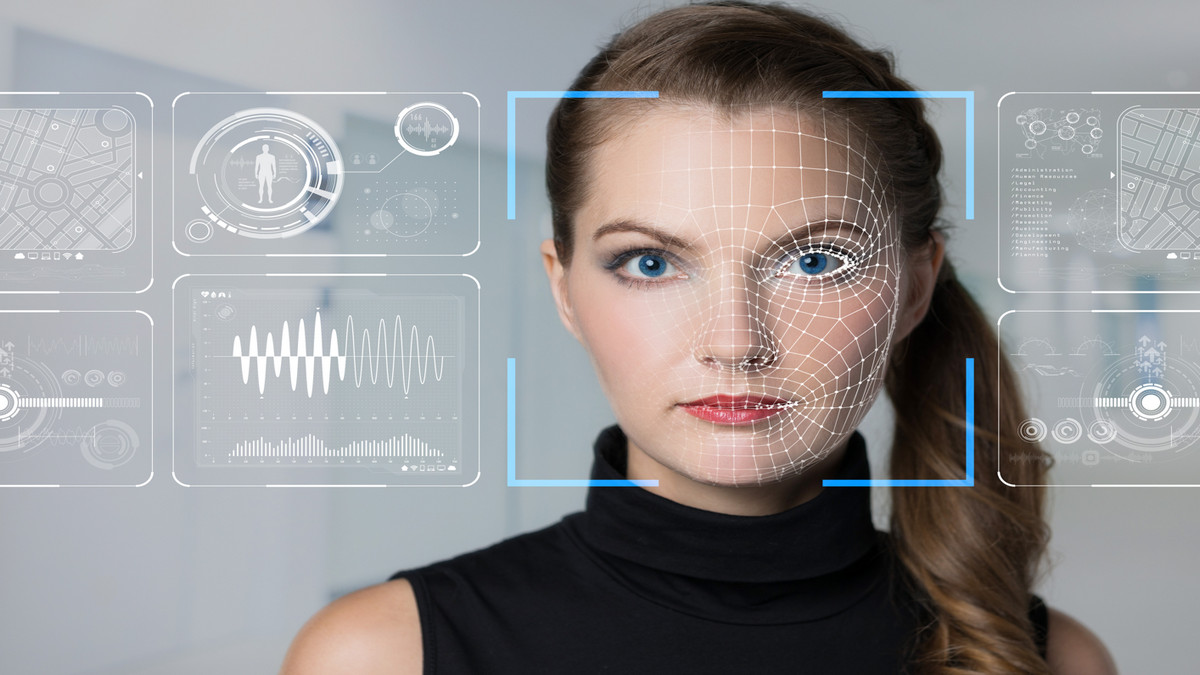
It is the key to facial recognition technology to extract features that can be analyzed and identified in facial images. A computer needs to perform image recognition through a multi-layer chip network operation to obtain an established standardization. For example, the first layer extracts the partial graphics in the frame to recognize various shapes, which may be eyes, nose, mouth, and other facial features, and then combine these shapes to form a complete value. This recognition system treats a human face like a map. There are objects of different shapes on the map. Each small object has a specific coordinate in the map to indicate the location and distance of the object, so it is not just collecting a few specific objects. The feature points are calculated through the area and relative position of the entire face. Since the whole face is used as the recognition area, even if some parts of the face are slightly occluded, the recognition can still be completed by comparing other areas.
AI deep learning: The regional experience of facial recognition technology. The core of the face recognition system is AI technology, which requires continuous input of image data. Correct/wrong adjustments through data collection, will improve the analysis capabilities of the system. The more data input and number of times of analysis, the more precise will be the results.
Form multiple applications based on identity recognition
Facial recognition technology is now widely used in many different fields. In the field of security surveillance, facial recognition technology can effectively prevent crimes. Through surveillance and identification analysis, it can even assist in the pursuit of criminals. After the data of a specific person’s photo is stored in the database, the specific location of the person can be found through the camera and recognition system. In medical, retail, financial, and other fields, special technology applications can also be formed according to their own needs. In architectural buildings, facial recognition technology can be applied to more than just access control. If the face image is recognized, various intelligent settings related to personal identity can also be formed. Because the camera is the medium, it can quickly complete identity verification without the user's awareness, and integrate other device functions to provide a more relaxed and considerate living space.
Advantages of Face Recognition
-
Wide range of applications
The application of facial recognition technology has flooded daily life, greatly improving the efficiency and quality of life, including for airport entry and exit, smartphone unlocking, check-in and getting off work, smart ATM, and smart community housing, etc.
-
Non-contact
Among the many biometric technologies, face recognition is non-contact. For iris and fingerprint recognition, direct contact is required at close range, but face recognition can achieve body recognition without contact.
-
Uniqueness
After scientific research, it has been calculated that the probability of having eight identical facial features between two people is less than one in a trillion. However, the world has a total population of 7.4 billion. Based on this data, it can be determined that the probability of finding two identical faces is almost impossible So the face has unique characteristics of recognition.
-
Lower cost
The most basic of face recognition requires only the image of the face, and the pixels of modern cameras and video cameras are getting higher and higher. With the popularization of smartphones, it is relatively easy to obtain high-quality images, which greatly reduces the threshold of identification technology needed for face recognition.
Disadvantages of Face Recognition
-
Unstable facial condition
Facial features are not immutable like fingerprints. With time and age, the features in the face will slightly change. Lighting, facial expressions, and plastic surgery, etc., may also affect recognition results.
-
Fear of infringement of privacy
Since face information can be obtained from just a photo, unlike fingerprint recognition, the person being identified does not need to volunteer the information. Face data is also personal information. You can obtain a person's identity, name, age, background, and phone number from a single photo, which raises doubts about personal privacy protection. Although facial recognition technology brings countless conveniences, the issue of privacy will be a major challenge facing facial recognition technology in the future.
-
How to distinguish between a photo and a real person
In the past, 2D technology was the focus, and it may be difficult to distinguish the true from the false. To improve safety and accuracy, 3D technology, eye pattern technology, blink detection, or multiple identity verification must be combined to overcome this problem.
Technology it has evolved to the point where almost everything can be done with technology. Emerging face recognition has replaced traditional sign-in, punch-in, cash payment, and unlocking procedures. Nowadays, face recognition applications can be seen everywhere in life. Facial recognition technology not only improves efficiency, but also greatly improves the quality of human life. The combination of face recognition with various industries and fields can bring a lot of economic value. But every time a new technology appears, problems will inevitably follow. Technologies are still not developed that can completely distinguish between photos and real people. The problem of privacy is also a major challenge in the field of face recognition. A future prospect to achieve higher recognition accuracy will be to strengthen algorithms which can reduce the number of photo samples required for positive recognition. With improved recognition accuracy, information security can be further strengthened, and people can be more at ease to trust facial recognition technology.




(3796)(20260924)(原).jpg)
(4005)(20260924)(原).jpg)