What Are the Fundamentals and Benefits of Choosing between Liquid and Powder Coating?
Knowledge

What Are the Fundamentals and Benefits of Choosing between Liquid and Powder Coating?

Metal fabricators aiming to venture into finishing processes should familiarize themselves with two prevalent options—liquid and powder coating—along with the prerequisites necessary for a company seeking to employ either or both.
Published: Dec 01, 2023
What Are the Fundamentals and Benefits of Choosing between Liquid and Powder Coating?

Introduction to Liquid Coating

Liquid coatings consist of fundamental raw materials, including additives, carriers, pigments, and resins. Although additives constitute a small portion, they contribute unique characteristics to the finish, such as rust prevention or UV protection. The carrier, the primary liquid in paint formulation, can be water, solvent, or a combination of both. While solvent-heavy liquid coatings have traditionally dominated metal finishing, there is a growing interest in waterborne and high-solids coatings due to their minimal volatile organic compound (VOC) emissions. Pigments influence gloss, with higher pigment volumes resulting in lower coating gloss. Resins serve as the base, governing overall coating performance.

Liquid coatings can be applied in various thicknesses, with manufacturers often seeking a balance between maximum protection and minimal paint mil thickness.

Advantages of Liquid Coating:

1. Economical:

Thin application reduces material usage, making it a cost-effective option.

2. Variety of Choice:

Offers a broad range of color choices, including metallics and pearls.

Provides various specialty coats like glow-in-the-dark and Teflon, suitable for specialty markets.

3. Lower Error:

Reduces film build occurrences, minimizing rejected parts and production time.

4. Easily Markable:

Sections can be easily marked off without the need for an oven, as liquid paint doesn't require baking.

Introduction to Powder Coating

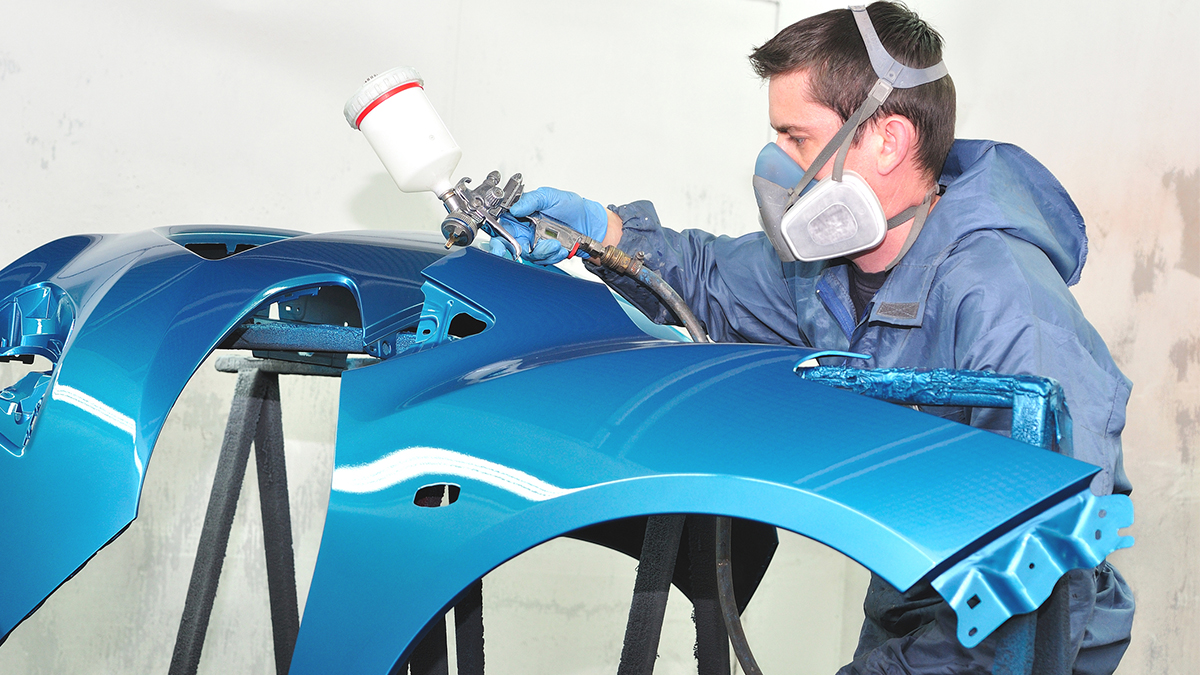
Powder coatings eliminate the need for a carrier, with additives, pigments, and resins formulated in powder form. The powder, electrostatically charged, is conveyed via compressed air and attracted to a grounded part. The part undergoes heating in an oven, transforming the powder from solid to liquid and then to a solid coating, generally with minimal or zero VOCs.

Advantages of Powder Coating:

1. Environmental Benefits:

Zero or near-zero VOC emissions.

Allows thicker coatings without running or sagging.

Recyclable overspray enables nearly 100% utilization of the coating.

Produces less hazardous waste in production lines.

2. Consistency in Appearance:

Fewer differences in appearance between horizontally and vertically coated surfaces.

3. Specialty Effects:

Enables a wide range of specialty effects not achievable with other processes.

Environmental Impact

Solventborne Coatings:

Dependable but reduced due to VOC reduction efforts.

Shift towards environmentally friendly coatings like waterborne and high-solids formulations.

High-Solids Coatings:

Have at least 65% solids content, minimizing solvents.

Multipart application systems formulated for mixing seconds before application.

Waste and Recycling

Liquid Coatings:

Overspray cannot be reclaimed, leading to disposal challenges.

Powder Coatings:

Recyclable with proper reclamation equipment, subject to local regulations.

Disposal considerations, including sealed containers or baking into bricks for landfill disposal.


Published by Dec 01, 2023 Source: thefabricator.com Source: georgiapowdercoating Source: knotwood

Further reading

You might also be interested in ...

Headline
Knowledge
Industrial Ultrasonic Cleaning Machines-Applications, Specifications, and Buyer Selection Guide
An industrial ultrasonic cleaning machine is a precision cleaning system that uses high-frequency sound waves to remove contaminants from surfaces. Unlike manual or spray-based cleaning, ultrasonic systems rely on cavitation the rapid formation and collapse of microscopic bubbles in a liquid medium to dislodge particles from even the most complex geometries.
Headline
Knowledge
Scaling and Corrosion in Plastic Machinery Cooling Systems: Causes, Risks, and Preventive Measures
Scaling and corrosion are persistent risks in plastic machinery cooling systems. This article outlines their causes, their effect on heat transfer and flow stability, and practical maintenance measures manufacturers can use to reduce efficiency loss, blockage risk, and long-term equipment damage.
Headline
Knowledge
Chemical Packaging Lines Evolve as Safety and Precision Demands Increase
As chemical manufacturers face stricter safety regulations and complex material requirements, packaging lines are evolving from standalone machines into fully integrated production systems. This article explores key considerations including filling technology selection, equipment durability under chemical exposure, workplace safety, and the shift toward complete system solutions. Understanding these factors helps manufacturers improve accuracy, ensure safety, and enhance overall production efficiency in hazardous chemical packaging environments.
Headline
Knowledge
Grease Pumps in Maintenance Operations: Types, Applications, and Selection Considerations
A Practical Guide to Grease Pump Applications, Performance, and Selection
Headline
Knowledge
BLDC vs. Induction Motors in Lifting and Hoisting Applications: Efficiency, Safety, and System Cost
What makes BLDC motors a better fit for today’s lifting and hoisting systems.
Headline
Knowledge
Improving Multi-Computer Workflow Efficiency with a 4-Port USB-C KM Switch
How mouse roaming, 10Gbps USB sharing, and flexible control help streamline modern multi-system environments
Headline
Knowledge
How Anti-Static And Protective Films Reduce Surface Damage In Sensitive Manufacturing
In sensitive manufacturing, many costly defects do not begin with machine failure or operator error. They begin with static charge, airborne particles, micro-scratches, adhesive residue, and unnoticed surface contamination. These issues are often underestimated because they appear as scattered defects rather than one major failure. Yet in electronics, optics, display processing, and coated surface production, even small flaws can reduce yield, increase rework, slow inspection, and weaken final product quality.
Headline
Knowledge
What Buyers Should Know Before Choosing a Automatic Plastic Blow Molding Machine
For buyers, factory owners, and packaging manufacturers, selecting an automatic blow molding machine is no longer just a matter of comparing output speed or initial price. In real production environments, the performance of a plastic blowing machine is often determined by the quality and coordination of its core components. A machine may appear competitive on paper, yet still create costly problems once production begins. Uneven wall thickness, unstable parison formation, excessive scrap, slow cooling, and difficult maintenance are all issues that can usually be traced back to the design of several key modules. This is why experienced buyers tend to look beyond catalog specifications and focus instead on the machine’s screw, die head, clamping system, and cooling design. These components do more than support production. They directly influence product quality, material efficiency, energy use, maintenance frequency, and overall return on investment.
Headline
Knowledge
What Buyers Overlook When Choosing a Wire Harness Manufacturer
A practical guide to evaluating engineering support, quality control, customization and sourcing risk
Headline
Knowledge
How High-Efficiency Gear Motors and Brushless Motors Support ESG and Energy Savings
Industrial motor efficiency directly affects a factory’s electricity use, carbon footprint, maintenance burden, and long-term operating cost. For factory owners, procurement teams, and equipment designers, choosing a more efficient gear motor or Brushless Motor is not only a technical upgrade. It is also a practical way to improve ESG performance, reduce energy waste, and strengthen return on investment. In most industrial facilities, motors are among the largest sources of electricity consumption. When motors run continuously in conveyors, packaging lines, automated machinery, food processing systems, and material handling equipment, even a modest improvement in efficiency can produce significant annual savings. That is why motor efficiency is increasingly linked to ESG strategy, cost control, and supply chain competitiveness.
Headline
Knowledge
Die Casting Vs. Forging: How To Choose Based On Strength, Geometry, And Volume
Choosing between die casting and forging affects far more than part cost. It influences structural performance, design flexibility, tooling strategy, machining requirements, lead time, and long-term production efficiency. When the wrong process is selected too early, projects often run into redesigns, extra machining, or higher-than-expected production costs. The right decision depends on how much strength is required, how complex the part geometry is, and whether the target is lower-volume production or stable high-volume output.
Headline
Knowledge
How Material Design Affects Fitness And Rehabilitation Rubber Products
In fitness and rehabilitation products, material design has a direct effect on performance, comfort, durability, hygiene, and long-term user trust. A resistance band that stretches unevenly, a grip that becomes slippery, or a flexible component that tears too early can quickly lead to complaints, returns, and lower confidence in the product. The key challenge is not simply choosing an elastic material. It is selecting and validating a material system that can perform consistently under repeated stretching, skin contact, sweat exposure, and ongoing mechanical stress.
Agree