With the reduction of the labor force and the rise of labor costs in emerging countries such as China and other Southeast Asian countries, production lines are increasing their reliance on industrial robots for processing or assembly processes. With the development of technology, the environment in which robots and laborers work together will become more common, and safety issues will become more complex.
With the robotics industry quickly developing, people often get the impression that robots will make manufacturing processes safer than with traditional manual labor. But this can often give a false sense of safety, causing the operator to lower safety vigilance. This can lead to a higher risk of injury if the robot is not installed with appropriate safety features.
What are industrial robots and collaborative robots?
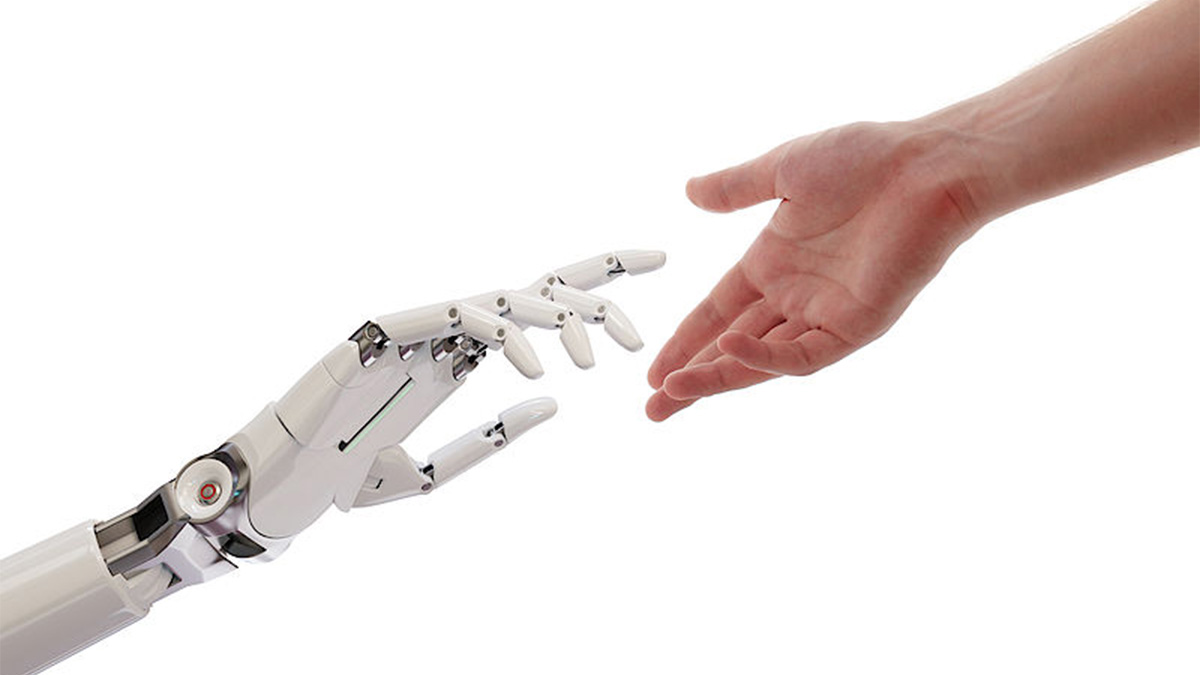
Industrial robots are completely automatic robots that can perform complete operations without the need for human interaction. Collaborative industrial robots on the other hand are robots that operate in collaboration with workers to perfume a completed task.
As robots have become more common in manufacturing, there has been an increase in labor accidents involving robots in the manufacturing industries of various countries. It was found that accidents occurred most often during maintenance or resetting. Most accidents resulted from human negligence, the failure to follow safety procedures, or the failure of safety control devices. With the development of technology, environments where robots and laborers work together will become more common, and safety issues will become more complex.
ISO/TS 15066 Collaborative Robot Safety Standard:
ISO/TS 15066:2016 Robots and robotic devices - Collaborative robots, specifies that the collaborative operation of collaborative robots includes:
-
Safety-rated monitored stop:
In ISO/TS 15066:2016 , This ISO protocol requires that a robot has a stop robot function which monitors safety and stops robot movements in the coworking space before an operator can enter the coworking space. When there is no operator in the coworking space, the robot can be set to operate in non-cooperative mode. If an operator is to enter the collaborative workspace while the robot system is within the collaborative workspace, safety monitoring will stop the robot motion from being performed. Robotic system actions can be restarted only after the operator has exited the coworking space.
-
Hand guiding:
In this mode of operation, the operator uses a manual operating device to send motion commands to the robotic system. The robot is required to reach a safe-rated supervised stop before allowing the operator to enter the co-working space and perform hand-guided work. This is done by manually actuating a guide at or near the robotic end effector. Robotic systems for manual guidance can be equipped with additional functions such as increased force application, virtual safety zones, or tracking technology.
-
Speed and separation monitoring:
In this mode of operation, the robotic system and the operator can move simultaneously within the collaborative workspace. Risk is reduced by maintaining a protective separation distance between the operator and the robot at all times. During robot motion, the robotic system is never closer to the operator than the protective separation distance. When the separation distance decreases to a value below the protective separation distance, the robot system stops. When the operator moves away from the robot system, the robot system can automatically restart the operation while maintaining a protective separation distance. When the speed of the robotic system decreases, the protective separation distance decreases accordingly.
-
Power and force limiting:
In this mode of operation, intentional or unintentional physical contact may occur between the robotic system and the operator. This mode requires the robot to perform cooperative work with a limited power and force application for the specific operation. By keeping the hazards associated with the robotic system below threshold values determined during the risk assessment, the risk is reduced through inherent safety methods in the robot or safety-related control systems.
Robot stop time and collision force / Collision pressure test:
Whether it is the stop time of the industrial robot itself, or the stop time set by the safety device, it is important to evaluate the parameters to closely to determine the safety requirements of the industrial robot. While not important for industrial robots, the collision force and collision pressure between robots and humans are important concerns associated with collaborative robots.
-
Stop time measurement: Industrial robot body
An external signal trigger is used to obtain stop-time data of the industrial robot body. Induction, touch, and stop time measuring instruments are used.
-
Stop time measurement: Industrial robots with safety devices
When the user uses the collaborative robot, the robot will often be picking up or discharging material in the collaborative workspace. Therefore, during the operation phase where the robot is within the user’s work area, the stop time will be monitored according to the usage mode of the operation.
-
Collision force measurement: Collaborative robots
Damping materials with different spring characteristics can be incorporated into the robot’s design to control the force of the robot’s impact if the robot should contact the operator. The position of the operator’s body in relation to the robot is considered, and this information can determine the appropriate operation settings and safety damping material to be used with the robot.
-
Collision pressure measurement: Collaborative robots
The basic measurements are the same as the collision force measurements, except that when measuring the collision pressure, a pressure measurement film is placed on the damping material to measure the contact pressure. The pressure measurement film can be evaluated to determine pressure area and intensity.
Global Industrial Robot Market Analysis:
In 2020, the market demand for industrial robots and their systems increased sharply. World-wide, the Asia-Pacific region saw the highest volume of industrial robots installed, especially in China, Japan, South Korea, and Taiwan. The continued demand for increase in production capacity will continue to drive the growth of industrial robots. In particular, Selective Compliance Assembly Robot Arm (SCARA) human-robot collaboration is rapidly expanding. In addition to their use on the production line, the application of robots in the logistics, warehousing, and transportation industries is expanding. In 2020, the Asia-Pacific region occupied about 70% of the global industrial robot market, with a market size of US$44.6 billion. This was a decrease of 8.42% year on year compared to US$48.7 billion in 2019, due to the pandemic. However, by 2025, the global industrial robot market is expected to reach US$73 billion, with a compound annual growth rate of 10.36%.
The development trend of industrial robots:
In recent years, the rapid rise in use of collaborative robots has shown that they have become more popular than industrial robots. The main reason is that as a result of the pandemic, the manufacturing industry better understood that using robots as the core of modern production is a key to maintaining competitiveness. In the automotive industry, where robots are often used, with the booming development of electric vehicles, the demand for robots has also increased.
In the manufacturing industry, post-pandemic modernization and digitalization of production with industrial robots will present many new opportunities for development. The advantages of rapid production and the increased production quality that industrial robots give, offers a guarantee of competitiveness. From 2021 to 2026, the number of installations of global industrial robots is expected to grow steadily. As robots become an important foundation of modern manufacturing, their functionality continues to improve. In the future, the trend will be for machinery equipment manufacturers to transform from stand-alone output to integrated services. Robot manufacturers at home and abroad will also increase profits by continuing to provide robotic safety solutions.
Global technology has developed around technical issues such as AI, 5G, B5G, and IoT. Integrated robotic systems will become more intelligent with their development. Key technologies for robot intelligence in the future will be autonomous mobile technology, recognition technology, precision control technology, and long-distance communication technology. The market size forecast of robots is constantly changing, and its expansion depends on the generation of new information and communication technologies such as robot vision, robot lidar, O-RAN architecture for remote real-time control of robots, low-orbit satellites for autonomous mobile communication systems for robots, etc. The new generation of robots will be easier to install and program, and thanks to advances in Information and Communications Technology (ICT), they will be seamlessly connected and integrated into smart manufacturing deployments.
The improved wireless network connectivity brought about by 5G network technology, as well as the reduction in the price of edge, AI chips, and the increase in processing power, enable the processors in robots to perform AI tasks instead of processing them through the distant cloud. This will lower the delay in response time and increase the application abilities of service robots. Edge AI chips can address and overcome many of the limitations of professional service robots and increase their usefulness, attractiveness, and practical capabilities.