Water hardware is an indispensable part of life. From the showerhead of the bathroom to the faucet of the kitchen, it is all connected to water flow. For the water hardware industry, the United States is the world's largest importer of water hardware and also exports to the global water hardware industry. The deepest impact in recent years has come from the rapid development of water hardware products in China and other developing countries. With its continuous expansion of product exports and market share, China is replacing countries such as Europe, America, and Japan, and has become an important production base and product sales market for water hardware.
The global faucet market is expected to grow at a compound annual growth rate of 9% during the forecast period from 2020 to 2024, and grow to a scale of USD 7.87 billion. The main factors for market growth are changes in consumer preferences and lifestyles, and an increase in global construction activities.
Complete Renovation of Taiwan's Water Hardware Industry
The water hardware industry is a part of the metal manufacturing industry. One feature of this industry is that due to the complicated appearance of the faucet is difficult to introduce automatic equipment. Up to 90% of the faucet processing still uses manual grinding and polishing. Because of this, the demand for automation and smart manufacturing is huge.
Taiwan's water hardware industry clusters supply more than half of the world's faucet products. It has traditionally been a labor-intensive industry. With the pressure for transformation in recent years, the water hardware industry's demand for automation and smart manufacturing has gradually expanded. For this reason, it is hoped that Taiwan will take advantage of developments in the machinery industry, and also implement information and communications technologies to assist the water hardware manufacturing industries. By accelerating the accumulation of technical knowledge for smart manufacturing, industrial technology transformation and upgrading can be carried out.
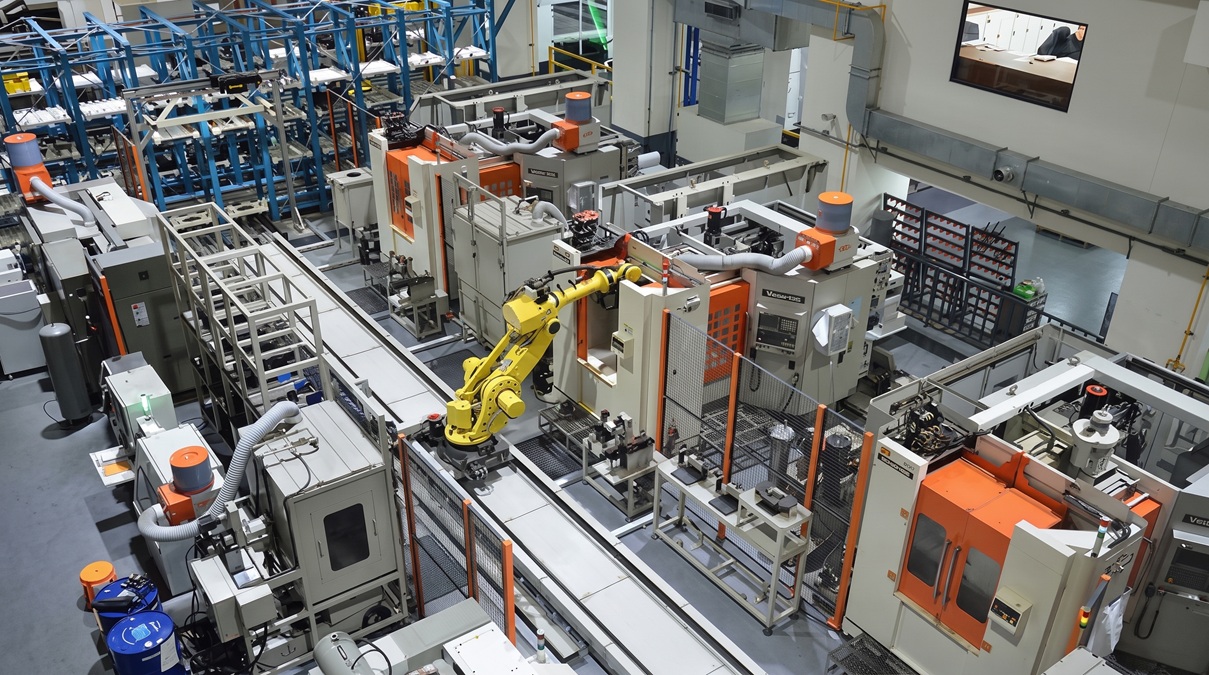
In recent years, some water hardware manufacturers have introduced robotic grinding and polishing to create smart production lines. Continuous optimization and development of technology can improve quality and help achieve the goal of having fully automated operations.
Taiwan’s Changhua County is the main supplier of more than 50% of the world’s faucets for export, with an annual output value of about NT$60 billion. It occupies an important position in the world. Many internationally renowned brands of sanitary equipment are contracted from here. The water hardware industry is still regarded as a labor-intensive traditional industry, especially due to the complicated appearance of the faucet, which makes it difficult to introduce automated equipment. Up to 90% of manufacturers still use manpower for operations such as grinding, polishing, and other processes, in an environment that is hot, dusty, and noisy. Therefore, the water hardware industry is actively moving towards the goal of upgrading production technology. It is hoped that the technical strength of Taiwan's machinery industry can assist in the upgrading of the water hardware industry by meeting the huge demand for automation in loading, unloading, grinding and polishing operations.
The new trend of faucets, combined with inductive detection technology:
With progress in society and the increasing value of water resources, faucets are constantly being improved and changed, and "sensor faucets" have been developed.
What Is An Induction Faucet and Its Principle?
The induction faucet is based on the principle of infrared reflection. When the human hand is placed in the infrared area of the faucet, the infrared emitted by the infrared emitting tube is reflected back to the infrared receiving tube. The signal processed by the microcomputer in the integrated circuit is sent to a pulse solenoid valve. When the solenoid valve receives the signal, it opens the valve according to the specified instruction. When the hand leaves the infrared sensing range, the solenoid valve does not receive the signal, and the solenoid valve is reset by the internal spring to turn off the faucet.
Having a water switch which is automatically controlled by a sensor is especially water saving. The faucet can have either AC or DC power supply, and can have battery backup. There is no need to touch the faucet, effectively avoiding bacterial cross-infection. The faucet is controlled by a microcomputer, and sensing can be set to correspond to the shape of the basin for the best sensing distance. It can also be equipped with a 1-minute overtime shutoff to stop the water and avoid the waste of water in the event of foreign objects blocking the sensor. DC faucets use 4 AA batteries and if used 1000 times a day, do not need to be replaced for 2 years. A filter mechanism is built in to prevent impurities from entering and jamming the solenoid valve. It is easy to clean, has a beautiful appearance, is strong in structure, and is suitable for crowded places.
Advantages of an induction faucet:- Intelligent water-saving: Automatic induction control, with obvious water-saving function.
- Overtime protection: Automatic water cut-off function to avoid waste of water resources.
- Convenient and sanitary: Hands do not need to touch the faucet, effectively avoiding cross-contamination of bacteria.
- Intelligent power saving: Using modern digital technology, ultra-low energy consumption.
- Strong adaptability: Adjustable sensitivity (range) based on different use environments.
- Easy to maintain: Built-in filter prevents impurities from entering the solenoid valve and is easy to clean.
- Low current indication: When the battery power is low, it prompts that the battery should be replaced in time.
- Applicable places: Restaurants, stores, airports, medical institutions, and other public places.