Polishing refers to the use of mechanical, chemical, or electrochemical action to reduce the surface roughness of the workpiece to obtain a bright and smooth surface. It includes the modification of the surface of a workpiece using polishing tools and abrasive particles or other polishing media.
Development and Status of the Mirror Polishing Process:
In recent years, with the continuous development of technology in the field of domestic machinery and equipment manufacturing, there has been an increase in demand for workpieces with high surface quality and a super-mirror appearance.
In traditional mechanical polishing processes, the grinding wheel will cause a large amount of wear from the surface of the workpiece, and surface accuracy cannot be guaranteed. The strong extrusion action of the abrasive tool will produce a plastic flow of metal, forcing it into the microscopic pits on the surface of the metal, creating a distortion in the surface appearance. The surface of the material will remain prone to continuous shedding caused by fatigue wear. The surface may appear to have a bright appearance but no obvious mirror effect will be evident and there will be no guarantee of the accuracy of the workpiece.
Machine polishing is suitable for some types of products, and the advantages of automatic polishing are undeniable. High production efficiency and mass production can save a lot of labor, improve the production environment, and reduce dust hazards. Polishing automation has become a trend in the polishing machine industry.
Principles of Polishing:
Workpieces can be surface finished using flexible polishing tools and abrasive particles or other polishing media. Polishing is not intended to improve the dimensional accuracy or geometric accuracy of the workpiece but aims to obtain a smooth surface or mirror gloss. Usually, a polishing wheel made of multi-layer canvas, felt, or leather is used. During polishing, the high-speed rotating polishing wheel (circumferential speed above 20 m/s) presses against the workpiece, causing the abrasive to roll and micro-cut the surface of the workpiece. The removal of surface material is very small, so the processing efficiency is low, but it is possible to obtain a bright machined surface. Surface roughness can generally reach a Roughness Average of Ra0.63 ~ 0.01 microns; when a non-greasy matting polishing agent is used.
Factors Affecting Polishing Efficiency:
Polishing will remove surface material at a rate equal to R=k.p.v.t where p is the polishing pressure, v is the polishing speed, t is the processing time, and k is the proportionality constant. To maintain processing efficiency, the pressure, speed, concentration of the slurry, temperature, and the state of the polishing machine are important factors that need to be managed to stabilize polishing.
Functions of Mirror Polishing Processing Technology:
- Removes surface roughness and eliminates defects such as scratches, dirt inclusions, and micro-cracks.
- Reduces surface friction and improves wear resistance.
- Improves the physical and mechanical properties of the surface of the part, and improves the stress distribution of the surface of the part.
- Improves the accuracy of parts and ensures assembly manufacturability.
- Improves the gloss and brightness of the surface of the parts, and meets the requirements of cleaner production.
- Improves the service life of parts and the whole machine.
- Improves the bonding force between the coating layer and the substrate, and meets the requirements of appearance and decoration.
Advantages and Disadvantages of the Mirror Polishing Process:
Polishing technology can be divided into three categories: mechanical methods, chemical and electrochemical methods, and thermal energy methods. According to the state of the abrasives used during processing, mechanical methods can be divided into two forms: free abrasive polishing and non-free abrasive polishing.
What are the Types of Polishing Processes?
-
Dry grinding wheel polishing:
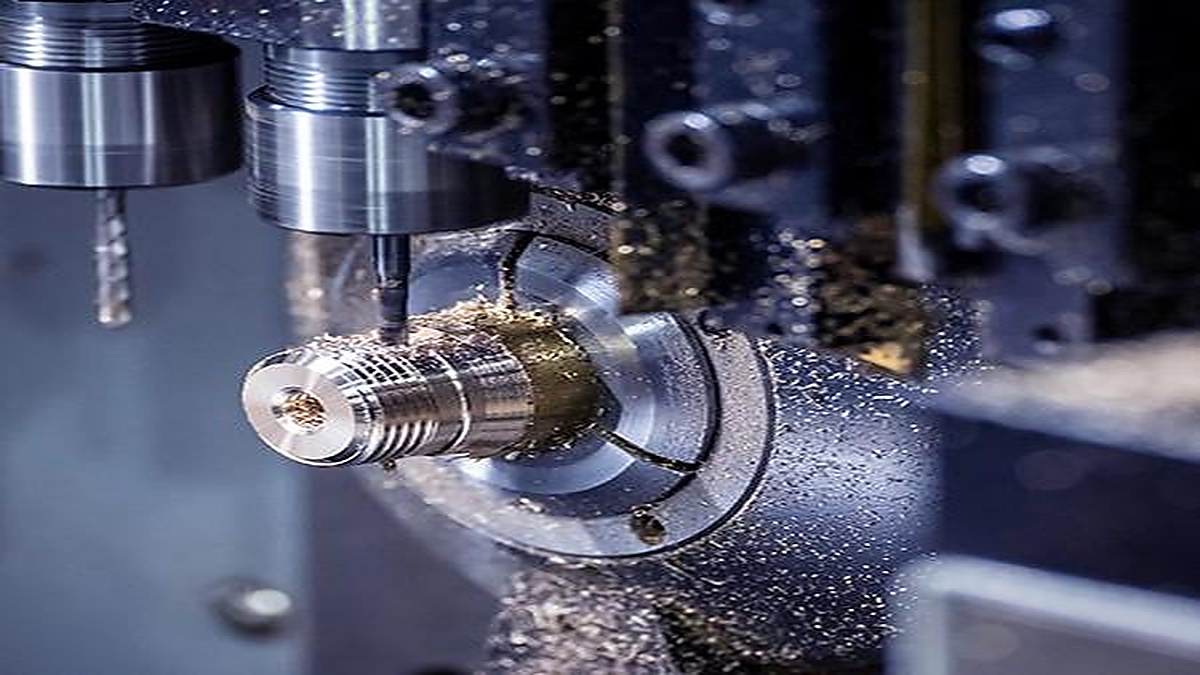
In the polishing process of roller shaft parts, non-free abrasive mechanical polishing technology is generally used. The most widely used is the dry grinding wheel polishing method. It has high production efficiency, low input cost, and is suitable for batch production and processing. During dry polishing, the surface of the grinding wheel is coated with polishing wax and rotates at high speed along the tangential direction and makes contact with the surface of the workpiece. Due to the strong extrusion cutting force, high temperature is generated on the polished surface causing plastic deformation on the surface of the metal. Metal begins to generate plastic flow and is forced into the microscopic pita, and the concave areas are filled. A very thin oxide film or other compound film is rapidly formed on the metal surface. After repeated polishing of the film, the surface morphology is improved, and finally, a smooth and mirror-like decorative surface is formed.
-
Metal mirror processing technology:
Ultrasonic vibration energy generated by an ultrasonic, high-frequency vibration system acts on the surface of the metal workpiece, causing plastic deformation of the surface metal of the workpiece. Cold hardening then improves the surface quality, increasing hardness, and reducing surface roughness. The bridging of microscopic cracks improves the fatigue strength, wear resistance, and corrosion resistance of the workpiece.
-
Wet abrasive belt polishing:
During wet abrasive belt polishing, the abrasive belt contacts the surface of the workpiece through the contact wheel. The material of the contact wheel is generally rubber or plastic, and the base material of the abrasive belt is cloth, paper, or polyester film, all of which have a certain elasticity. During grinding, due to the extrusion of abrasive particles, the machined surface will also produce plastic deformation. However, due to the large area of the elastic deformation zone, the load on the abrasive particles is small and the force is more uniform. Wet abrasive belt polishing adopts various combinations of refined abrasive grains, carrier abrasive belts, and processing fluid to grind and polish. Ultra-precision vibration grinding is performed on the surface to achieve a super-mirror decorative effect.
-
Electrochemical polishing:
Generally, an electrolytic polishing solution of phosphoric acid is used. Parts with microscopic roughness are dissolved and surface roughness is reduced. Mirror brightness and leveling can be obtained and this process can be used as a pretreatment for decorative electroplating. Electrochemical polishing has good brightness and leveling properties, long service life of the solution, fast polishing speed, and high polishing efficiency.
Grinding Process Metamorphic Layer:
Processing the metamorphic layer causes the structure and composition of the workpiece material to be damaged or deformed. Mechanical properties of the metamorphic layer, such as hardness and surface strength, and chemical properties such as corrosion resistance, also differ with various base materials.
When grinding metal materials, although no fragmentation occurs, when the abrasive particles are rotated and scraped, due to the plastic deformation of the material, a deterioration layer is usually formed. On the contrary, in a polycrystalline metal material, with finer crystal grains, more dislocations are accumulated in the outermost layer, and an amorphous state develops. In some cases, the metal reacts with oxygen in the atmosphere. In some cases, abrasive grains become embedded in the metal due to plastic deformation.






.jpg)
.jpg)