Refers to the use of imaging, medical image processing technology, and other possible physiological and biochemical means, combined with computer analysis and calculation, to assist radiologists in finding lesions and improve the accuracy of diagnosis.
What is AI Healthcare? The Combined Application of Digital Technology and Public Healthcare
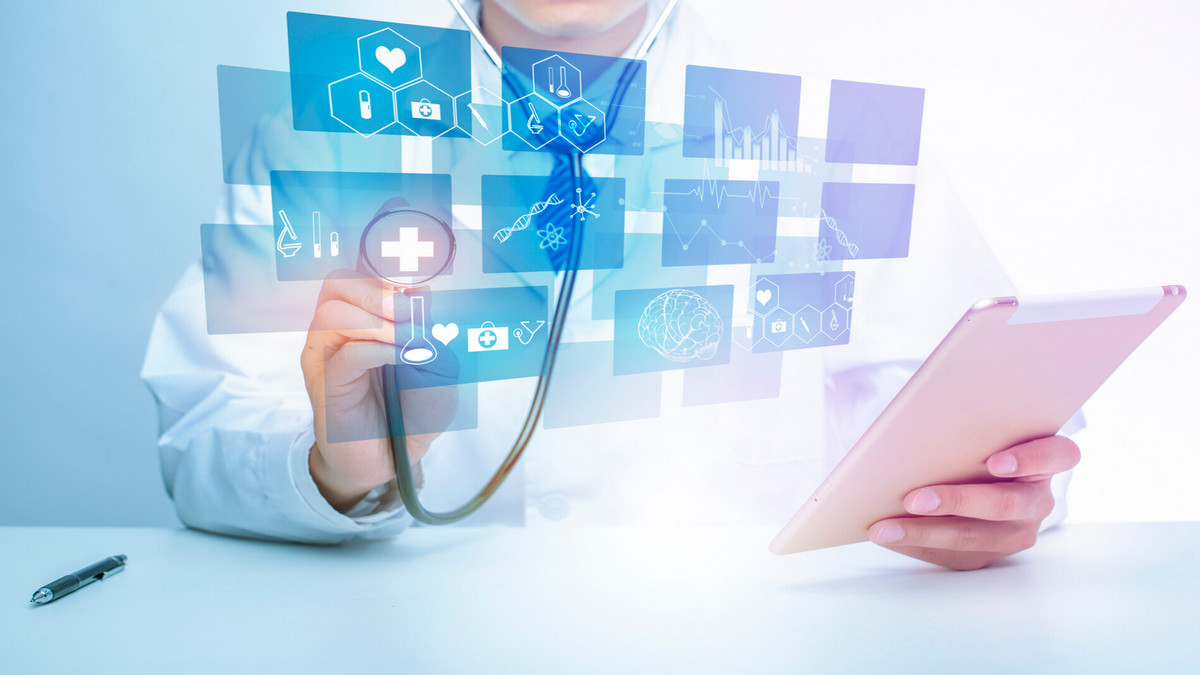
Smart medical care is mainly based on current medical care and introduces deep image recognition and AI. The purpose of technologies such as learning or neural network is to provide predictable and tailor-made medical services, thereby reducing the repetitive work of doctors and improving the efficiency, accuracy, and convenience of medical services. AI is introduced into the medical industry. The medical 4.0 era of new value has been derived. Artificial intelligence assists medical treatment, but it needs to be certified by the US FDA before it can be successfully introduced in various countries. The medical images provided for machine learning must be clear and of a certain quality to have accurate AI effects. The technical team may be able to strengthen the technology by providing clear images for these organ parts that work 24 hours a day, and then let AI perform deep learning (DL).
Aging, low birthrate, and lack of nursing manpower will impact the entire medical and nursing industry. Combining medical and ICT technology will save repetitive mechanical work, allowing practitioners in the big health industry to truly spend their time with caregiver interaction.
Smart healthcare refers to the application of artificial intelligence technology (AI) in the medical field. The World Health Organization (WHO) defines eHealth as "the use of information and communication technologies (ICT) to support health and health-related fields". The World Health Organization has shifted its focus from information communications to broader digital technologies, formally recognizing the important role of digital technologies in improving public health. And urging member states to prioritize the development of digital health technologies as a means of promoting Universal Health Coverage (UHC) and promoting Means of Sustainable Development Goals (SDGs). It also further defines Digital Health as "covering eHealth, mHealth, and other emerging technologies applied in the field of health care, such as the use of advanced computer science, such as big data, artificial intelligence, etc.". Under the development context of the relevant concepts and strategies of the World Health Organization, smart health care is a part of the development of digital health, and the development of smart medical care is an important part of smart health care.
Advantages of Smart Medical Applications:
- Assist in medical decision-making: Develop the hospital's digital decision-making control center, organize data analysis, and help speed up the hospital's efficiency in dealing with emergencies.
- Improve doctor-patient relationship: Introduce digital technology and artificial intelligence (AI) to help improve processes and enhance patient experience and the doctor-patient relationship.
- Simplify administrative processes: Through technologies such as Process Robotics (PRA) and artificial intelligence, caregivers can focus on care work instead of spending time on administrative work.
- Optimize service process: Analyze the bottleneck of hospital service, and improve service quality through design optimization of the hospital service process.
- Improve operational efficiency: Introduce technologies such as digital supply chain, automation, and robotics to improve operational management and back-office efficiency.
What is the Computer-Aided Diagnosis?
Computer-aided detection (CADe), also known as computer-aided diagnosis (CADx), is a system that helps doctors interpret medical images. Imaging techniques in X-rays, MRIs, endoscopy, and diagnostic ultrasound generate vast amounts of information that must be thoroughly analyzed and evaluated by a radiologist or other medical professional in a short period. CAD systems process digital images or videos of typical appearances and highlight salient features, such as possible diseases, to provide input to support decisions made by professionals. CAD has potential future applications in digital pathology with the advent of whole-section imaging and machine-learning algorithms. So far, its application has been limited to quantifying immunostaining, but standard H&E staining is also being investigated.
CAD technology mainly refers to computer-aided technology based on medical imaging. The CAD technology that is often said now mainly refers to computer-aided technology based on medical imaging. This is to be distinguished from computer-aided detection, which focuses on the detection. The computer marks abnormal signs and provides common image processing techniques without a diagnosis. Computer-aided diagnosis is the extension and ultimate purpose of computer-aided diagnosis, and computer-aided diagnosis is the basis and necessary stage of computer-aided diagnosis. The adoption of the CAD system helps to improve the sensitivity and specificity of the doctor's diagnosis.
CAD is an interdisciplinary technology that combines elements of artificial intelligence and computer vision with image processing in radiology and pathology. A typical application is the detection of tumors. For example, some hospitals use CAD to support mammograms (breast cancer diagnosis), colonoscopies for polyps, and preventive checkups for lung cancer.
Computer-aided inspection (CADe) systems are often limited to marking prominent structures and parts. Computer-aided diagnosis (CADx) systems assess salient structures. Computer-Aided Simple Classification (CAST) is another type of CAD that performs fully automated initial interpretation and categorizes studies into meaningful categories such as negative and positive. CAST is particularly useful for emergency diagnostic imaging, where the rapid diagnosis of life-threatening critical situations is required.
Computed Tomography (CT):
After the CT image is produced, the medical staff will transmit the image to the computer-aided workstation. Once the workstation has data, it will automatically run the program. Preliminary detection results will be generated in about 1 to 3 minutes. This result is displayed with a picture with additional indicators, indicating what kind of condition is in that area. By clicking on the picture, the doctor can zoom in on the features of each affected part to further diagnose whether it is abnormal. Although AI technology can quickly mark subtle and large amounts of information, sometimes the parameter settings of the AI system are too sensitive. For example, it may just be a normal block of blood vessels, but the system does not behave as abnormal. At this time, an experienced physician is still required to screen and exclude.
Disease probability prediction:
In the system with a very user-friendly interface, physicians can obtain the probability of each disease by clicking on the department and entering items such as age, symptoms, data, and imaging parameters.
Biomarker report:
Physicians can click on different biomarkers in the system to get different analysis reports. For example, before or after the developer is injected, different data and graphs with comparative symptoms can be obtained. In addition, the system can also add database data again, distinguish the left and right sides of the graph or display it symmetrically. Whether there is a disease in the gray matter, white matter, and basal ganglia of the brain will also clearly show the probability for the doctor's diagnosis reference.
CAD Technical Methods and Steps:
CAD is based on highly sophisticated pattern recognition. Scan X-rays or other types of images for suspicious structures. Usually, several thousand images are needed to optimize the algorithm. The digital image data is copied to a CAD server in DICOM format and prepared and analyzed in several steps.
- Preprocessing:
- Reduce artifacts (errors in images).
- Image noise reduction.
- Flattening (harmonization) of image quality (increasing contrast), is used to clear different basic conditions of the image.
- Filter.
- Divide into:
- Discrimination of different structures in the image, e.g., heart, lungs, thorax, blood vessels, possible round lesions.
- Matched with the anatomical database.
- Sample grayscale values in the volume of interest.
- Structure/ROI (Region of Interest) Analysis Each detected region is individually analyzed for special features:
- Compact.
- Form, size, and location.
- A reference to close-by structure/ROI.
- Analysis of the mean gray value within the ROI.
- The ratio of gray level to structure boundaries within the ROI.
- Evaluation/Classification After analyzing the structure, each ROI was evaluated (scored) individually to obtain the probability of TP.
- Nearest neighbor rule.
- Minimum distance classifier.
- Cascading Classifiers.
- Naive Bayes classifier.
- Artificial neural networks.
- Radial Basis Function Network (RBF).
- Support Vector Machines (SVM).
- Principal Component Analysis (PCA).
Matters Needing Attention in CAD Technology:
- Sensitivity and specificity:
CAD systems attempt to highlight suspicious structures. Today's CAD systems cannot detect pathological changes 100% of the time. Depending on the system and application, the hit rate can be as high as 90%. Correct hits are called true positives (TP), while false positives (FP) are mislabeled in healthy parts. The fewer FPs indicated, the higher the specificity. Low specificity reduces the acceptance of the CAD system because the user must identify all of these false hits. The FP rate in lung overview exams can be reduced to 2 per exam. In other sections, the FP rate maybe 25 or higher. The FP rate in the caste system must be extremely low (less than 1 per examination) for meaningful study classification.
- Absolute detection rate:
The radiologist's absolute detection rate is a surrogate for sensitivity and specificity. Overall, clinical trial results regarding sensitivity, specificity, and absolute detection rates can vary significantly. Each study outcome depends on its underlying conditions and must be assessed against those conditions.
- Retrospective or prospective design.
- Use the quality of the image.
- Conditions for X-ray examination.
- The experience and education of radiologists.
- Disease type.
- Consider the size of the lesion.