Are Compatible Toner Cartridges a Smart Choice? A Comprehensive Analysis
Knowledge

Are Compatible Toner Cartridges a Smart Choice? A Comprehensive Analysis

Toner cartridges play a crucial role in both the performance and cost-effectiveness of printing. Among the available options, compatible toner cartridges—third-party products made to function with branded printers—have become a widely used alternative to Original Equipment Manufacturer (OEM) cartridges. This report examines the advantages and disadvantages of compatible cartridges, considering factors such as cost, environmental impact, print quality, and potential risks. By drawing on diverse sources, it provides a balanced evaluation of their suitability for personal and business use.
Published: Jun 18, 2025
Are Compatible Toner Cartridges a Smart Choice? A Comprehensive Analysis

Toner cartridges are a key factor in the performance and cost-efficiency of printing. Among the choices available, compatible toner cartridges—non-OEM products designed to work with branded printers—have gained traction as a popular alternative to Original Equipment Manufacturer (OEM) cartridges. This analysis explores the benefits and drawbacks of compatible cartridges, including cost, environmental considerations, print performance, and associated risks. Drawing from a range of sources, this report aims to offer a well-rounded assessment of their suitability for both individuals and businesses.

Cost Savings

Compatible toner cartridges are most noted for their lower price point. Typically priced 30–70% less than OEM equivalents, they are especially attractive to users with high print volumes, enabling substantial savings over time. For budget-conscious consumers, the upfront cost advantage is clear.

That said, cost-effectiveness should be viewed through the lens of cost per page. OEM cartridges, while more expensive initially, often deliver a higher page yield, potentially making them more economical over the long term. Compatible options may need more frequent replacement, which could diminish their overall savings.

Environmental Benefits

The ecological footprint of printing supplies is increasingly important. Compatible toner cartridges are frequently made with recycled materials, reducing waste and lowering the environmental impact of manufacturing. In contrast, OEM cartridges—typically made from new materials—contribute more to plastic pollution.

Remanufactured cartridges, a type of compatible cartridge that reuses spent OEM cartridges, offer an even greener solution by minimizing material usage. For environmentally aware users, compatible and remanufactured options represent a more sustainable alternative.

Compatible Toner Cartridges
Referral Link

Print Quality and Reliability

When it comes to print output and reliability, performance can vary across compatible cartridge brands. Many deliver high-quality results, often comparable to OEM cartridges. However, inconsistencies do exist, and some users report variability in print sharpness or reliability.

OEM cartridges are more consistent, delivering superior output in terms of sharp text, vibrant color, and photo clarity. They also have a lower failure rate—approximately 3%, compared to 8% for compatible cartridges—and present less risk of defects like leaks or misalignments.

Potential Risks

Despite their advantages, compatible toner cartridges come with risks. Inferior versions may leak toner, leading to potential damage to the printer's internal components. Poor fit and construction can cause mechanical issues such as streaking, faded output, or color inaccuracies.

Another challenge is firmware updates. Some printer models, particularly from manufacturers like HP and Brother, may reject third-party cartridges via software updates, leading to error messages or non-recognition of the cartridge.

Warranty and Support

A common concern is whether using non-OEM cartridges voids a printer’s warranty. In most cases, it does not. For example, HP’s warranty terms clarify that using third-party or refilled cartridges does not invalidate the warranty or service agreement. However, if a malfunction is directly caused by a non-OEM cartridge, the resulting damage won’t be covered—placing the responsibility on the user.
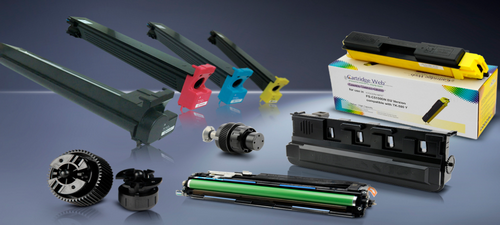
Compatible Toner Cartridges
Referral Link

Final Thoughts

Compatible toner cartridges present a practical, cost-effective, and eco-friendly alternative to OEM options. They are capable of delivering solid print quality and can lead to significant savings, especially for high-volume users. Nonetheless, their performance and reliability are not always consistent, and issues such as leakage or firmware incompatibility remain important considerations.

For users focused on reducing costs and environmental impact, compatible cartridges are a strong contender - especially when sourced from reputable brands. However, for environments where print precision and printer reliability are critical - such as client-facing businesses - OEM cartridges may justify their premium price.

In the end, selecting a toner cartridge should be based on a balanced evaluation of price, quality, sustainability, and risk. By choosing trustworthy manufacturers and understanding their printer’s requirements, consumers can make choices that best align with their goals and printing demands.


Published by Jun 18, 2025 Source: Cartridge Web. (n.d.), Premium Toners. (n.d.), Quill Blog. (n.d.), Toner Buzz. (n.d.), Toner Cartridge Depot. (2025, April 26)

Further reading

You might also be interested in ...

Headline
Knowledge
What is a TPE Yoga Mat? A Professional Guide to Eco-Friendly Performance and Manufacturing Insights
Why TPE Yoga Mats Are Becoming the Preferred Choice in Modern Wellness Manufacturing
Headline
Knowledge
How 5-Axis Tapping Centers Help Reduce Setup Time, Improve Accuracy and Support Flexible Production
Why flexibility, not volume, is becoming the real competitive advantage for automotive, motorcycle and bicycle parts manufacturers.
Headline
Knowledge
Automatic Packaging Line vs. Standalone Packaging Machines: Which Is Better for Your Factory?
A practical guide to choosing the right packaging equipment strategy for your production volume, product mix, and automation goals.
Headline
Knowledge
How to Evaluate Cutting Pliers Quality Before Bulk Purchasing: Common Issues Buyers Should Watch For
A practical quality checklist for importers, wholesalers and industrial buyers reviewing cutting pliers before large orders.
Headline
Knowledge
How to Choose a Shrink Bundler Machine for Bottles, Cans and Tetra Pak Products
A practical guide to selecting shrink bundling equipment for beverage, food and carton packaging lines.
Headline
Knowledge
PEEK Plastic Applications and Benefits: Where High-Performance Engineering Plastics Add the Most Value
PEEK is a high-performance engineering plastic used in demanding industries that need heat resistance, chemical resistance, and dimensional stability. This article explains where PEEK adds the most value, how it is used in medical, semiconductor, aerospace, and industrial applications, and what engineers should consider before CNC machining and production scale-up.
Headline
Knowledge
Knee Mill vs Bed Mill: What’s the Difference and Which One Fits Your Workflow?
Why Choosing Between a Knee Mill and a CNC Bed Mill Matters
Headline
Knowledge
Beyond Part Holding: The Role of TCP Thin Carrier Plate in Advanced Automated Manufacturing
As manufacturing environments become more compact, more precise, and more automated, components that were once treated as secondary are gaining much greater technical importance. Among them, the tcp thin carrier plate has become increasingly relevant in high-density production, especially in processes involving precision transfer, terminal handling, dipping-related applications, and repeated automated movement. For procurement teams, process engineers, and equipment integrators, the decision is no longer just about whether a carrier plate can physically hold a part. The more important question is whether it can maintain stable performance under real production conditions. In high-density manufacturing, even a small variation in flatness, thickness consistency, rigidity, or thermal behavior may lead to process instability, lower yield, or increased equipment interruption. This is why the tcp thin carrier plate is now being assessed more carefully as a process-critical component rather than a simple fixture.
Headline
Knowledge
Biodegradable Straw Making Machines: Key Technologies Driving Sustainable Packaging Production
This article examines how biodegradable straw making machines are supporting the shift toward sustainable packaging production. It covers PLA and paper straw manufacturing technologies, automation trends, production challenges, and key factors manufacturers should consider when selecting biodegradable straw production equipment.
Headline
Knowledge
Choosing Between C-Frame and H-Frame Hydraulic Presses for Metal Stamping
This article provides a comprehensive guide for manufacturers on choosing between C-frame and H-frame hydraulic presses for metal stamping operations. It begins by analyzing the structural differences: C-frame presses are highlighted for their three-sided accessibility and space-saving design, making them ideal for light to medium-duty tasks. In contrast, H-frame presses are recognized for their superior stability and rigidity, making them the preferred choice for high-tonnage, high-precision, and heavy-duty applications. The article features a detailed comparative table evaluating both types based on tonnage capacity, footprint, and cost. It also outlines critical selection factors such as precision requirements and budget constraints. Finally, the guide naturally introduces leading global manufacturers, including Yeh Chiun, Schuler, AIDA, Komatsu, and Beckwood, helping readers make informed investment decisions tailored to their specific production needs.
Headline
Knowledge
What Do Fruit Juice Suppliers Provide? A Practical Guide for Beverage and Food Brands
A practical overview of ingredient formats, supplier services, and sourcing considerations for beverage and food product development.
Headline
Knowledge
Understanding HVLP Technology: How Low Pressure High Volume Saves Paint and Costs
A practical guide to how HVLP spray systems improve coating efficiency, reduce waste, and support better cost control.
Agree