With technological progress and industrial restructuring, the cement industry is actively introducing a circular economy and has become an international pioneer in net-zero carbon emissions through alternative fuels, alternative raw materials, waste heat power generation, green power development, and carbon capture technologies.
The Cement Industry Moves Towards Net Zero Carbon Emissions:
The Global Cement and Concrete Association (GCCA) released the "2050 Cement and Concrete Industry Net Zero Emission Roadmap", promising to reduce carbon emissions by 25% by 2030 compared to 2020 and achieve net zero emissions by 2050.
A cement manufacturer in Taiwan took the lead in passing the review of the International Science-Based Reduction Target Initiative (SBTi), completed the setting of carbon reduction targets, specifically responded to global climate control better than 2°C, and invested heavily in innovative processes for energy saving and carbon reduction. Drive the whole industry to observe and learn from each other, and jointly move towards the road of circular economy and carbon reduction.
Development and Application of Circular Economy-Cement:
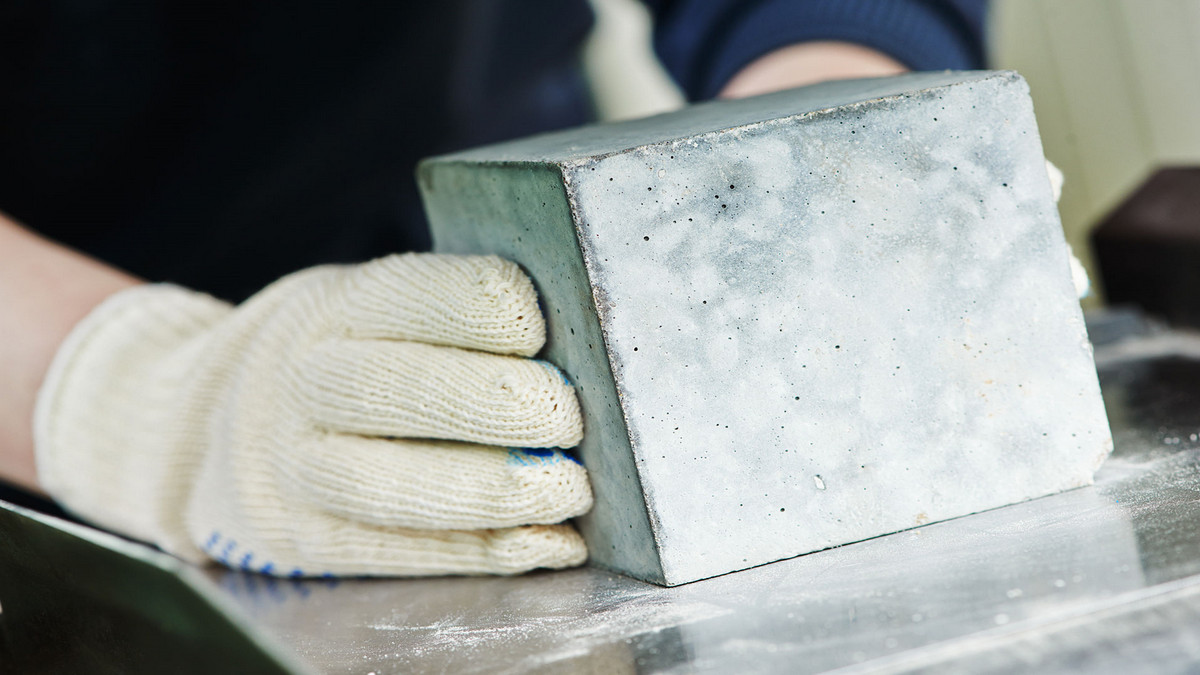
Clay work is an important part of building foundation engineering, and it has an important role in the economic construction and development of various countries. The scope of cement construction includes the walls and floors of ordinary houses. The part of the wall includes plastering, laying bricks, and building walls and the part of the ground is tile bonding and floor paving. The remaining cement is used in large-scale public construction projects, such as track construction, water environment improvement, urban and rural renovation, etc. The cement industry plays an important role in economic development. Cement is bulky and easy to deteriorate, which is not conducive to long-distance transportation or import, and it requires a lot of capital from the construction of raw material mills, rotary kiln equipment, and raw and clinker warehouses to sales to the client. The cement industry is prone to form a regional oligopoly industry due to product characteristics, capital intensive, and high transportation costs.
However, the cement industry is an industry that makes an important contribution to the regional economy, including the collection of upstream ore raw materials. Such as the largest raw materials as marble and clay, as well as by-products of the iron and steel smelting industry, fly ash from power plants, and desulfurized gypsum as raw materials. From cement production and maintenance in the industry to downstream cement application end civil engineering, construction engineering, road laying, bridge engineering, and other building materials and raw materials. As well as the transportation industry needs to be coordinated in the middle, and a complete cement industry chain has to be formed.
With the rising awareness of environmental protection and the adjustment of industrial structure, the international cement industry is gradually transforming and introducing the concept of the circular economy. Taking advantage of the continuous process characteristics of cement kiln, the high temperature above 1,500 degrees assists in the treatment of domestic and industrial waste, and at the same time solves the problem of waste burial, and the relevant waste can be used as an alternative raw material or fuel in the cement process. Cement rotary kilns have the advantage of assisting in the treatment of waste.
The Actions of the Foreign Cement Industry in Developing Circular Economy:
Internationally, the cement industry uses industrial waste generated by other industries, such as power plants and foundries, as alternative raw materials or alternative fuels. At present, some cement plants in Europe have an alternative fuel ratio of more than 50%, and the overall ratio is about 20%. North America and Japan use waste to replace about 10% of fossil fuels. The promotion of a circular economy has enabled the cement industry to reduce energy consumption per unit, allowing the country's domestic and industrial waste to return to a virtuous resource cycle through reuse. At the same time reduce the amount of mining at the source, giving play to the effect of turning stones into gold.
-
Japan:
Japan is facing the problem of environmental pollution after a century of industrialization. The local eco-city plan was launched to create a society where resources are recycled. While developing industry and revitalizing coastal towns, environmental protection is taken into account. Utilizing the concentrated characteristics of multiple industries such as cement, steel, and petrochemicals in the industrial zone, the industrial waste of A company is converted into alternative energy resources of B or C company so that the energy or resources in the ecological city can be fully recycled.
-
Germany:
Early cement production in Germany mainly used fossil fuels as energy sources, of which lignite was the bulk. In recent years, the ratio of cement alternative fuels in Germany has grown rapidly. The raw materials are various wastes such as waste wood, waste tires, domestic and industrial wastes, etc. On average, about 3.03 million metric tons of waste can be used a year. In addition, the German cement industry has recently promoted the recycling of waste construction concrete. In the process of building demolition, crushed concrete can be used as an alternative raw material for gravel and sand. It is estimated that recycled waste building materials can replace about 5% to 10% of the required mineral resources, which can not only effectively reduce the consumption of mineral raw materials, but also it can promote the recycling of industrial resources.
-
United States:
The process of using combustible waste as an alternative fuel in the United States is divided into two parts: one is the collection, storage, processing, mixing, and transportation of combustible waste. The second is the combustion application of storage, mixing, combustion, and environmental monitoring in the cement plant. The overall waste circulation process needs to be strictly controlled. U.S. waste treatment technology is developed by the state environmental protection bureaus and the U.S. Environmental Protection Agency. Recent studies have confirmed that cement rotary kilns can use combustible waste as an alternative fuel to produce cement, which can reduce the burden of waste on the environment and achieve the vision of saving energy and realizing waste recycling. The rate of use of combustible waste as an alternative fuel by the US cement industry is increasing year by year, mainly including waste tires, waste plastic packaging, recycled liquid fuel, animal fat, sludge, etc., among which waste tires have the highest utilization rate.
-
EU:
In 2015, the European Union began to promote the EU Circular Economy Action Plan to reduce waste and carbon footprints. At present, the traditional linear economy is gradually developing towards a circular economy. In 2012, the cement industry in the EU-28 cumulatively used about 98 million metric tons of alternative fuels, a substitution rate of about 36%. The European cement industry is actively increasing the rate of alternative fuels, and the medium-term target is expected to reach 60%, which is estimated to reduce the carbon footprint by about 10.2 million metric tons. The European Union has a mature waste infrastructure, which can effectively promote the ratio of alternative fuels in the cement industry. The collection and separation of domestic and industrial waste are large-scale and convenient. In the future, it is expected to increase the ratio of waste alternative fuels from 60% to 95%.
-
Taiwan:
Taiwan's cement industry has started to develop a circular economy. In terms of alternative raw materials, the output of industrial waste in 2015 was coal ash (28.07%), water-quenched blast furnace stone (15.76%), construction mixture (7.98%), electric arc furnace steelmaking slag (5.65%) and inorganic Sexual sludge (4.97%). Among them, coal ash, water-quenched blast furnace stone, electric arc furnace steelmaking slag, etc., can be used as substitute raw materials in cement kilns, such as materials and additives for cement, concrete, and other products. In terms of alternative fuels, Taiwan sends the shredded tire pieces processed by waste tires to cement plants for use as alternative fuels. The steel wire after high-temperature treatment is oxidized to iron oxide, which can replace part of the iron ore in the cement process and directly serve as an alternative raw material in the cement process, which not only reduces coal consumption and source mining but also reduces air pollution emissions.
The Cement Industry Transforms Waste into Recycling:
The general impression is that the cement industry is an industry with high energy consumption and high carbon emissions, but the cement industry plays the role of a waste terminator. The cement rotary kiln used in the cement industry has the advantages of high temperature, long residence time, large turbulence, and zero residues. It can burn most of the waste. Even if there is a small amount of residue, it will be raw mineral salt in the rotary kiln. The structural reorganization process is consolidated in it, and it becomes a stable and pollution-free cement clinker. At the same time, converting waste into raw materials or energy, replacing the use of some minerals and fossil fuels, has become a major boost to promote a circular economy.
The EU cement industry generally uses waste tires as an alternative fuel. The reason is that the cement plant directly utilizes heat energy, and the heat utilization efficiency of the process exceeds 70%, which is superior to other industries in terms of energy conversion efficiency for gas-electricity cogeneration or steam generation. And there is no problem with the secondary treatment of residues. In addition, many alkaline fine powder raw materials in the production process have a high degree of adsorption, and the ability to control pollution is stronger, which can prevent the production of dioxin. No matter from the perspective of environmental protection or carbon reduction, cement plants in Taiwan can use it, and it is the best alternative fuel. The cement manufacturing process is inclusive, and most wastes can be used as sources of alternative raw materials or fuels as long as they are within the range of cement composition standards. For the cement industry, waste disposal not only takes into account environmental protection and carbon reduction but also has economic benefits and social welfare value.
Japan has great flexibility in adding alternative raw materials to cement. In 2017, the EU cement industry used alternative fuels as much as 46%. Compared with Taiwan, cement regulations are still quite restrictive. In addition, the average cement clinker blending ratio in the European cement industry is only about 74%, which is far lower than Taiwan's 91%. Thanks to the government for making some adjustments in the regulations in the past two years. In particular, the Bureau of Standards, Inspection and Quarantine announced the revision and pre-announcement in August and September of this year to update the hydraulic mixed cement and its applicable inspection regulations. This mixed cement can be added with more multi-mixture materials will help the cement industry to further reduce carbon. However, it is still recommended that the government continue to align with international adjustments on other manufacturing standards such as chloride ion content or the use of alternative fuels so that the industry can continue to move towards net zero emissions.
The Cement Industry Develops a Circular Economy:
-
Enterprise level:
It mainly focuses on the circular economy of individual factories or enterprises operating alone in the industry. In the raw material transportation route, the potential energy of the ore transported downhill by the belt conveyor can be used to convert power generation, and the mining, engineering, electrical, and instrument departments are skillfully integrated during the individual transportation process. Or in individual factory areas, combined with the irrigation separation policy, the groundwater is used for cooling or recycling of the process, and after treatment, it is discharged into the drainage channel of the farmland water conservancy committee to recycle water resources.
-
Industrial Park:
It refers to the recycling and reuse of domestic and industrial waste in the region as an alternative raw material or alternative fuel for the cement process. In addition to the feasibility assessment of the disc combustion furnace, there is a three-in-one operation mode of port, factory, and electricity. This model plans to import the fuel and most of the raw materials required for cement production to the eastern port, and the cement products are also transported to the cement receiving stations of the western ports through the eastern port, to avoid potential impact on the environment. Save shipping costs while increasing port throughput. The coal ash produced in the coal-fired process of power plants can be used as a raw material for cement. In addition, the lime powder produced in the cement production process can also be used as a raw material for desulfurization in power plants. Furthermore, the desulfurized gypsum produced by desulfurization can be used as one of the ingredients added to cement production. In this way, a virtuous circle is formed to achieve the purpose of reusing all resources.
-
Country level:
Because some counties and cities in China are difficult to implement the policy of one garbage incinerator for each county and city, these counties and cities without incinerators can only entrust other counties and cities to jointly process domestic and industrial waste. This method of cross-regional assistance in the disposal of national domestic and industrial waste is the role played by the foreign cement industry in the circular economy at present. It is a circular economy at the national level, and it is the development cycle of the domestic cement industry in the future.
In the past industrial revolution, to seek prosperity and development, products were produced from raw materials, consumed, and finally discarded and polluted, and the life cycle was deduced from the unidirectional linear consumption model from the cradle to the grave. People began to face the problem of how to balance the environment, resources, and development needs. Therefore, concepts such as green economy, low-carbon economy, and circular economy came into being. Recycle the products that have been exhausted in the original linear economy, and at the same time develop low-energy, high-efficiency manufacturing processes to create more added value. With the rising awareness of environmental protection, the development of the international cement industry has gradually transformed, and the cement industry, which was originally a linear economy, has been introduced into the development of a circular economy. Japan, Germany, the European Union, and other countries use the high-temperature, continuous, and non-stop kiln process characteristics of cement kilns to assist in the treatment of domestic and industrial waste. It not only effectively reduces coal consumption and carbon dioxide production, but also solves the problem of waste burial and effectively promotes resources. Since the development of the domestic cement industry, the industrial chain has matured and sounded. The circular economy has become more and more popular in the world. Taiwan must learn from foreign countries to overcome the current situation, invest in energy and resource integration equipment, and develop a circular economy in a planned way.
In the long run, cement needs to maintain a stable supply. Therefore, the existence of the cement industry is necessary. However, a certain price must be paid for the transformation of the industry. In the future, the cement industry will need to invest a huge amount of money in technology research and development, capital investment, and personnel training to introduce a circular economy, and it will require the joint efforts of domestic industry, government, academia, and research institutes. It is expected that after Taiwan is integrated with international environmental protection plans, it can more concretely implement the vision of sustainable economic development and environmental protection, and create more green business opportunities.
Improve Energy Efficiency and Develop Carbon Capture Technologies:
Improve Energy Efficiency and Develop Carbon Capture Technologies:
Taiwan's cement industry is generally superior to Europe and the United States in terms of energy efficiency, due to equipment renewal. Replace the old clinker cooler and waste heat power generation with the most advanced equipment, reduce fuel consumption, improve energy efficiency, and actively build renewable energy and energy storage. The introduction of oxygen-enriched combustion technology can increase the use ratio of alternative fuels, recycle more waste, and combine with carbon capture design to further reduce carbon emissions. The comprehensive installation of a waste heat power generation system can reduce the purchased electricity by more than a quarter. If cogeneration after cement production or using waste as energy can be recognized as renewable energy. It will encourage more businesses to build new or replace equipment and provide incentives for carbon reduction.
Many carbons capture, utilization, and storage technologies are still in the experimental stage and have not yet entered commercial application. To achieve net zero emissions by 2050, the government should vigorously subsidize the infrastructure construction and technology development of innovative carbon capture and utilization technologies such as oxy-combustion and calcium loop (CCU) and solve the subsequent storage and utilization of carbon capture question. Asia Cement is planning to use the waste from different industries, including steelmaking slag, waste concrete, etc., as carbon-fixing absorbents, and then make negative carbon recycled pellets for concrete use. Hoping to combine upstream and downstream value industries in Chain mode, and work together to achieve net zero and mutual benefits.
In addition, because the value of international carbon trading has surpassed carbon tax, it is suggested that in addition to collecting carbon tax. The government can imitate the European Union to promote carbon trading, strengthen management year by year in the form of cap control, and provide appropriate carbon reduction economic incentives for industries to play a role. Maximum carbon reduction effect. To preserve a good environment for the next generation, carbon reduction is imperative. We look forward to Taiwan's circular economy laws and regulations and cement specifications being in line with international standards, and all enterprises working together towards the goal of net zero carbon emissions.