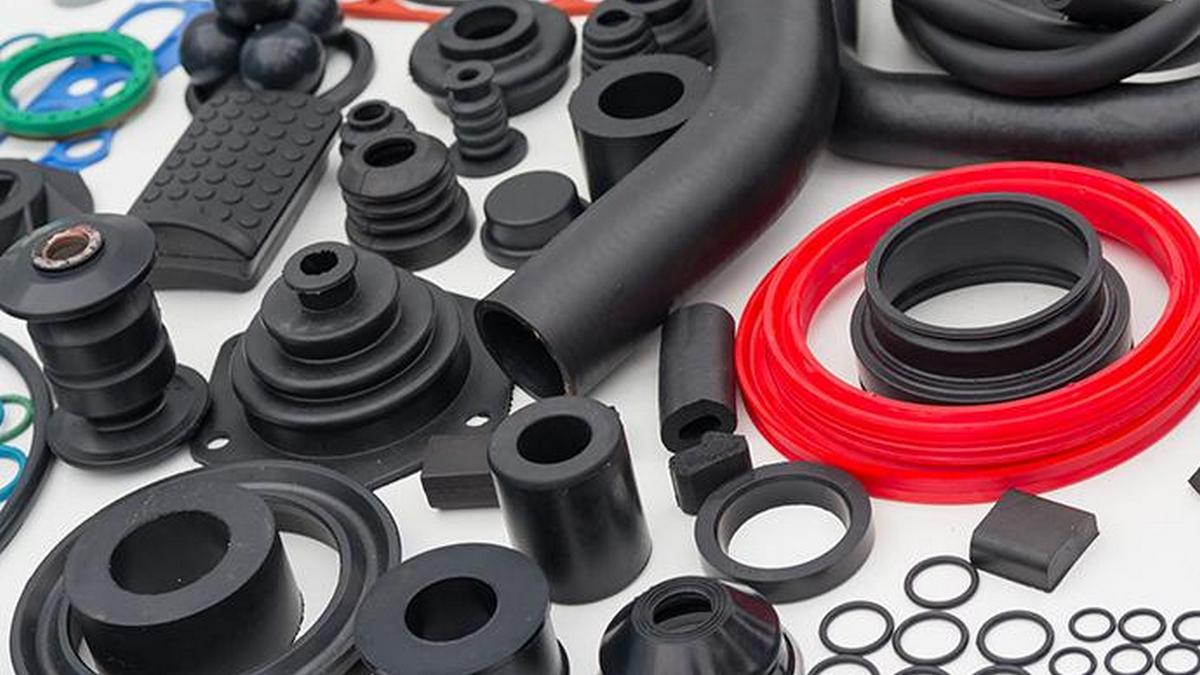
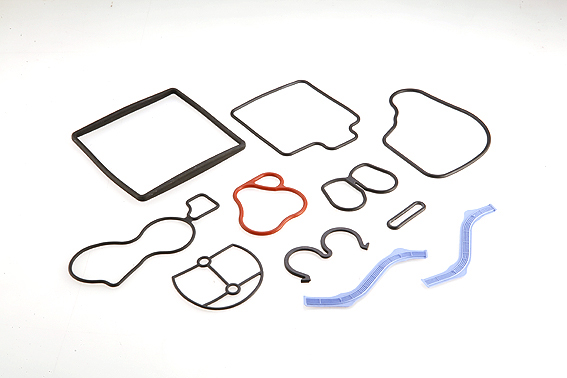
Material selection is one of the most important decisions in custom molded rubber parts manufacturing.
A part may look dimensionally correct at launch, yet still fail early if the elastomer does not match the actual service environment. In harsh applications, failure usually begins when heat, fluid exposure, compression, ozone, or repeated motion push the material beyond its performance window. That is why EPDM, Silicone, NBR, and Viton should not be treated as interchangeable rubber options. Each has a distinct balance of physical properties, temperature capability, chemical resistance, and cost.
Why Material Choice Determines Long-Term Part Performance
For molded rubber parts, performance depends on more than shape and hardness. The elastomer must retain elasticity, resist compression set, tolerate the working temperature range, and remain stable when exposed to media such as oil, fuel, steam, cleaning agents, or outdoor weather. If one of these conditions is overlooked, the part can swell, crack, harden, soften, or lose sealing force well before the expected replacement cycle.
A useful selection process starts with four questions: What mechanical stress will the part experience? What is the continuous and peak temperature? What chemicals or fluids will contact the surface? And does the application justify a higher material cost for longer durability?
How EPDM, Silicone, NBR, and Viton Differ
Before looking at each material in detail, the comparison below shows how the four elastomers perform across the criteria that most often affect molded part reliability.
| Material |
Physical Properties |
Temperature Thresholds |
Chemical Resistance |
Cost Profile |
Typical Failure if Misapplied |
| EPDM |
Good elasticity, good compression resistance, good weather durability |
Strong low- and medium-high temperature performance |
Excellent against water, steam, and ozone; poor against oils and fuels |
Low to medium |
Swelling and softening in hydrocarbon exposure |
| Silicone |
Excellent flexibility across broad temperatures, clean and stable, moderate tear strength |
Excellent at both low and high temperatures |
Good in mild environments; limited against many oils, fuels, and solvents |
Medium to high |
Tearing, abrasion wear, or chemical degradation |
| NBR |
Good tensile strength, good abrasion resistance, reliable sealing under oil contact |
Good at moderate temperatures |
Excellent against oils and fuels; limited against ozone and prolonged weathering |
Low |
Surface cracking and hardening outdoors |
| Viton |
Strong heat stability, good compression set resistance, durable in aggressive media |
Excellent at elevated temperatures |
Excellent against fuels, oils, and many harsh chemicals |
High |
Overspecification cost or reduced flexibility at lower temperatures |
This comparison shows why no single elastomer is universally superior. The right choice depends on which risk is most critical to control.
EPDM: Best for Water, Steam, and Outdoor Exposure
EPDM is often selected when moisture, steam, ozone, and weather resistance are the primary requirements. Its physical profile makes it suitable for parts that must remain flexible and stable over time in outdoor or water-based environments. It also performs well where thermal cycling is present but hydrocarbon exposure is not.
The main risk with EPDM is chemical incompatibility with petroleum-based media. If the same part is exposed to lubricating oil, grease, or fuel, volume swell and softening can occur quickly. In that condition, the part may lose dimensional stability and fail even if its temperature rating appears acceptable.
Silicone: Best for Extreme Temperature Stability
Silicone is valuable when a molded part must stay flexible across very low and very high temperatures. It maintains elasticity well and is often selected when thermal stability, cleanliness, and consistent performance are more important than abrasion strength. This makes it a strong option for environments where conventional elastomers become brittle, stiff, or permanently deformed.
Its limitation is mechanical and chemical durability in more aggressive service. Silicone generally offers lower tear strength and abrasion resistance than more robust elastomers, and it is not the best choice for prolonged contact with fuels, oils, or strong solvents. In those conditions, thermal performance alone does not prevent premature failure.
NBR: Best for Oil and Fuel Resistance at Controlled Cost
NBR remains one of the most practical elastomers when oil resistance is the leading requirement. It combines good tensile strength, dependable sealing behavior, and strong resistance to many petroleum-based fluids, making it a cost-efficient choice for a wide range of molded components.
Its weakness is environmental aging. Ozone, sunlight, and outdoor exposure can cause cracking and hardening over time. If a part must resist both oil and severe weathering, standard NBR may not provide enough long-term stability, even though its fluid resistance is strong.
Viton: Best for High Heat and Aggressive Chemicals
Viton is typically chosen for the harshest service conditions, especially where elevated temperatures combine with fuels, oils, and chemically aggressive media. Its strength lies in retaining performance where lower-cost elastomers degrade through swelling, hardening, or rapid compression loss. When failure carries a high operational penalty, Viton can justify its premium price.
The tradeoff is cost. Not every application requires that level of chemical and thermal resistance. If the actual environment is less demanding, Viton may add material expense without a proportional increase in service value. Selection should therefore be based on exposure severity, not on the assumption that the highest-cost compound is always the safest choice.
How Wrong Material Selection Leads to Premature Failure
Premature component failure usually occurs when the dominant stress factor is misunderstood. A seal exposed to fuel may swell if EPDM is used. An outdoor part may crack if NBR is selected without considering ozone. A high-temperature component may lose integrity if a lower-heat elastomer is specified. A part in abrasive service may tear early if Silicone is chosen mainly for its temperature range.
In molded rubber parts, failure is rarely random. It usually results from a mismatch between material behavior and operating conditions. That mismatch can reduce sealing force, alter dimensions, increase maintenance frequency, and shorten overall service life.
How Sanhao Supports Custom Rubber Material Development
When material requirements are complex, compound selection often needs more than a standard catalog choice. Sanhaos strength include rubber mixing technology, custom mold development, research and design, and the manufacturing of rubber, silicone, PU, elastomers, and composite materials. This is especially relevant when a project requires a more precise balance of hardness, heat resistance, oil resistance, abrasion resistance, or other targeted physical properties. By supporting custom formulation and tailored manufacturing, Sanhao can help align compound design more closely with actual application conditions.
Final Thoughts
EPDM, Silicone, NBR, and Viton each solve different performance problems. The best choice comes from matching physical properties, temperature thresholds, chemical resistance, and cost to the real environment the part must survive. In custom molded rubber parts manufacturing, long service life depends less on choosing the most familiar elastomer and more on choosing the one that fits the application without compromise.


.jpg)
.jpg)