Exploring Ventilator-Associated Pneumonia (VAP) and Its Effects on ICU Patients
Knowledge

Exploring Ventilator-Associated Pneumonia (VAP) and Its Effects on ICU Patients

Ventilator-associated pneumonia (VAP) is a significant healthcare challenge in intensive care units, typically occurring in patients who have undergone mechanical ventilation for at least 48 hours. It is associated with high morbidity, mortality, and healthcare costs. VAP develops due to respiratory tract colonization by pathogens, facilitated by invasive devices like endotracheal tubes. Common bacteria include Pseudomonas aeruginosa, Escherichia coli, and Staphylococcus aureus. Risk factors range from prolonged ventilation to prior antibiotic use and underlying health issues. Diagnosing VAP is difficult due to overlapping symptoms with other lung conditions and the absence of standardized criteria, often leading to antibiotic overuse. Preventive strategies—such as ventilator care bundles, elevating the head of the bed, maintaining oral hygiene, and staff training—are critical to reducing its incidence. While progress has been made, ongoing research and consistent application of evidence-based practices are essential to improve outcomes and lower the burden of VAP in ICU settings.
Published: Jul 04, 2025
Exploring Ventilator-Associated Pneumonia (VAP) and Its Effects on ICU Patients

Introduction

Ventilator-associated pneumonia (VAP) represents a major clinical issue in intensive care units (ICUs) around the globe. This form of hospital-acquired pneumonia develops in patients who have been on mechanical ventilation for a minimum of 48 hours. VAP is linked to increased rates of illness and death, as well as rising healthcare costs, making its prevention and treatment a top priority for medical professionals. This report seeks to offer an in-depth overview of VAP, its implications for ICU patients, and the various approaches to prevent and manage the condition effectively.

Definition and Epidemiology

VAP is defined as a lung infection that arises in patients undergoing mechanical ventilation, generally within 48 hours of endotracheal intubation. It affects an estimated 10% to 20% of patients who remain on ventilators for more than two days. However, reported incidence rates can vary widely - from 4% to 42% - due to inconsistencies in diagnostic standards and monitoring methods.

Pathogenesis and Contributing Factors

The development of VAP typically stems from the colonization of the respiratory tract by harmful microorganisms. Devices such as endotracheal and tracheostomy tubes bypass the body’s natural airway defenses, making the lungs more prone to infection. Frequently identified pathogens include Pseudomonas aeruginosa, Escherichia coli, Klebsiella pneumoniae, and Staphylococcus aureus.

Key risk factors include extended periods of ventilation, previous antibiotic usage, and underlying health conditions like chronic obstructive pulmonary disease (COPD) or immune suppression. In pediatric patients, additional risks include the use of neuromuscular blockers, certain types of sedatives, and positive fluid balance.
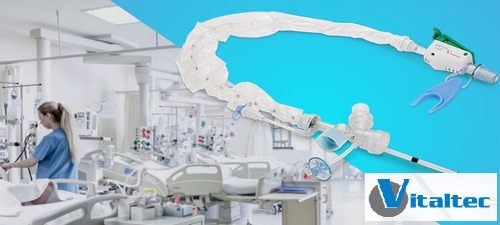
Vitaltec Corporation
Referral Link

Clinical Consequences

VAP substantially prolongs hospital stays and contributes to higher treatment expenses. Mortality associated with VAP ranges from 24% to 50%, and this figure may climb to 76% when infections are caused by multidrug-resistant organisms. Beyond the immediate risks, VAP is also tied to long-term health complications, including extended mechanical ventilation and longer ICU admissions.

Diagnostic Difficulties

Accurately identifying VAP continues to be a complex task due to the lack of standardized diagnostic protocols and the similarity of symptoms to other pulmonary conditions. Indicators often include new infiltrates visible on chest imaging, fever, elevated white blood cell counts, and purulent respiratory secretions. Nevertheless, these criteria often fall short in terms of sensitivity and specificity, leading to the potential overuse of antibiotics and delays in initiating the right treatment.

Preventive Measures

Effective prevention of VAP is key to enhancing patient outcomes and controlling healthcare expenditures. Several evidence-backed practices are widely recommended:

Ventilator Care Bundles: These are sets of coordinated interventions used together to prevent VAP. They typically include sedation and weaning protocols, maintaining a semi-recumbent position, thorough oral and hand hygiene, and subglottic secretion drainage.

Elevating the Head of the Bed: Positioning patients with the head of the bed elevated between 30° and 45° is one of the most effective and commonly adopted preventive tactics.

Oral Hygiene: Regular oral care with antiseptics like chlorhexidine has been demonstrated to lower the occurrence of VAP.

Selective Oropharyngeal Decontamination: Applying topical antibiotics such as colistin, tobramycin, and nystatin can help minimize VAP by reducing bacterial colonization.

Staff Training and Compliance Audits: Ongoing education for healthcare personnel and rigorous monitoring of adherence to prevention protocols are crucial for successful VAP control.
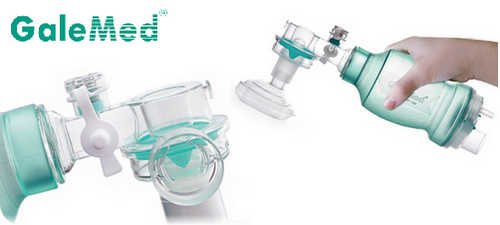
GaleMed
Referral Link

Conclusion

Ventilator-associated pneumonia remains a serious threat in intensive care environments due to its frequency, clinical complications, and financial burden. Although there have been significant improvements in both preventive and therapeutic methods, issues such as diagnostic uncertainty and inconsistent implementation of preventive strategies persist. Continued research and the systematic application of validated, evidence-based practices are vital to reducing VAP incidence and improving outcomes for critically ill patients.


Published by Jul 04, 2025 Source: Vitaltec Corporation, EBSCO Research Starters. (n.d.)., Nature Communications. (n.d.)., PMC. (n.d.)., PMC. (n.d.)., PMC. (n.d.)., Vitaltec. (n.d.).

Further reading

You might also be interested in ...

Headline
Knowledge
Industrial Ultrasonic Cleaning Machines-Applications, Specifications, and Buyer Selection Guide
An industrial ultrasonic cleaning machine is a precision cleaning system that uses high-frequency sound waves to remove contaminants from surfaces. Unlike manual or spray-based cleaning, ultrasonic systems rely on cavitation the rapid formation and collapse of microscopic bubbles in a liquid medium to dislodge particles from even the most complex geometries.
Headline
Knowledge
Scaling and Corrosion in Plastic Machinery Cooling Systems: Causes, Risks, and Preventive Measures
Scaling and corrosion are persistent risks in plastic machinery cooling systems. This article outlines their causes, their effect on heat transfer and flow stability, and practical maintenance measures manufacturers can use to reduce efficiency loss, blockage risk, and long-term equipment damage.
Headline
Knowledge
Chemical Packaging Lines Evolve as Safety and Precision Demands Increase
As chemical manufacturers face stricter safety regulations and complex material requirements, packaging lines are evolving from standalone machines into fully integrated production systems. This article explores key considerations including filling technology selection, equipment durability under chemical exposure, workplace safety, and the shift toward complete system solutions. Understanding these factors helps manufacturers improve accuracy, ensure safety, and enhance overall production efficiency in hazardous chemical packaging environments.
Headline
Knowledge
Grease Pumps in Maintenance Operations: Types, Applications, and Selection Considerations
A Practical Guide to Grease Pump Applications, Performance, and Selection
Headline
Knowledge
BLDC vs. Induction Motors in Lifting and Hoisting Applications: Efficiency, Safety, and System Cost
What makes BLDC motors a better fit for today’s lifting and hoisting systems.
Headline
Knowledge
Improving Multi-Computer Workflow Efficiency with a 4-Port USB-C KM Switch
How mouse roaming, 10Gbps USB sharing, and flexible control help streamline modern multi-system environments
Headline
Knowledge
How Anti-Static And Protective Films Reduce Surface Damage In Sensitive Manufacturing
In sensitive manufacturing, many costly defects do not begin with machine failure or operator error. They begin with static charge, airborne particles, micro-scratches, adhesive residue, and unnoticed surface contamination. These issues are often underestimated because they appear as scattered defects rather than one major failure. Yet in electronics, optics, display processing, and coated surface production, even small flaws can reduce yield, increase rework, slow inspection, and weaken final product quality.
Headline
Knowledge
What Buyers Should Know Before Choosing a Automatic Plastic Blow Molding Machine
For buyers, factory owners, and packaging manufacturers, selecting an automatic blow molding machine is no longer just a matter of comparing output speed or initial price. In real production environments, the performance of a plastic blowing machine is often determined by the quality and coordination of its core components. A machine may appear competitive on paper, yet still create costly problems once production begins. Uneven wall thickness, unstable parison formation, excessive scrap, slow cooling, and difficult maintenance are all issues that can usually be traced back to the design of several key modules. This is why experienced buyers tend to look beyond catalog specifications and focus instead on the machine’s screw, die head, clamping system, and cooling design. These components do more than support production. They directly influence product quality, material efficiency, energy use, maintenance frequency, and overall return on investment.
Headline
Knowledge
What Buyers Overlook When Choosing a Wire Harness Manufacturer
A practical guide to evaluating engineering support, quality control, customization and sourcing risk
Headline
Knowledge
How High-Efficiency Gear Motors and Brushless Motors Support ESG and Energy Savings
Industrial motor efficiency directly affects a factory’s electricity use, carbon footprint, maintenance burden, and long-term operating cost. For factory owners, procurement teams, and equipment designers, choosing a more efficient gear motor or Brushless Motor is not only a technical upgrade. It is also a practical way to improve ESG performance, reduce energy waste, and strengthen return on investment. In most industrial facilities, motors are among the largest sources of electricity consumption. When motors run continuously in conveyors, packaging lines, automated machinery, food processing systems, and material handling equipment, even a modest improvement in efficiency can produce significant annual savings. That is why motor efficiency is increasingly linked to ESG strategy, cost control, and supply chain competitiveness.
Headline
Knowledge
Die Casting Vs. Forging: How To Choose Based On Strength, Geometry, And Volume
Choosing between die casting and forging affects far more than part cost. It influences structural performance, design flexibility, tooling strategy, machining requirements, lead time, and long-term production efficiency. When the wrong process is selected too early, projects often run into redesigns, extra machining, or higher-than-expected production costs. The right decision depends on how much strength is required, how complex the part geometry is, and whether the target is lower-volume production or stable high-volume output.
Headline
Knowledge
How Material Design Affects Fitness And Rehabilitation Rubber Products
In fitness and rehabilitation products, material design has a direct effect on performance, comfort, durability, hygiene, and long-term user trust. A resistance band that stretches unevenly, a grip that becomes slippery, or a flexible component that tears too early can quickly lead to complaints, returns, and lower confidence in the product. The key challenge is not simply choosing an elastic material. It is selecting and validating a material system that can perform consistently under repeated stretching, skin contact, sweat exposure, and ongoing mechanical stress.
Agree